Sign in. It’s quick, free and it’s up to you.
An account is an optional way to support the work we do. Find out more.
Sign in. It’s quick, free and it’s up to you.
An account is an optional way to support the work we do. Find out more.
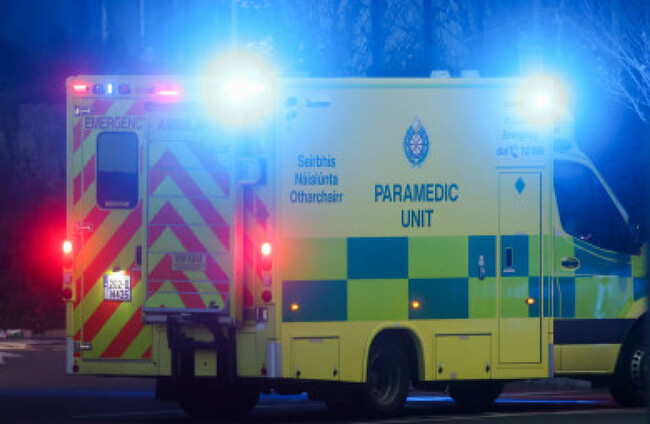
LARGE NUMBERS OF Covid cases, non-emergency calls and logistical problems have combined to put massive pressure on the ambulance service in Dublin in recent days.
The Journal has learned that a massive influx in Covid cases, in particular, has led to major delays and shortages for the ambulance service in the capital.
At the time of writing, there were 1,610 confirmed Covid cases in hospital and 50 of these were in intensive care units.
Various policies have created more delays within the system, according to sources within the National Ambulance Service.
For example, paramedics can only unload a patient at a hospital when a bed is available for them. This has caused massive delays within the service, given the scarcity of beds. The Irish Nurses and Midwives Organisation (INMO) said today that 532 patients were waiting for beds as of this morning.
According to one source with knowledge of the service, there are many people who have called for an ambulance in recent days who are not emergency cases, are able to walk and could take a seat within an emergency department, thus freeing up the ambulance to attend another call.
The huge spike in Covid-related admissions to hospital has left the ambulance service unable to deal with calls that come in as ambulance staff are left waiting for a bed to become available for their patients before they can go out on another call.
Our source explained: “Covid is rampant again. They need to bring back masks. Nobody is wearing them anymore and nobody is washing their hands like they used to. It’s just gone mad around here. We need to be able to keep on the move. A lot of the people I am seeing could get to a hospital handy enough. I just feel sorry for the people who really need us.”
The pressure is so great on the ambulance service that the HSE released a statement urging people to look for other care options before calling 999.
“The emergency ambulance services operate a priority dispatch system to ensure that our paramedics and ambulances are dispatched to the most seriously ill and injured patients first in order of their priority. All callers are advised to ring back if the patient’s condition changes or deteriorates,” the statement read.
The NAS has also not been immune from staffing crises brought about by Covid. Another element of the pressure on the system stems from staff members who are unavailable for work due to either contracting Coviid or having Covid symptoms.
Real effects
The delays in the system have resulted in people in emergency situations waiting longer for an ambulance than they should have in the last ten days.
According to multiple sources who have spoken to The Journal, a man in his 30s in west Dublin who was suffering serious chest pains, often an indicator of a significant medical issue, waited over 40 minutes for an ambulance, while an elderly woman suffering shortness of breath was asked if she could find another way to a hospital after ringing 999.
At the same time, ambulances have attended non-emergency calls including a man who thought he had broken his leg which, upon examination by paramedics, turned out to be mild bruising.
The problems are being exacerbated by the HSE’s policy for dispatching emergency calls, according to multiple paramedics.
Under the current system, when someone calls 999 for an ambulance, their call is directed to one of two call centres: one based in Tallaght, Dublin, and the other in Ballyshannon, Donegal.
If all the resources are already responding to calls, the job is given to the next available ambulance which could be hours away from where the caller is, according to Siptu’s Ted Kenny.
Kenny, who is an industrial organiser for Siptu’s health sector, said the system is relatively new and that union figures are in talks with the HSE to change it.
However, there has been no change over the Covid period, something which he has repeatedly called “mind-boggling”.
The HSE has defended the model and said that all calls to the NAS are triaged and responded to appropriately – the nearest and most appropriate response is dispatched with the most urgent calls prioritised.
“The ambulance service operates on a national basis and mobilises responses to calls for assistance based on patient needs, ambulances may travel to various locations irrespective of their base as they are not confined to work in geographical areas,” it said.
Non-Emergency Calls
Last month, The Journal published correspondence which revealed a number of non-emergency incidents that people called an ambulance over, including:
Many paramedics have consequently asked that a further pre-screening of patients, on top of the usual triage questions posed to callers, be carried out before they are dispatched to calls.
In their statement on Tuesday relating to Dublin services, the health service asked patients who no longer required an ambulance to call them and let them know.
Robert Morton, director of the National Ambulance Service, said: “Please bear with us over the coming days as we continue to be extremely busy. If the situation is not serious or life threatening consider contacting your GP, a minor injury unit, your pharmacist or self-care. Our staff continue to work incredibly hard trying to deliver normal health services and respond to the pandemic.
“The HSE is incredibly thankful for the continuing efforts of all of our staff in what remains challenging circumstances.”

To embed this post, copy the code below on your site













have your say