Sign in. It’s quick, free and it’s up to you.
An account is an optional way to support the work we do. Find out more.
Sign in. It’s quick, free and it’s up to you.
An account is an optional way to support the work we do. Find out more.
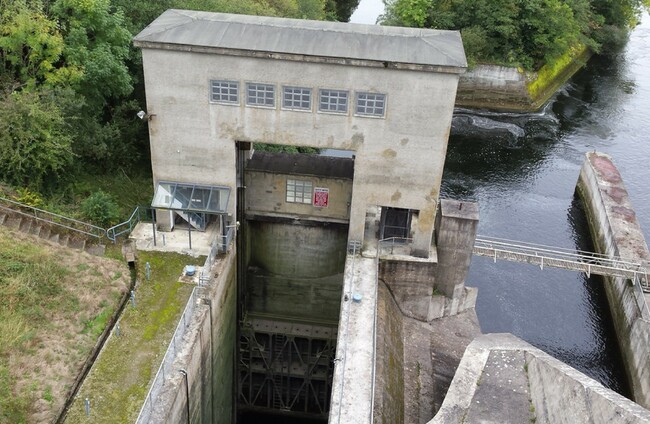
SCHOOLS AND THE public have been invited to come see Ireland’s first national hydro-electric station at Ardnacrusha in Co Clare.
The dam was open to tours from the general public in June 1928 and welcomed over 85,000 visitors within the first nine months. To mark the 90th anniversary of its foundation, ESB is reviving this tradition and is running dedicated school and public tours during the summer months.
School group visits are being facilitated until 30 June with public tours taking place from 1 July to 31 August 2017. The guided tours can accommodate groups of up to 30 people and run for approximately 90 minutes. All bookings can be made here.
The tours will take in a newly refurbished visitors’ centre before going out on site to view the impressive headrace canal, locks and tailrace.
Pupils from Scoil Íde Primary School in nearby Corbally, Limerick City were among the lucky ones to experience this industrial and architectural wonder earlier this week, as part of the early school tours of the season. Sixth class pupil Grace Finnan says: “The building is so big. Even though I am afraid of heights, it was so cool to look out and see Thomond Park and the rest of Limerick.”
ESB’s Alan Bane, Plant Manager at Ardnacrusha, explains that the station supplied 100% of the nation’s electricity in 1929. “Our workplace is an important historic site in Ireland’s development, so it has been a source of great pride to everyone who works here to open our gates to the public this summer.
The four turbines are still humming, supplying same 86 megawatts of renewable electricity as when they were first installed. The country’s development has been such in the meantime that the power station now represents about two per cent of total installed capacity.
The building of the Shannon Scheme began in 1925 and took four years, involving 4,000 Irish and 1,000 German workers. The building was a symbol of the new Irish state as the fledgling Irish Free State recognised the need to develop and use its natural resources to modernise Ireland. The total cost of the project was £5.2m, about one fifth of Irish Government revenue in 1925.

To embed this post, copy the code below on your site













have your say