Sign in. It’s quick, free and it’s up to you.
An account is an optional way to support the work we do. Find out more.
Sign in. It’s quick, free and it’s up to you.
An account is an optional way to support the work we do. Find out more.
LAST UPDATE | 29 Aug
ICELANDERS HAVE BEGUN voting on whether the country should resume entry talks with the European Union.
The island nation, home to some 400,000 people, is not being asked just yet to decide if they want to join the 27-member bloc.
Rather, today’s vote is on whether they want their government to negotiate possible terms, including on the highly sensitive fishing issue.
The public is being asked to answer “Yes” or “No” to the question: “Should Iceland resume accession negotiations with the European Union?”
Implied is the question of whether the country ultimately thinks it’s best to remain the captain of its own ship, or hitch its cart to the EU.
A No vote would put the issue to rest, but a Yes vote would kickstart talks with Brussels.
However, a second referendum would then be required to greenlight to a final entry deal – the EU’s 27 members would also have to agree to the deal.
Amid growing global insecurity, it’s understood the referendum will go down to the wire.
One poll this week put the Yes vote ahead by 51.3% to 48.7%. However, an earlier poll had it neck-and-neck.
In a post to social media this week, Iceland’s prime minister Kristrún Frostadóttir encouraged everyone to “show up and vote”.
“Let’s not let others decide the future for us.”
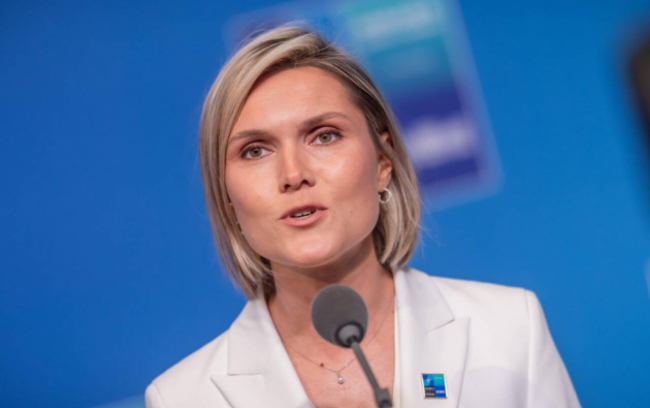
The Social Democrats leader added that the vote is an “opportunity, not a final decision”.
Frostadóttir’s centre-left coalition government was elected following a snap general election in 2024 and it pledged to hold a referendum on whether to resume EU entry talks by 2027.
Frostadóttir said she has been “listening” over the past number of weeks and that many citizens “see opportunities for Iceland in membership negotiations with the EU”.
However, she acknowledged that “others are worried” and that she will keep this in mind “if the result will be to negotiate”.
In her social media post, Frostadóttir sought to remind Icelanders of “the victories that have been won” and pointed to the country’s membership in Nato, the European Free Trade Association and the European Economic Area.
“None of these victories were undisputed in society at the time,” said Frostadóttir.
“Time and time again we have taken great steps for good with increased international cooperation.
“Let’s get a good deal for Iceland and then see – we can do it well – and we have done it before with great results.”
“This way you get a deal on the table, you’re able to see all the questions, and the answers to all the questions.”
Iceland applied to join the EU in 2009, a year after the 2008 financial crisis led to the collapse of its banks and economy.
Membership negotiations began in 2010 but were suspended in 2013 after a eurosceptic government came to power, and formally came to an end in 2015.
The world has changed radically since then.
“The EU is looking around, it’s finishing deals with India, with Mercosur. We’re seeing changes in the global climate when it comes to how people are using tariffs as weapons,” Frostadóttir noted.
While Iceland’s economy is flourishing again – albeit with a volatile currency – households are struggling with rising inflation and soaring interest rates, with the central bank raising rates three times so far this year to 8%.
This makes the euro an attractive option to indebted households.
On the global stage, the return of war in Europe with Russia’s invasion of Ukraine has shaken established security doctrines.
US President Donald Trump’s threats to take over neighbouring Greenland have added to Icelanders’ concerns.
Iceland is strategically located in the sub-Arctic, has no military and depends on Nato and a 1951 bilateral agreement with the United States for its defence.
Opinion polls highlight that Icelanders are deeply divided on the EU question.
Office worker Vilborg Inga Magnusdottir said she saw no reason to change the status quo.
“Why would we want to enter the European Union? What would we benefit from it when things are already good?” the 33-year-old told AFP.
Unlike her, Hrafnkell Gudnason plans to vote “Yes”.
“It’s getting more dangerous for a small country to stand outside the EU,” the 59-year-old consultant and horse-breeder said.
“I think it’s safer to be a part of a bigger family.”
Fishing is an integral part of Iceland’s national identity and seafood products account for around 40% of exports of goods.
This means that fishing would inevitably be the key issue in EU negotiations.
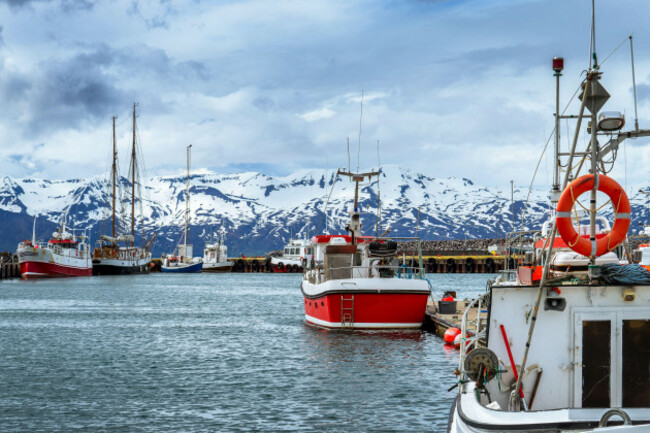
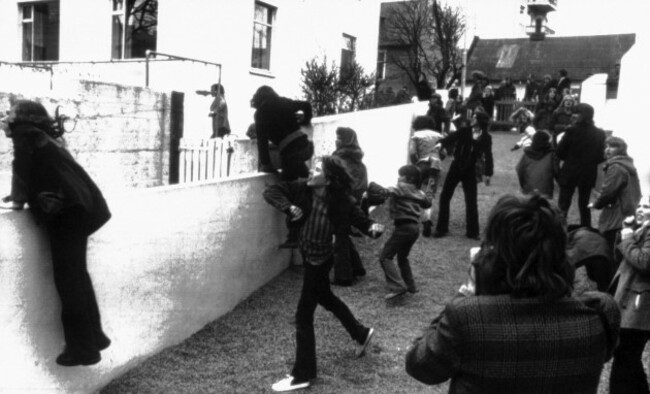
Half a century after the last “Cod Wars” with Britain, many Icelanders are reluctant to yield even the tiniest bit of control of their hard-won national waters to Brussels.
The Cod Wars were a series of conflicts primarily between Iceland and the UK between 1958 and 1976 which centred around fishing rights.
Even foreign minister Thorgerdur Katrin Gunnarsdottir, a staunch europhile, has made it clear that in any future negotiations Reykjavík would insist on retaining “sovereign control over all fisheries”.
That would be difficult to reconcile with the EU’s current Common Fisheries Policy, which places limits on the amount of certain species that can be caught each year.
Brussels has stayed out of the fray ahead of the referendum, but has sent positive signals, even on the sensitive fisheries issue.
For the EU, the prospect of welcoming a wealthy, stable country already largely integrated in the single market through its membership in the European Economic Area would provide a strong showcase for its enlargement policy and strengthen its presence in a coveted region.
-With additional reporting from © AFP 2026

To embed this post, copy the code below on your site














have your say