Sign in. It’s quick, free and it’s up to you.
An account is an optional way to support the work we do. Find out more.
Sign in. It’s quick, free and it’s up to you.
An account is an optional way to support the work we do. Find out more.
IRISH COMMUTERS HAVE been blind-sided by today’s surprise announcement of nationwide bus and train fare hikes.
Understandably so. When the average 15% increase kicks in, in January, they will be the first general price rise for public transport in almost a decade.
“I’m surprised by this decision,” Trinity College Dublin professor in transportation Brian Caulfield said.
“It’s eroding any of the benefits we’ve had from reduced fares brought in by the previous government.”
Those changes were brought in by the Green Party – now safely out of the picture for Fianna Fáil and Fine Gael.
The Greens were inevitably spitting today. Former transport minister Eamon Ryan this evening accused the government of being “happy to maintain a car-dependent country”. Leader Roderic O’Gorman claimed current record levels of public transport use were directly driven by its 2022 fare reductions and are now being jeopardised.
Fares were slashed by an average of 20% in 2022. For the travelling public, cheaper fares increasingly seemed like the new normal.
That has especially been the case in Dublin. For four years now, a €2 flat Leap card charge for 90 minutes of travel has provided tangible and easily understandable value to transport users. Five years ago, a single express bus fair using a Leap card was €3; now it’s €2.40.
The capital’s public transport offering, especially for areas reliant on buses, may be underwhelming by international standards – slow, unreliable, not especially pleasant to use – but for a while there, it was at least fairly cheap.
Apparently it wasn’t sustainable, at a time when public transport needs to expand, at least without more direct exchequer funding.
Fare revenues cover only 38% of the cost of running public transport in Ireland. The rest comes from the government, to the tune of almost €1 billion last year.
The government left it up to the National Transport Authority (NTA) itself to deliver the bad news to the press this morning. Minister for Transport Darragh O’Brien was at an event today about geothermal energy, but he didn’t make time to take questions from journalists.
The NTA, for its part, bravely put as good a spin as it could manage on things, presenting journalists with a bizarre table comparing the price of intercity rail services after the increases kick in with January with prices way back in 2018 rather than with prices as they stand now. Happily, if you’re commuting to Dublin via time machine from 2018, you can expect prices to fall.
The NTA also boasted that Ireland’s 90-minute Leap fares will still compare “very favourably” with prices in other major cities including Vienna, Berlin, Manchester, London and Brussels after the increase.
How long will that be the case?
These fare increases may the first in a number of years, but it looks like they will not be the last. The NTA said today that it plans to review fares every year going forward.
Caulfield, of Trinity College, said the reality is that this is probably the last thing the NTA wanted to do – but higher fuel prices are almost certainly biting Dublin Bus, Bus Éireann and other operators.
“They [the NTA] get a grant from government, and that can only go so far, and clearly it can’t stretch as far as they wanted it to, so they have to increase fares by 15%,” Caulfield said.
He said today’s announcement shows where the government’s priorities lie.
“Funding could be found for keeping petrol and diesel below €2, but not for this, which jars a little bit, particularly around our climate ambitions,” Caulfield said.
Peter O’Neill, a campaigner with the Galway Commuter Coalition, agreed. He said the government is penalising commuters who are trying to do the right thing by opting for public options over the private car at the same time that it is spending hundreds of millions of euro on subsidising fossil fuels through excise reductions.
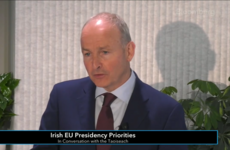
The Taoiseach told journalists today that funds have to be raised to expand public transport services. Asked whether that means fares will have to increase continually to fund increasing expansion of services, he answered in philosophical mode.
“Well, I mean, like historically, you know, nothing ever stands still,” the Taoiseach said.
“We will always endeavour, obviously, to make things affordable.”
Transport users The Journal interviewed in Dublin city centre this afternoon universally gave a thumbs down to today’s announcement.
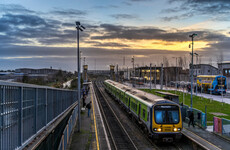
Commuters who travel into Dublin from elsewhere in the country drew attention to limited and unreliable inter-city services. A regular 15-minute wait at Maynooth on the Sligo-Connolly train, and the 9pm hard cut off for services to Limerick were instanced.
Some commuters said they didn’t mind paying once the service was good, which they don’t believe it is. Others said fare increases would only serve to enhance the attraction of the private car for those who can afford to drive into town, and would bring financial pain to those who can’t.
Dubliner Toni Kelly said while she herself is able to avail of the free travel scheme for older adults, people who need to use public transport will have no choice but to absorb fare increases. They may then need to cut back on something else as the daily increments add up.
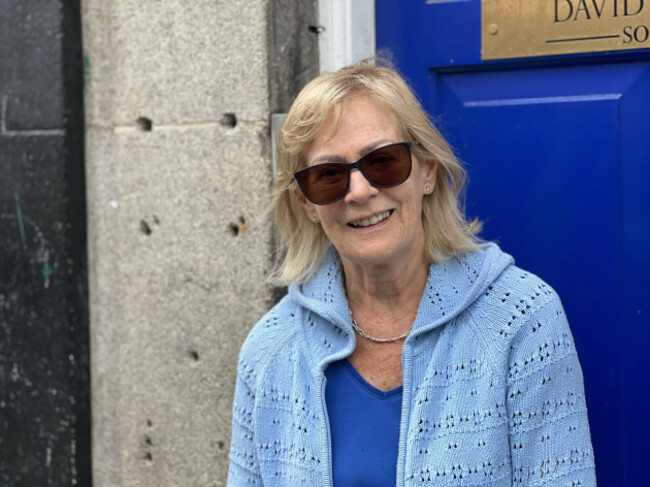
Declan O’Beirne, also living in Dublin, said increasing public transport fares at a time when the capital is struggling with congestion was ridiculous. He added that measures such as the €2 flat fare had made a lot of sense.
“The city is choked,” O’Beirne said. “It’s in gridlock constantly.”
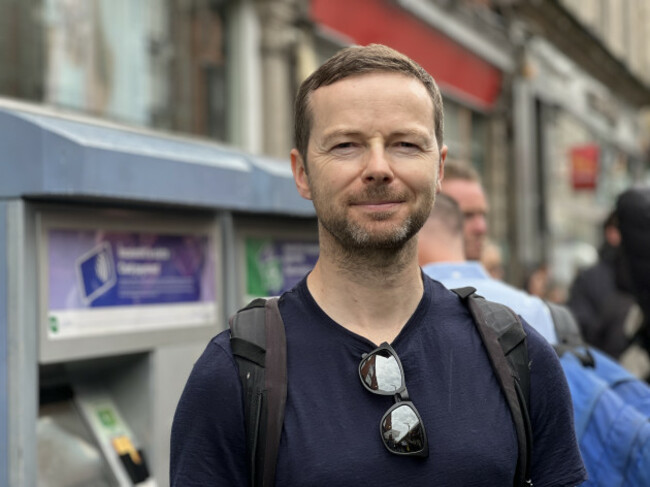
Caulfield, of Trinity College, agrees.
“Our cities have never been more congested, chronically congested,” Caulfield said.
“One of the levers we have to get more people to use public transport is to reduce the cost. Why we’re pushing that lever in the opposite direction is a mystery to me.”
Peter O’Neill, of the Galway Commuter Coalition, said the idea that fare increases are necessary to expand services will not wash with commuters.
“We’re putting the cart before the horse. Regional routes and the ones that intersect [Galway] city and country have not seen expansion,” O’Neill said.
He said that regional routes such as the 424 from Conamara to Galway city are already an unfortunate combination of unreliable and expensive for regular users, at €5.80 each way. Increasing fares further will only make these routes less attractive, he said.

To embed this post, copy the code below on your site











have your say