Sign in. It’s quick, free and it’s up to you.
An account is an optional way to support the work we do. Find out more.
Sign in. It’s quick, free and it’s up to you.
An account is an optional way to support the work we do. Find out more.

In Calling 353, a new series for The Journal, bestselling Motherfoclóir author and podcaster Darach Ó Séaghdha casts a linguistic eye on how we talk about what it means to be Irish, the signs we post to each other about Irishness – and what really lies beneath it all.
This week, a 2025 clip from the TLC show “Match Me Abroad” went viral on social media. It featured a young Irishman on a date with an initially-cheerful American lady called Victoria, and begins with them enjoying some oysters together. Then, very much against the run of play, the Irishman decides to put some tabasco in his eye. It does not end well. Several Irish online citizens were quick to declare that we do not “claim” him.
You may have seen this clip and wondered if being single at the moment is exactly as bad as your single friends say it is. Or perhaps you spied the tabasco bottle, spotted the name McIlhenny on the label, and wondered if there was an Irish connection to this famous product. After all, McIlhenny is one of those solid country names where you can safely guess that a person who bears it has some recent connection to a place (in this case, Donegal).
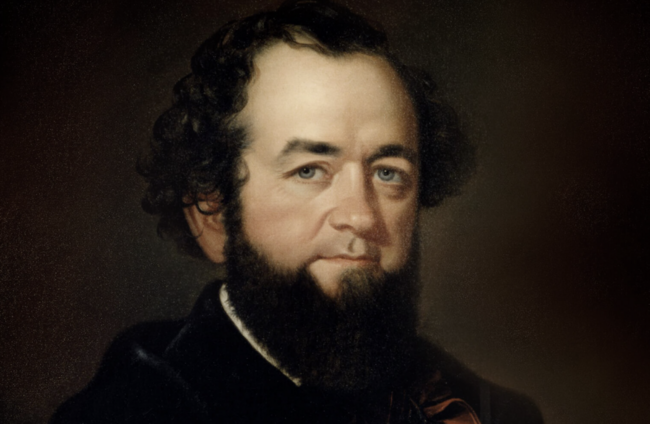
And there’s no doubt that Edmund McIlhenny, the founder of the Tabasco company that bears his name, has a big Irish head.
The question, however, probes at a thought that has haunted me while writing a series of articles about Irish culture and identity such as this is. We like tabasco, we seek an Irish connection. We see that Boy George has composed a pro-war reggae song using environmentally catastrophic AI products, and seek to minimise Mr George O’Dowd’s Irish connection, one that was celebrated before he did all those things he did.
Does everything have to be Irish? Can we not enjoy the Beatles or The Departed or Rihanna or It’s Always Sunny In Philadelphia without culturally photobombing them? Or does a sincere curiosity about the Irish connection invite us to look deeper into a story we think we already know?
As it happens, there is a bit of “the luck of the Irish” in the story of tabasco brand: it all began with a banking crash. The collapse of the Confederate dollar ruined Edmund McIlhenny (born in Maryland but who moved south) who swallowed his pride and took up work on his in-laws’ plantation. Lots of companies like to mythologise their origins stories with a eureka moment, and for the hot sauce we know, the inspiration came from the dinner table of Maunsel White, an Irish-born (hooray!) slave owner (boo!) and politician whose banquets were famous across Louisiana, and who brewed a piquant sauce from peppers he had sourced in the Tabasco province of Mexico.
The McIlhenny Company began business in 1868, at a time when one in five people in Louisiana were originally from Ireland and New Orleans had the largest Irish population in the South. If this surprises you, there is a theory that Irish-American identity in the Southern states in America is not as visible because there was less anti-Irish discrimination in these places (No Irish Need Apply signs were far more common in the north-east), and therefore the cultural stimulus of an obstacle to push against was not there. It’s the grit that makes the pearl, after all.
The story of the “No Irish Need Apply” (NINA) sign has a remarkable place in the folk history of the internet, in how it gives us a fairly inspiration David vs Goliath moment of citizen fact-checking. In 2002, a Professor called Richard Jensen (who worked at Notre Dame and was probably sick to his back teeth of Irish-American “bonhomie”, for want of a better word) published a paper entitled No Irish Need Apply: A Myth of Victimization. In it, he dismissed NINA signs as an exaggerated myth, blown out of proportion by Irish people with a over-indulged sense of grievance.
If you were in university around 2002 you may remember that the internet was in its infancy. Faculty members had to take turns to go “on-line”.
Academic articles and newspaper archives were not easily accessible, and the network of links between topics made possible by Wikipedia had not yet taken shape. By 2015, the internet was a bigger and more navigable place, and that is when a 14-year-old girl called Rebecca Fried was shown the article by her father. Within hours, she had disproven Jensen’s paper using records available to her from a Google search. She went on to have her own paper published in the same academic journal, adding insult to injury (like tabasco sauce in the eye) for the professor.
One prominent champion of NINA as an employment practice was Little Women author Louisa May Alcott, who lived in Boston and who wrote a piece entitled The Servant Girl Problem: How Louisa M Alcott Solves It. In this article she encourages her readers not to hire Irish maids with a veritable buffet of of slurs and stereotypes. This article may not have come to public attention if it was not for Fried’s rebuttal of Professor Jensen’s original article.
Now, 2015 isn’t that long ago, but the memory of going online and quickly gathering the information you want feels like a different time. Between intrusive ads, constant demands for two-factor logins and uninvited AI summaries, it feels like we all have tabasco in our eyes at the moment. But we don’t have to put the tabasco in our own eye, and just like Rebecca Fried, we can start by questioning what’s shoved in front of us.
Darach will be back next Sunday with more thoughts on the words and Irish cultural phenomena that unite us.
To embed this post, copy the code below on your site












have your say