Sign in. It’s quick, free and it’s up to you.
An account is an optional way to support the work we do. Find out more.
Sign in. It’s quick, free and it’s up to you.
An account is an optional way to support the work we do. Find out more.
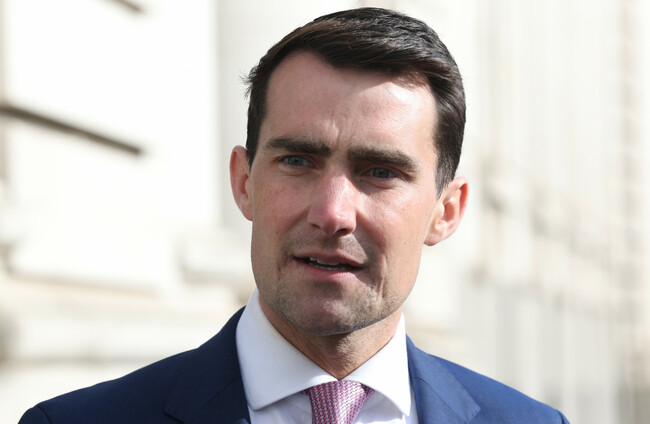
MINISTER FOR PUBLIC Expenditure Jack Chambers has said a decision on whether to postpone the planned carbon tax increase for the second time this year “has not been made yet”, but that it remains “on the table”.
The deferral of the measures was announced in April, following the fuel protests.
At the time, the government said the planned increase due to kick in on 1 May 2026 of €71 per tonne would be postponed until 14 October 2026.
Carbon tax is levied on fuels: coal, peat, home heating oil, natural gas supplies to consumers and, of course, petrol and diesel.
Minister for Climate Darragh O’Brien told The Journal on Saturday that the deferral is “on the table” in upcoming budget talks.
On RTÉ Radio 1′s This Week today, Chambers was asked if the plan was to extend the schedule of increases so that the tax would go up in smaller amounts over a longer period of time.
“There’s been no decision made on this, except to say that we’re conscious, agile and responsive to the pressure that families are under,” he said.
The Fianna Fáil minister said the government is “very conscious” of the impact on energy prices for families across the country, “and that’s why we’re considering that in the round”.
But he said that continuously deferring the tax could impact other spending plans.
“The carbon tax is hypothecated, where we ringfence what it brings in for spending plans on retrofitting, on measures around fuel poverty, and also on the acres and agri environmental scheme.
“If there’s an extended or indefinite deferral of carbon tax, that has an impact on what can be spent on those particular areas in 2027.
“That’s the context in which we have to be careful about any deferral, or if it’s temporary, how we profile the spending plans which are already in the specific budgets.”
Chambers said decisions taken in this year’s budget “have to be sustainable, affordable and safe into the medium to long-term”, but highlighted some areas where the government want to address.
“On the cost of living, we want to help support and reward work across the economy. That’s why there’ll be a significant income tax package, but one that’s moderate overall, because we have to do what’s affordable and safe.”
He also pointed to the cost of childcare for young families as an area that will receive some focus.
“But there will be trade-offs across government, and I’m very clear from a public expenditure perspective, that we also need to prioritise reform, efficiencies and productivity within the public service.”
In a report this week, the Irish Fiscal Advisory Council (Ifac) said the health overspend rose from €0.4 billion to €0.7 billion in August, putting it on track to be the second-largest health overspend in a decade.
Chambers said there has been “ineffective implementation” by the HSE of controls that were agreed and were directed by the government in the last few months.
“I’m very clear that there’s going to have to be further corrective action taken within the HSE about ensuring that there’s a strengthened control environment,” he said.
He said there was a “mixed picture” across different regions, and that while some had moderated their spending over the summer months, others have worsened.
Asked what these corrective actions would be, he said both he and Minister for Health Jennifer Carroll-MacNeill would introduce “additional controls” before the end of the year to ensure that there is “greater financial management and controls with the HSE”.
Chambers said “the debate is over about whether we’re sufficiently funding the public health system”, highlighting that the spending would be about €28 billion this year.
“In certain regions – we’ve obviously developed a more autonomous model which has been introduced in the last 12 to 24 months – some have not upheld the quality of financial management which is acceptable to me and the minister for health.”
He would not specify which regions, but he said an overrun will affect what is possible to further invest in in the budget.
Earlier this year, Chambers introduced a levy of €446 million on other departments to try to claw back education overspending. But this will not apply to health. “What we’re doing in the Department of Health is trying to drive greater corrective action,” he said.

To embed this post, copy the code below on your site










have your say