Sign in. It’s quick, free and it’s up to you.
An account is an optional way to support the work we do. Find out more.
Sign in. It’s quick, free and it’s up to you.
An account is an optional way to support the work we do. Find out more.
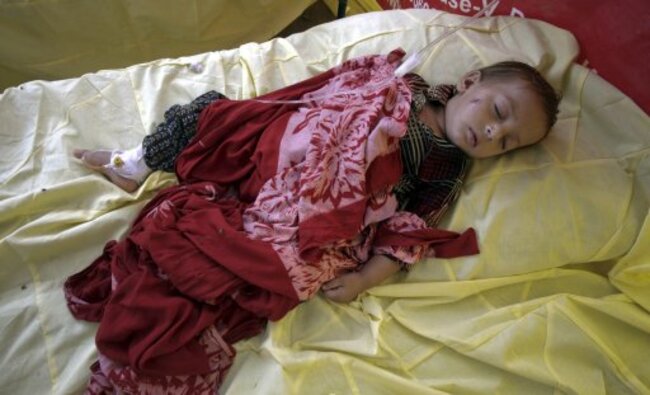
A SENIOR UNICEF official has described the lack of support displayed by the international community for Pakistan in its time of need as “quite extraordinary”.
Director of emergency operations for Unicef in New York, Louis-George Arsenault, said that the country had suffered the worst humanitarian crisis in decades, according to reports by the BBC.
Today Pakistani officials are meeting with members of the International Monetary Fund (IMF) in Washington, to review the country’s budget and establish the best course of action.
So far 1,600 people have been killed and 16.8 million affected by the catastrophe. Speaking on RTÉ radio on Sunday, Pakistan’s ambassador to Ireland, Naghmana Hashmi, warned that the consequences of the disaster are extremely grave.
Hashmi said that millions of people are certain to die without help. She pointed out that children are likely to be the worst hit victims, as their young bodies are most vulnerable to injury, malnutrition, and disease.
The World Health Organization (WHO) has reported that diseases are spreading in affected areas, with cholera causing a wave of deaths.
Cholera is water-borne disease that causes severe dehydration and death if treatment is not promptly given. It will be a major cause of death in Pakistan without fresh drinking water being delivered to survivors.
The UN has aid that it has so far raised almost 70% of the $460m (€363m) it has appealed for, and added that they received more in the second week after the disaster than the first, which is very unusual.
This video from Al Jazeera shows the devastation and chaos caused by the flooding:

To embed this post, copy the code below on your site













have your say