Sign in. It’s quick, free and it’s up to you.
An account is an optional way to support the work we do. Find out more.
Sign in. It’s quick, free and it’s up to you.
An account is an optional way to support the work we do. Find out more.
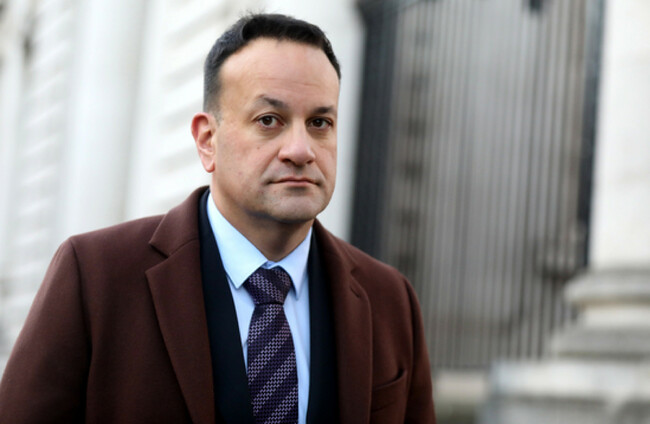
TAOISEACH LEO VARADKAR has said that the “State didn’t have a leg to stand on” following a decision not to pay disability allowances to 12,000 vulnerable people in residential care.
Last night, RTÉ Investigates revealed that 12,000 vulnerable people were denied Disabled Persons’ Maintenance Allowance (DPMA) and that legal advice provided to the Government showed that if they took a case against the State, they were likely to succeed.
According to the report, a secret Cabinet memo said that the State could be liable for claims of up to €700 million if cases were taken.
Speaking during Leaders’ Questions, Varadkar said that this particular case was different from the legal strategy around nursing homes saying that it was “different in substance” due to different legal advice provided.
“The legal advice in relation to DPMA was that the state didn’t have a leg to stand on,” Varadkar told the Dáil, adding that the issue had been resolved in 2009.
However, he said that the Government would examine the issue over the coming weeks.
He added that while the Government had a responsibility to “do what’s right”, it also had a responsibility to protect the taxpayer and that a balance had to be struck between the past and future issues.
Sinn Féin leader Mary Lou McDonald labelled the strategy taken by the State on the DPMA issue was “cold and heartless”.
Speaking to RTÉ’s Morning Ireland, Minister for Children, Equality, Disability, Integration and Youth Roderic O’Gorman said that in both the DPMA case and the nursing home case, the need to protect State resources had “obscured” the need to protect the vulnerable.
“When the State is subject to legal actions, when it adopts legal positions, I think it’s really important that those positions are influenced by the obligation that the state has to some of its most vulnerable citizens,” O’Gorman said.
“From what we’ve heard and indeed from the example on the nursing homes, I think, perhaps, that central obligation of the vulnerability of the people we’re dealing with here has been obscured by saving State resources approach and we can’t have that.

To embed this post, copy the code below on your site














have your say