Sign in. It’s quick, free and it’s up to you.
An account is an optional way to support the work we do. Find out more.
Sign in. It’s quick, free and it’s up to you.
An account is an optional way to support the work we do. Find out more.
EVER SINCE THE Journal started back in 2010, our readers and their thoughts have been fundamental to our coverage of the news. Here’s what you’ve been saying to us this week. Have something to say? Send a mail to letters@thejournal.ie. You can see our letter guidelines here.
[Ireland's welfare payments far from enough to keep people out of poverty]
I wish to remind people that there are some people who can not work.
I used to work. I have a degree in Equine Science from University of Limerick (UL) and I’m also a qualified Accounting Technician. I worked in EMEA for a multinational company. However, after almost 10 years working, I got sick. Sickness happens.
I tried to stay in the workplace and reduced my hours, but I kept falling asleep at my desk, I had to sleep on the way home from work by pulling over, as the journey was too much for me – I live in a rural location, so public transport was not an option. I mis-posted money, I messed up month end, I deleted important emails without replying etc.
I tried for five months to keep working, only I was getting sicker and sicker and then given my mistakes, I was about to be fired, so I had to quit. I am on disability allowance ever since.
I had specified illness protection cover, only it refused to pay out as my illness ME was not specified under my cover.
I’m married, I have a mortgage and bills. Social welfare gives me €102 a week via disability allowance, and I’m audited every three years (at which point SW dock me, as my husband’s wage naturally goes up over those three years via wage increases, and the more he earns, the less I’m entitled to. The lowest I’ve been docked to date is €66 a week… then the budget happens, and I get a small increase until the next audit occurs). Between my husband and I, we live off €2,500 a month. As I say, people get sick, and when they do, they find themselves living off a system that barely meets most needs.
Marie Hanna Curran,
Co Galway
[Invasive species are spreading across Ireland. So why is the response so inadequate?]
Dear Editor,
A recent opinion piece by Orla Ní Dhúill highlights the lack of government action on the growing issue of invasive species.
However, it fails to miss one crucial detail: there is no existing definition for “invasive species” in Irish legislation.
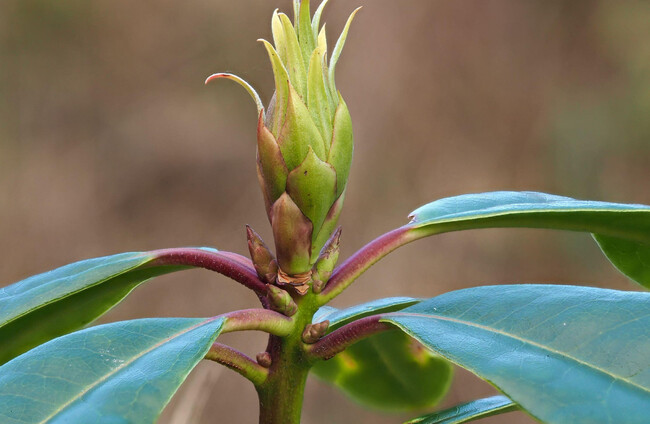
Species like Rhododendron ponticum, giant hogweed and grey squirrel are what we would commonly call “invasive” but are actually simply the species listed by the Third Schedule of S.I. No. 477/2011.
The vast majority of non-native species, including some of the most harmful species such as H. fraxineus (the cause of ash dieback) or P. infestans (the cause of potato blight) are not included, as the Third Schedule only covers plant and animals, not fungi or water molds.
Orla Ní Dhúill rightly points out that the scope of the NBDC’s operations and responsibilities is unclear, but what’s even more concerning is that the NBDC has its own definitions of “non-native” and “invasive” (available on Invasives.ie) that it seems to use interchangeably in its own documentation (e.g., Trends in introductions, 2014).
The NBDC also has its own list of non-native species that somehow includes Phytophthora ramorum (sudden oak death) but not Phytophthora infestans (potato blight).
Its risks assessments also place sycamore at 15 (of 25) points of potential risk to damage the economy and environment, and places giant hogweed at 19 points. Apparently giant hogweed, which can cause permanent blindness, is only 16% more dangerous than sycamore, a common park tree.
What’s needed more than government action on invasive species is a clarification on what we’re even talking about when we use the term “invasive”.
Pedro Roche,
Co. Wexford
When floods destroy homes, heatwaves claim lives and droughts devastate harvests, we often describe these events as natural disasters. Oxfam’s new report, ‘Disaster Divides’, arrives ahead of COP31 and shows a very different reality.
The main takeaway is that climate disasters are increasingly the result of inequality, and they disproportionately punish those who have done least to cause the crisis.
According to the report, the world’s richest 0.1% emit more carbon pollution than the poorest 3.5 billion people combined – while many of that 0.1% are also investors in polluting industries.
Scientists at Imperial College London and the London School of Hygiene and Tropical Medicine recently estimated that over 50,000 people died prematurely because of high temperatures across 854 European cities between June and August this year, making it Europe’s deadliest summer heat on record.
By 2050, as many as one billion people could be displaced by the climate crisis, most of them in the Global South. Oxfam’s research also finds that deaths from flooding are seven times higher in more unequal countries. It can be hard to put faces to the numbers, but it’s crucial to be aware that it is ordinary families who pay the price.
Perhaps most disturbing of all is that some of the same wealthy investors and corporations helping to drive climate breakdown are also profiting from the aftermath. Oxfam’s new “Destroy & Rebuild Index” reveals how major investors are making money both from polluting industries and from the recovery efforts that climate disasters make necessary.
After floods, storms, fires and other disasters; governments, insurers, development banks and aid agencies spend enormous sums rebuilding homes, infrastructure and services. Climate-related droughts, floods and crop failures reduce food supplies and push up prices. Large agribusinesses and investors can benefit from increased market volatility, while low-income households are pushed deeper into poverty.
Ireland may not be among the world’s biggest emitters, but we are not spectators. As a wealthy country with a long-standing commitment to international development, we have a responsibility to stand with communities experiencing the worst impacts of a crisis they did not create. We are also experiencing our own warning signs through increasingly frequent storms, disastrous flooding – particularly in Midleton, Co. Cork – and rising costs associated with extreme weather.
That means showing leadership at COP31 and beyond. Ireland should increase its climate finance contribution to at least €500 million annually, provide dedicated support for loss and damage, and champion grant-based finance that helps vulnerable countries adapt without sinking deeper into debt.
We should also ensure that those ultra-wealthy individuals and corporations most responsible for pollution contribute more towards the solutions. Major polluters must pay their fair share in taxes.
The climate crisis is often presented as an environmental issue, but it is also an issue of injustice. If we are serious about tackling the climate crisis, we must be equally serious about tackling the extreme inequalities that are driving it and exacerbating its impact.
A just transition away from fossil fuels domestically and internationally is the only way forward.
The floodgates have already opened – but it’s never too late to take action.
Would you like to have a letter published? See guidelines for submission here.

To embed this post, copy the code below on your site














have your say