Sign in. It’s quick, free and it’s up to you.
An account is an optional way to support the work we do. Find out more.
Sign in. It’s quick, free and it’s up to you.
An account is an optional way to support the work we do. Find out more.
THE BLIND SPOT. Nature’s way of saying ‘this driving lark is far too easy, we need to up the challenge a little’.
All drivers will be familiar with the tiny patch of mischief that their mirrors just can’t quite cover. All joking aside, blind spots cause accidents.
The solution? A pair of x-ray glasses it seems.
That’s what the makers of the Mini Cooper (now owned by BMW) have come up with anyway.
When we’re talking about x-ray vision, what we mean is ‘augmented vision’, something akin to Google’s ill fated Google Glass.
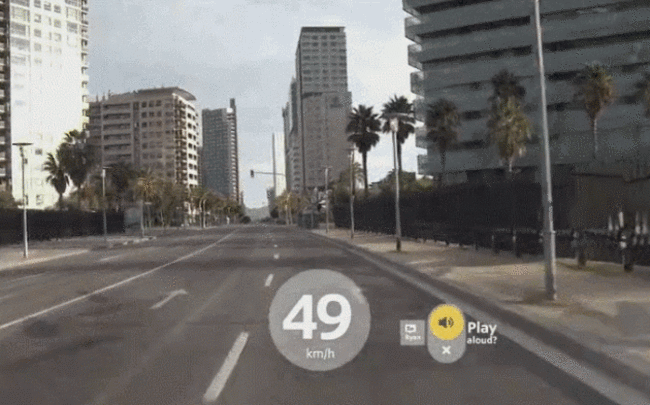
The idea is that a driver wears a pair of (relatively) light goggles (basically two mini-HD displays) while motoring, which work in tandem with the car’s onboard sensors and cameras to produce both a heads-up display (showing GPS directions, speed etc.) and, well, blind-spot-eliminating x-ray vision.
Which looks a little something like this:
It would almost make a near-death experience worthwhile to avoid it in such a fashion.
The headset can also be used to park effectively, both by sizing up spaces accurately, and by letting you see through your car to gauge how close to the kerb you are.
The goggles look like this:
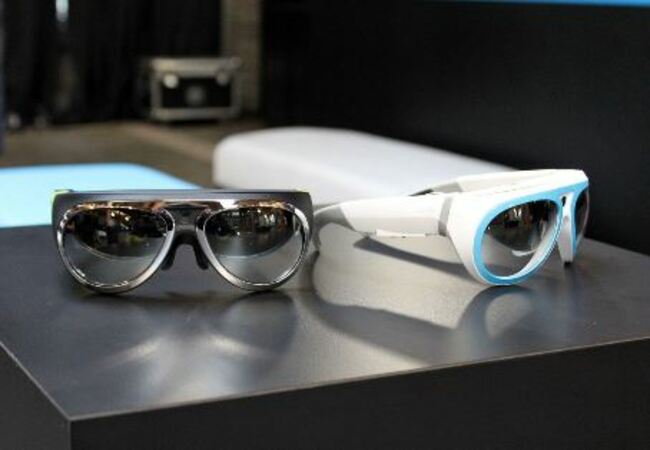
Qualcomm, the mobile technology experts who are leading the project in conjunction with Mini, say the driver’s headset is just the beginning, with a ‘long-term vision of a head-up display for your life, not just your car’.
The glasses are still very early in development so don’t expect to be able to pick up a set in Dixon’s anytime soon.
Having said that, it looks like the future of practical wearable technology is almost here.
With reporting from Business Insider

To embed this post, copy the code below on your site
















have your say