Sign in. It’s quick, free and it’s up to you.
An account is an optional way to support the work we do. Find out more.
Sign in. It’s quick, free and it’s up to you.
An account is an optional way to support the work we do. Find out more.
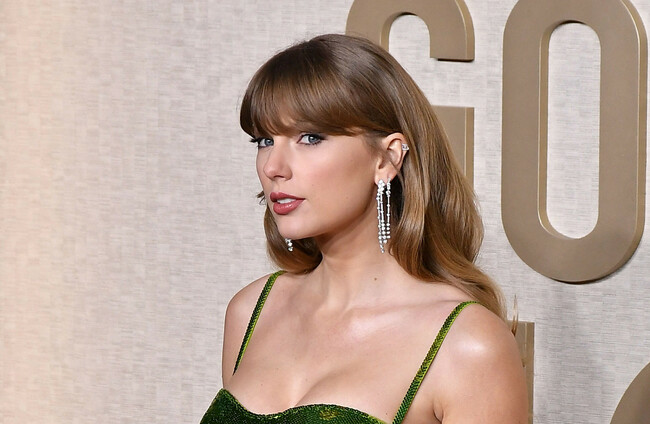
A FIANNA FÁIL Senator has warned that the public needs to be vigilant to misinformation and deepfakes ahead of the upcoming general election.
And while Senator Malcolm Byrne said he “laughed” at Michael Healy-Rae’s recent use of a Taylor Swift deepfake, he added that it “raises attention around the use of deepfakes”.
Deepfakes are digitally manipulated images, video and audio that are designed to create fake material featuring the likeness of an individual, often to misrepresent their views or speech.
On Monday, Healy-Rae posted a deepfake video to X which appeared to show popstar Taylor Swift stating that if she could vote in Ireland, “it would be for only one man, that’s Michael Healy-Rae”.
“You know what, the Tay-Tay loves the Healy-Rae,” added the deepfake.
Some going to wake up to the news of an endorsement from Tay Tay herself. I mean haters will say it's fake (and they'd be right) but I'll just shake it off! Like, I'm not looking for a love story and don't want any bad blood.. I just want your number 1 vote when the time comes! pic.twitter.com/FgxUlpTjUo
— Michael Healy-Rae (@MHealyRae) October 28, 2024
The video posted by Healy-Rae is a crude, unconvincing deepfake and the Independent TD for Kerry isn’t trying to trick people into believing it is an actual endorsement.
“I mean haters will say it’s fake (and they’d be right) but I’ll just shake it off!” writes Healy-Rae in the caption accompanying the post on X.
“Anyone who’s looking would realise that it’s not Taylor Swift endorsing a particular candidate,” Malcolm Byrne told The Journal.
“But the worry I have is that we could be in the middle of an election campaign, and a credible deepfake could emerge of a political leader appearing to say something controversial.
“Because of the way social media operates, the deepfake will be shared thousands of times before a statement of fact could be out there and it would have the potential to impact on an election campaign.”
Byrne noted that AI images have been used in recent elections in Argentina.
The campaign team of Argentina’s presidential candidate Sergio Massa fed the following promt into an AI program prior to last year’s election: “Sovietic Political propaganda poster illustration by Gustav Klutsis featuring a leader, masssa, standing firmly.”
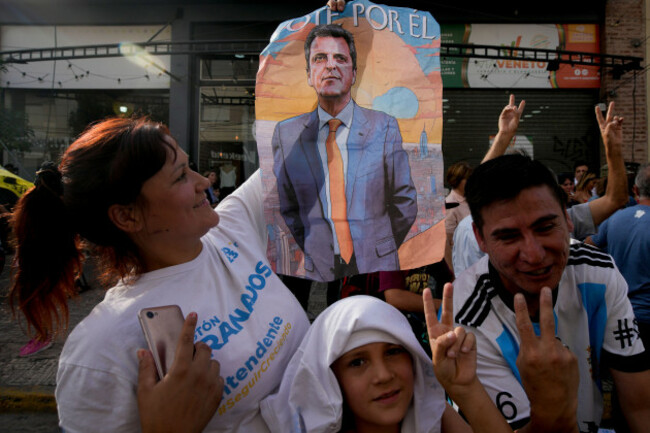
“The image exudes authority and determination,” the prompt continued.
In the general election last year to become president of Argentina, Massa won 36.6% of votes to Javier Milei’s 29.9%, but was defeated by Milei in the November run-off.
Byrne warned that AI has the potential to “supercharge” misinformation and disinformation around elections.
“We tend to trust what we see and read, and particularly when more and more convincing deepfakes are created, that could have an impact on an election,” said Byrne.
“There has to be much more public awareness around misinformation, questioning sources, and the potential of deepfakes.”
Byrne said he has spoken to a number of tech platforms and added that they will “do what they can” to combat AI misinformation during the general election campaign.
However, he also said there is a “big obligation on the Electoral Commission to inform people about this issue”.
Byrne also pointed to the broadcast moratorium as another “critical factor”.
The Electoral Commission has recommended that the broadcast moratorium be removed from future referendums.
The broadcast moratorium means radio and television broadcasters cannot report on elections or referendums from 2pm the day before polls open until the close of polls.
This does not apply to online media or social media.
“If something that is patently false is being distributed widely on social media in the immediate hours before people go to the polls, at present under the moratorium, broadcast media can’t mention it,” said Byrne.
He has called for a “real debate around how we respond to AI as a society” to ensure that the “necessary safeguards are in place”.
“This is one of those big picture topics,” said Byrne, “and I’m always surprised that it doesn’t feature in a big way given that the next Government will have to deal with it.”
Following the first, and only, US presidential debate between Kamala Harris and Donald Trump, Taylor Swift addressed AI-generated images shared by Trump that falsely depicted Swift endorsing his campaign.
She said it “conjured up” her fears around AI and misinformation.
When asked if Healy-Rae’s use of Swift’s likeness was misguided given the popstar’s apprehension around AI deepfakes, Byrne replied that he didn’t think it was.
But he added: “If somebody created a credible deepfake of Michael Healy-Rae declaring that himself and his brother, Danny, were going to become vegans and actively campaign against climate change, I’m not quite certain it would be seen in as much of a humorous light.
“I laughed at it, but it does show that we are probably going to see more deepfakes.”
Byrne also noted that a number of “prominent personalities in Ireland have been purported to be advertising particular products online which they certainly weren’t associated with”.
In one instance, video footage of an RTÉ interview with Sinn Féin leader Mary Lou McDonald was turned into a deepfake which falsely appeared to show McDonald talking about a “successful project” which prominent Irish celebrities had used to “multiply their assets”.
In a statement to The Journal, the Electoral Commission said that “a fundamental principle of any election is that the citizens have confidence in the democratic process and trust the result”.
The spokesperson added that in advance of the general election campaign, the Electoral Commission “will seek to publish suggested guidance for parties, candidates and platforms in respect of the standards expected during these Dáil elections, including ‘deepfake’ content”.
“An Coimisiún will also be running our own public awareness campaigns to highlight these issues to voters directly, as well as the need for each of us to identify our own trusted sources of information for any issues associated with the election,” added the spokesperson.

To embed this post, copy the code below on your site










have your say