Sign in. It’s quick, free and it’s up to you.
An account is an optional way to support the work we do. Find out more.
Sign in. It’s quick, free and it’s up to you.
An account is an optional way to support the work we do. Find out more.
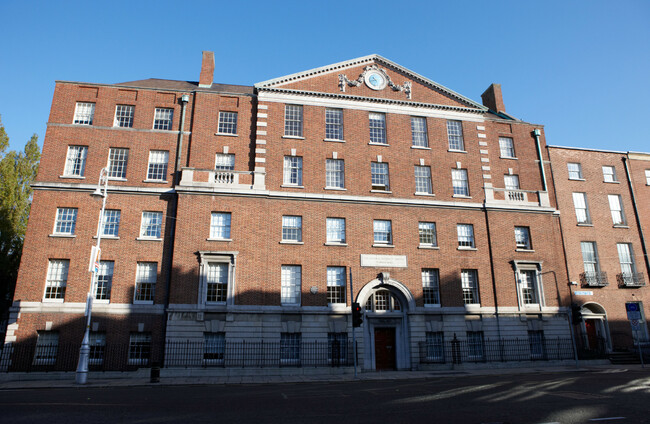
THE NATIONAL MATERNITY Hospital is able to ease restrictions ahead of the Rotunda due to a large amount of development in recent years, Peter Boylan has said.
The former master of the National Maternity Hospital (NMH) in Dublin was speaking after the hospital yesterday evening announced that it will now allow unrestricted visits to inpatients by one nominated partner.
In a statement, the hospital said: “Our visiting guidelines are under constant review as we strive to do our very best to help protect women, babies and staff, while providing a safe environment in line with government guidance.”
As part of the updated advice, visiting will be unrestricted for one nominated partner for women giving birth or in labour.
Visiting will also be allowed to a nominated partner who can visit during the 20-week scan for pregnant women, with the same rules applying for the early pregnancy assessment unit.
There has been criticism in recent months of the different approaches taken by maternity hospitals, with some found not to be fully compliant with official guidance – having tighter restrictions on partner access during labour and at pre-natal appointments.
Earlier this week, the Master of the Rotunda Maternity Hospital Professor Fergal Malone said restrictions at the facility could be eased if more patients and their partners were vaccinated.
Professor Malone said that, for several months, the Rotunda has been significantly exceeding the HSE guidelines of 30 minutes of visiting time per day, by allowing patients up to six hours of visiting each day, and up to nine hours at weekends.
However, he added that in certain parts of the hospital, particularly the old main building, which dates back to 1757, there is no ventilation and there isn’t enough space to allow large numbers of people to sit together safely.
⬇️Visiting guidelines update
— The National Maternity Hospital (@_TheNMH) August 12, 2021
Our #visitingguidelines are under constant review as we strive to do our very best to help protect women, babies & staff, while providing a safe environment in line with government guidance.
Visit https://t.co/tvnMxJiCBf for full details. Thank you pic.twitter.com/xkb9UWUlf0
‘Fundamental differences’
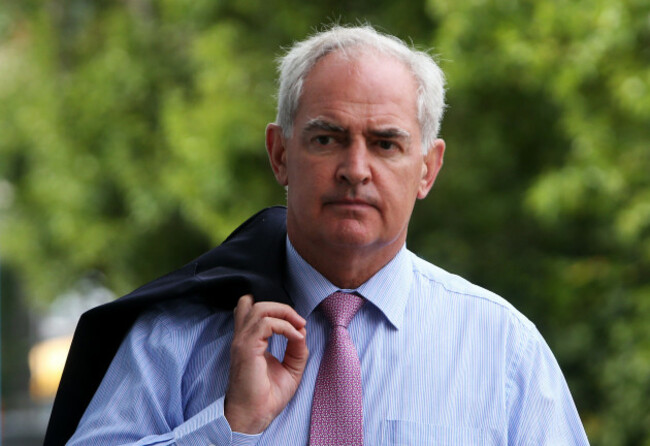
Speaking to Newstalk Breakfast, Boylan explained that there are “some fundamental differences” between the Rotunda and the NMH.
“The Rotunda is 275 years old, whereas the National Maternity Hospital – which was built in the 1930s and the 1970s – has had a huge amount of development in recent years,” Boylan said.
“There’s a new neonatal intensive care unit with a lot of single cubicles, there’s new labour rooms – and more coming on stream this year – new operating theatres, a new emergency department,” he said.
Boylan noted that the average age of women attending the Rotunda is 27, whereas in Holles Street it’s 34.
“More than 70% of women attending Holles Street have been vaccinated, whereas we heard from Professor Malone – the Master of the Rotunda – only 40% in the Rotunda [are vaccinated],” he said.
“Also there’s approximately 2,000 more deliveries in the Rotunda compared to Holles Street.
“So there’s a lot of reasons for restricting visits the way they have to do in the Rotunda”.
Boylan did, however, say compromises could be made in a number of areas.
“I note, with Holles Street for example, if somebody’s having a 20-week anomaly scan the partner waits until the woman is called in for her scan and then comes into the hospital.
“And that seems like a reasonable compromise in terms of not over-crowding the waiting room, but also allowing the partner in”.
‘Long overdue’
Campaigner Linda Kelly, of the union Forsa, who herself gave birth under Covid-19 restrictions said the announcement regarding the NMH was “really welcome and long overdue”.
“I think for women who are attending other hospitals in other parts of the country, they will find the news very very tough,” Kelly told RTÉ Radio.
Yesterday evening, HSE chief executive Paul Reid had warned that it will be “impossible” for some hospitals to fully comply with the guidelines.
He said that maternity hospitals in Ireland have “very real safety concerns”.
Reid said that the particular design and infrastructure of some maternity hospitals, including the Rotunda in Dublin, made it very difficult to fully comply with all HSE guidelines.
“We have asked the hospitals to be up front and communicate with us when they do a risk assessment,” Reid told a HSE briefing yesterday.
The latest HSE figures indicate that 14 out of 19 hospitals will be “fully compliant” with all guidelines by this weekend, HSE national director of the acute hospitals division Liam Woods told the briefing.
Woods said: “Most maternity hospitals are reporting as compliant with all requirements, including the extended ones. There are some exceptions.
“Of the 19, 14 will be fully compliant by this weekend. There’s a couple where they’re making physical space changes.
“We’ve two or three sites that will continue to have physical infrastructure problems,” he said.
Includes reporting by Press Association

To embed this post, copy the code below on your site












have your say