Sign in. It’s quick, free and it’s up to you.
An account is an optional way to support the work we do. Find out more.
Sign in. It’s quick, free and it’s up to you.
An account is an optional way to support the work we do. Find out more.
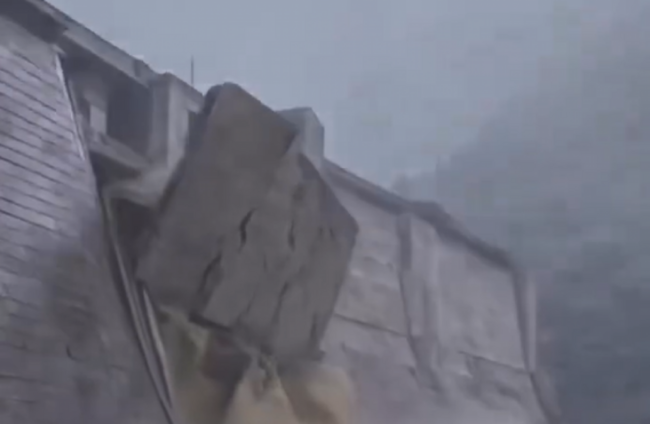
LAST UPDATE | 1 Sep
AI-GENERATED FOOTAGE HAS been posted online where it has been captioned with false claims that it shows the recent floods in Nepal and Tibet.
Separately, old videos from previous floods in Nepal, and Montana in the United States, as well as of a glacier collapsing in Chile, have all been reshared along with false descriptions that they show the recent flooding.
More than 1,000 people are dead and 4,400 remain missing according to Nepali and Chinese officials, following flash floods believed to have been caused by a glacial collapse in the Himalayan region.
However, some AI-generated clips appearing to show dams collapsing have been shared online, often alongside claims that they show the beginning of the flood, or proof that the flood was caused intentionally, or was the fault of poor construction techniques.
One of these clips appears to show a military jet flying above a dam shortly before an explosion bursts from its base. The clip goes on to show a settlement beyond the dam being destroyed by floodwaters.
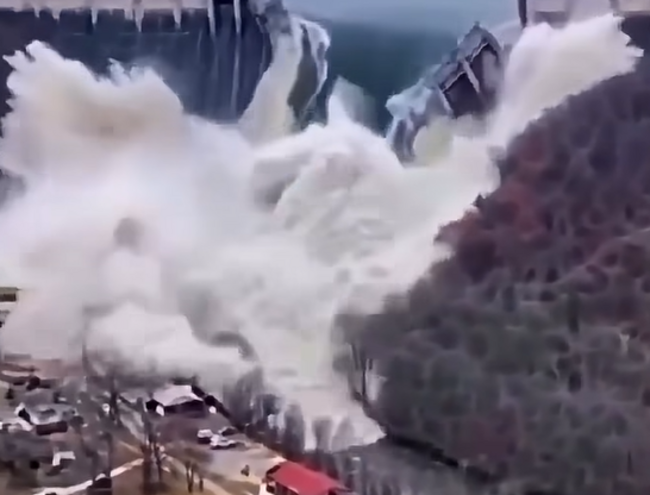
One such post, which has been viewed more than 2,100,000 times since being posted to Facebook on 27 August, claims that this is the real cause of the flooding.
In reality, that clip is old and computer-generated. Lead Stories traced a version of the video that was posted to Facebook in May, months before the flooding.
Two other clips that appear in posts together depict a dam dramatically collapsing, before floodwaters rage down onto a settlement below.
These clips were included in a compilation of flood footage, some of which is real and verified, and posted to the social media of Daily Times Nigeria. Their 27 August Facebook post that includes the compilation has been viewed more than 8,200,000 times.
However, these clips include tell-tale signs of being generated by AI. Although damage to dams has been reported during the floods, these do not match the catastrophic failure of a dam wall as shown in the video.
The first clip appears to be filmed on a road that appears to have collapsed to either side. A number of cars and people are on the road.
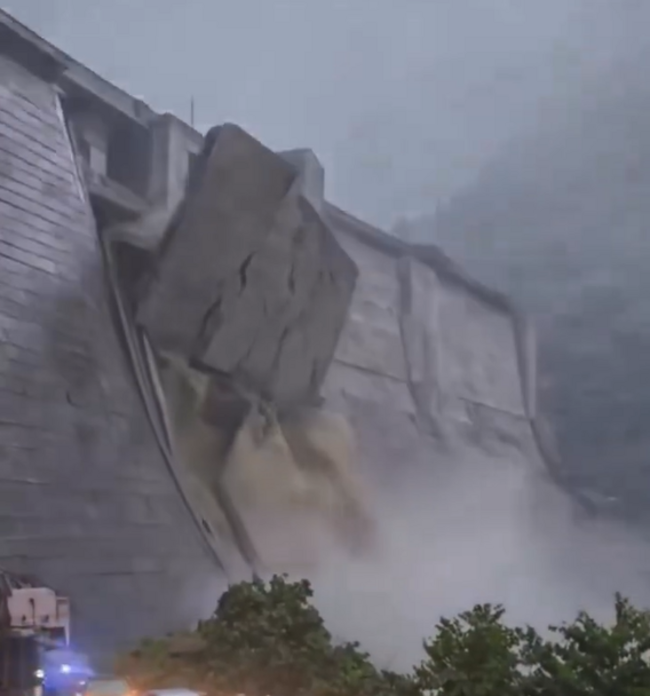
There are multiple indications that this is a fake video, including a miniature car, the wrong style of licence plates, and nonsensical electrical poles with wires running into a cliff. However, most tellingly, one of the people on the road briefly grows a second head, shudders, and then merges back into one person again as the dam collapses.
The second clip in this series appears to show a town being destroyed by the floodwater coming from a dam, seen in the background. The layout of the dam in this clip is different from that in the first.
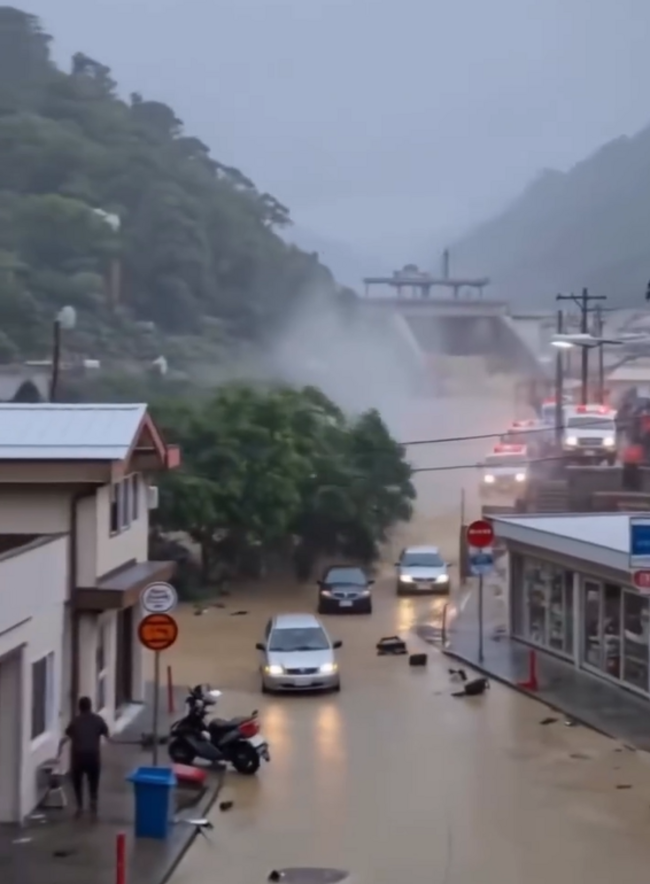
But, again, there are tell-tale signs that the video is AI-generated, including trees dissolving into the water and parts of road signs being dragged by unseen forces off-screen before being hit by floodwater.
These clips have also been cited in posts that seek to blame the flooding on dam collapse.
X posts with millions of views describe the flooding as being a “man-made disaster” caused by “reckless engineering”, and that the official explanation for the catastrophe — a glacial collapse — has been put out by China to shift blame elsewhere.
Other footage falsely purporting to show recent flooding in the region are real videos, but misrepresent where and when the videos were filmed.
One Facebook post viewed more than 4,300,000 times since being posted on 26 August shows floods rush past a giant golden Buddha statue, with its base submerged in the water.
The video is in fact from Nepal — specifically the north of Bharatpur city.
However, the footage is not from the recent floods and has been on YouTube since at least 2024.
https://www.youtube.com/shorts/I_AliFdgNl8
Other footage appears to show the glacier that caused the flooding. One video, viewed more than two million times since being posted to a page of a Mexican news account on 27 August.
It shows a glacier slowly collapsing into a body of water.
However, again, it is not from recent floods. The video has been online since November 2025, and is described as being filmed in Torres del Paine National Park in southern Chile.
https://x.com/CRCiencia/status/1993251060610158792
In another video, posted to Facebook by a man describing himself as a pastor, rushing waters tear away at a riverbank, exposing the foundations of a house that now overhangs the deluge.
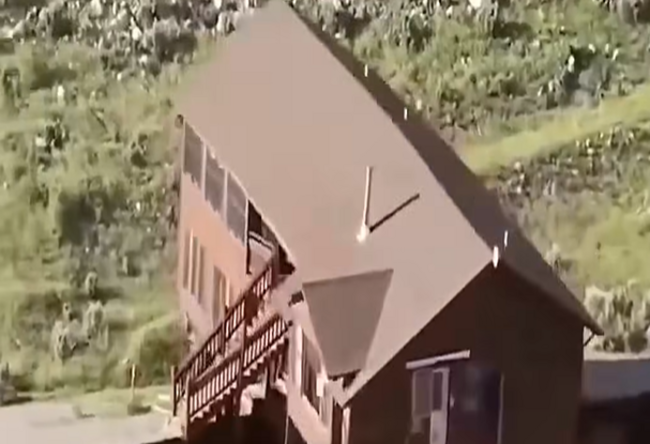
The footage, featuring an onscreen message saying it is “apocalyptic”, has been viewed more than 2.9 million times since being posted on 27 August.
The footage is neither new nor from Nepal.
Instead, it shows a house being swept into the Yellowstone River in the US state of Montana in 2022.
Many of these videos were likely shared without malice. However, by misrepresenting the scale of the floods they risk giving viewers a dramatically wrong understanding of a very serious situation, as well as leaving a misleading impression of what to expect a disaster situation to be like.
The Journal’s FactCheck is a signatory to the International Fact-Checking Network’s Code of Principles. You can read it here. For information on how FactCheck works, what the verdicts mean, and how you can take part, check out our Reader’s Guide here. You can read about the team of editors and reporters who work on the factchecks here.

To embed this post, copy the code below on your site

















have your say