Sign in. It’s quick, free and it’s up to you.
An account is an optional way to support the work we do. Find out more.
Sign in. It’s quick, free and it’s up to you.
An account is an optional way to support the work we do. Find out more.
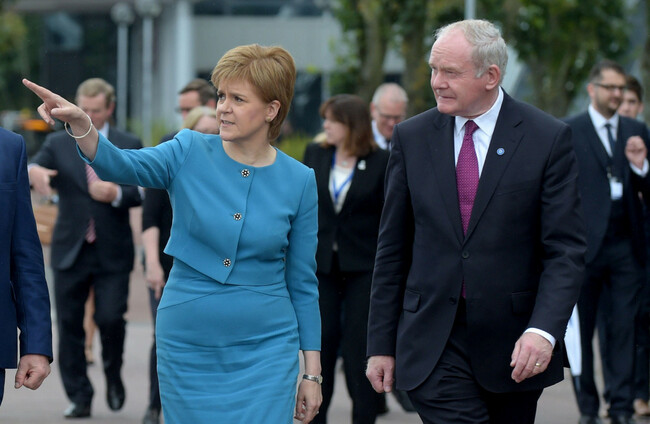
FORMER SNP LEADER Nicola Sturgeon has said her “instinct” is to back a united Ireland.
She also praised former Sinn Féin Northern Ireland deputy first minister Martin McGuinness for his role in the peace process.
She was speaking to BBC Radio Ulster upon the release of her memoir Frankly.
“I get a bit prickly sometimes if people from outside Scotland start to say what’s best for Scotland,” said Sturgeon.
“So my political instinct would be in favour of a united Ireland.
“I’m a supporter of Scottish independence, I think Westminster governance has not served Scotland well.
“I don’t live in Northern Ireland, but I’m not sure that it’s served Northern Ireland that well.”
She added that Brexit revealed the “downsides of Westminster Government”.
Meanwhile, she writes in her memoir that she experienced an unexpected bond of affection with McGuinness.
“I know that statement will please some people and displease others,” said Sturgeon.
“It’s just a reflection on my personal experience of Martin, I got on personally well with him. He was always really kind to me.”
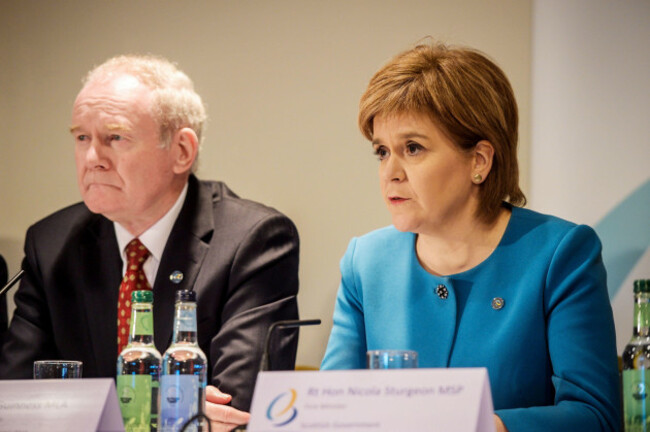
She added that she saw “up close how genuinely committed he appeared to be to the peace process in Northern Ireland”.
“We were both something like outsiders in terms of the sort of politics that we were involved in at the time, there just appeared to be a bond of affinity between us”.
Sturgeon added that McGuinness “was one of the warmest people I ever met”.
At the age of 21, McGuinness was the second-in-command of the IRA in his home city of Derry and in 1973, during the Troubles, he was jailed after being arrested near a car that contained explosives and ammunition.
He was also convicted in the Republic of Ireland for IRA membership.
Asked about his IRA membership, Sturgeon said: “Or course I would have these thoughts in my head, that contradiction, that conflict between the guy that I was interacting with and the accounts of his past.
“So all of that ran through my head as well, I think it would be absurd if that hadn’t been the case.”
She added: “Obviously Northern Ireland had moved on by the time I was interacting with Martin McGuinness.
“People in Northern Ireland had decided to put enmity aside and tried to work together and therefore I was encountering that version of Martin McGuinness.
“To me, he was absolutely committed to the peace process and he presented to me as somebody who was really kind.
“He had the twinkliest eyes of almost anybody I had ever met, but yeah you would always think of that contradiction.”
Sturgeon added: “If you take the view that you can’t ever move on from conflict and civil war, then people stay mired in that forever and ever and ever.
“Martin and others on both sides of the conflict made a conscious decision to try to leave that behind, at no doubt great personal risk to themselves.
“In any society, in any conflict, you have to have people who are prepared to draw a line in the sand and decide that what had gone before was no longer what they wanted to be and do.
“And if that hadn’t happened with people like Martin, then Northern Ireland would still be deep in a conflict that nobody here or anywhere else wanted to see.”
Meanwhile, Sturgeon said it was difficult to build a relationship with former DUP leader Arlene Foster.
She added that the “warmth” between Ian Paisley and Martin McGuinness was “replaced with a simmering tension” when Foster became First Minister in 2016.
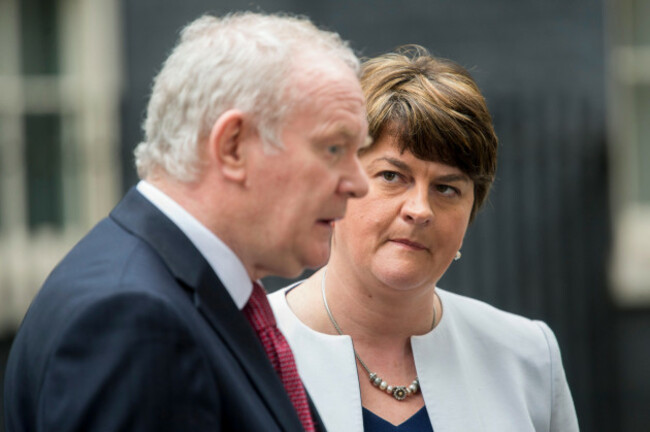
Sturgeon also said there was a “coldness” to Foster and that differences in opinion regarding the United Kingdom were “difficult to overcome”.

To embed this post, copy the code below on your site












have your say