Sign in. It’s quick, free and it’s up to you.
An account is an optional way to support the work we do. Find out more.
Sign in. It’s quick, free and it’s up to you.
An account is an optional way to support the work we do. Find out more.
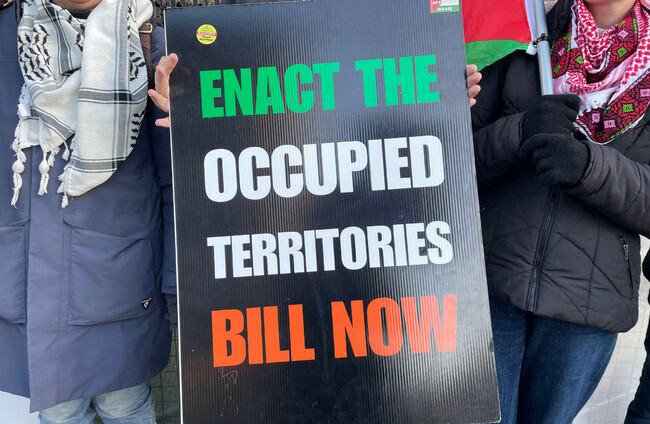
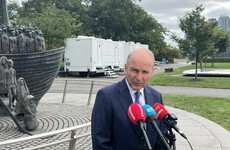
THE GOVERNMENT IS not moving away from enacting the Occupied Territories Bill, but is moving towards “a peace process approach”, Taoiseach Micheál Martin has said.
The timeline around the enactment of the Bill continues to be uncertain, with the Fianna Fáil leader refusing to commit to a timeline again today.
The Occupied Territories Bill, which was first introduced by Independent Senator Frances Black in 2018, proposed making it an offence “for a person to import or sell goods or services originating in an occupied territory or to extract resources from an occupied territory in certain circumstances”.
The Government then amended the Bill to propose making it a crime under the Customs Act 2015 to import goods into Ireland that originate in Israeli settlements built over what is legally recognised as Palestinian land.
However, services such as tourism and IT are as of yet excluded in the latest draft of the legislation, something opposition TDs have repeatedly called for to be included.
Before Christmas, Minister of State Malcolm Byrne told The Journal that the services aspect of the Bill was still under consideration.
But speaking in the Dáil earlier this week, Micheál Martin said that services was “non-implementable”.
“I’ve been consistent on that for quite some time now in terms of implementability of services,” he told RTÉ’s This Week programme this afternoon.
He said there will be further discussions in respect of services with Minister for Foreign Affairs Helen McEntee.
Martin also said things are “moving into a peace process” in respect to the Middle East. The US-brokered ceasefire has been in place since October, though it has been breached a number of times.
The White House confirmed yesterday that former UK prime minister Tony Blair was among a number of people appointed by Donald Trump to a so-called ‘Board of Peace’ formed to prevent future conflict in Gaza as part of the next phase of the 20-point ceasefire plan.
“Ireland has a contribution to make to conflict resolution in Gaza in the Middle East, and particularly given our own experience,” Martin said.
“We’re pivoting more to the peace process approach to making sure that we can contribute to peace and support Palestinians in terms of humanitarian issues, because you can see the pressure on UNRWA, for example, and others.”
He said Ireland was “doubling down” in supporting UNRWA and other humanitarian agencies.
Asked if this approach meant the Government was moving away from the Occupied Territories Bill in its entirety, he said no.
“What we’re simply saying is it’s not the entirety of the story, and unfortunately, there’s been a presentation that it is.
Its impact on Israeli policy, I think, will be very, very limited indeed, and people need to be clear-eyed about that.
The Fianna Fail leader said the enforcement of the Bill “is challenging” and that the Foreign Affairs Minister is working on this.
“It will come to Government. I can’t give a timeline on it just now.”
He also denied that the coalition has not implemented the Bill because they don’t want to, a claim repeated made by the opposition.
A number of US states have legislation which punishes companies that comply with anti-Israel boycotts, including those that target illegal settlements.
Martin said the original Bill had to be “essentially revamped” due to what he said was “all sorts of issues”.
“Issues have been turned up in the formulation of the legislation as well, but that will come back to the committee, and the Minister will come back to government with a timeline for it.”
Before Christmas, Senator Frances Black said that she had lost patience with Simon Harris, who was foreign affairs minister at the time, regarding the legislation.
Harris previously said he is open to services being included in the legislation.
Upon taking over from Harris, Foreign Affairs Minister Helen McEntee said last November that one of her first actions in the department will be to progress the Occupied Territories Bill.
Speaking to The Journal during a trip to the Rafah Crossing this week, she said that she received updated legal advice on the inclusion of services as well as goods in the Bill which is being considered, but that she is not going to “rush into something” that she’s not clear “will do good and that may cause more harm”.
She also said that giving a timeline isn’t possible at this point.

To embed this post, copy the code below on your site













have your say