Sign in. It’s quick, free and it’s up to you.
An account is an optional way to support the work we do. Find out more.
Sign in. It’s quick, free and it’s up to you.
An account is an optional way to support the work we do. Find out more.
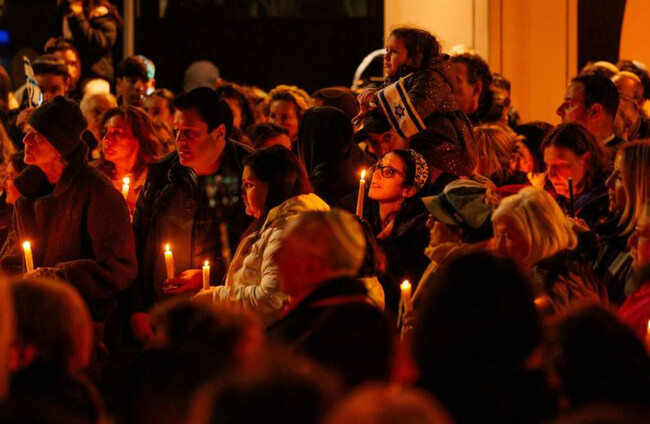
MOURNERS AND LEADERS around the world today voiced horror and called for peace at events remembering the 7 October Hamas attack that preceded a year of devastation inflicted on Gaza.
The Hamas onslaught left 1,206 dead on the Israeli side, mostly civilians, according to an AFP tally based on the latest official Israeli figures.
Some 251 people were captured and taken as hostages to the Gaza Strip by militants, of whom 97 are still held captive in the coastal territory, including 34 the Israeli military says are dead.
Members of Australia’s Jewish community gathered in Sydney for a vigil, where many held Israeli flags and lights in the shape of candles.
“Today is a very emotional day,” said 48-year-old Zack Shachar, whose cousin Naama Levy was taken hostage on 7 October.
“In the last year, we participated in any event, we read the names of the hostages every week in a different place in the city, and we will continue to do it until they all come back home.”
“I want to say ‘I’m here alive, thank God’,” said Carmel Efron, a Spanish woman who survived the Hamas attack.
I believe that light will win over darkness, the good will win over the evil and I still believe in peace and love.
One hostage who did not make it home alive was Polish-Israeli Alex Dancyg and today his family inaugurated a plaque in his memory in Warsaw.
A year on, Israel has yet to achieve one of what it says is its main objectives: securing the return of all those taken hostage.
Of the 251 captured that day, 97 are still held captive in Gaza, including 34 the Israeli military says are dead.
Since last October, the IDF has killed 41,909 people, the majority civilians. The figures, provided by the Gaza health ministry, have been deemed to be reliable by the United Nations.
Now the Palestinian territory is unrecognisable and its residents are exhausted by displacement and shortages, with no end in sight.
“It felt like the first day of the war all over again”, said Khaled al-Hawajri, 46, as the Israeli forces bombarded his Gaza neighbourhood today.
“Last night we were terrorised by the bombardments from quadcopters and tank shells,” said Hawajri, who has been displaced 10 times with his family of seven in the past year.
“We have endured a whole year in the north under bombardment, terror, and fear in the hearts of my children,” he said, adding he had stayed in Gaza’s devastated north because “there is no safe place in the entire Strip”.
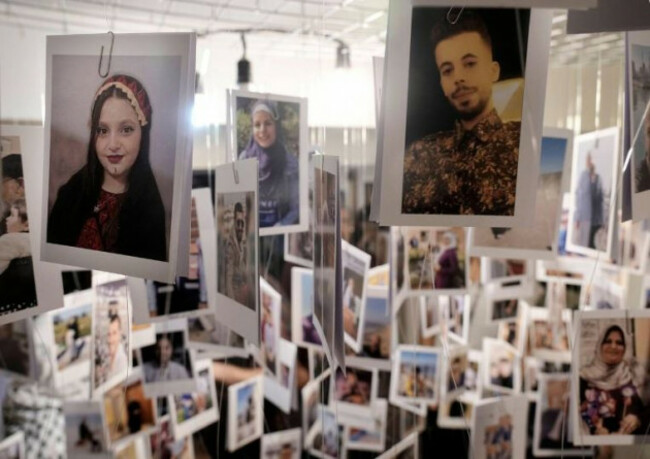
Today, residents of Gaza City walked along sand-covered streets stripped of pavements, with buildings either destroyed or left without facades, while piles of rubble littered the roads.
With fuel in short supply and expensive, car traffic was almost nonexistent. Most people walked, cycled or used donkey carts.
The United Nations says 92% of Gaza’s roads and more than 84% of its health facilities have been damaged or destroyed in the war.
Gaza’s 2.4 million inhabitants have endured hardship, with no signs of relief, even after Israel reassigned divisions to the north of the country where troops are fighting Hamas’s Lebanese ally Hezbollah.
About 90% of the population has been displaced at least once, the United Nations says.
I never imagined the war would last this long.
“Last night was one of the hardest nights of the war, as if the war had just begun,” said 46-year-old Muhammad al-Muqayyid, who has been displaced from the Jabaliya refugee camp in northern Gaza.
“A year has gone and we have seen every kind of suffering – disease, hunger, danger and loss.”
With reporting by AFP

To embed this post, copy the code below on your site









have your say