Sign in. It’s quick, free and it’s up to you.
An account is an optional way to support the work we do. Find out more.
Sign in. It’s quick, free and it’s up to you.
An account is an optional way to support the work we do. Find out more.
EVERY WEEKEND, OUR political team casts an eye over the events inside and outside Leinster House that have people talking.
The Dáil is still in recess for the summer, but political parties have been busy at their respective think-ins around the country as they all get ready to go back to school.
In a week when the US president stopped by for a visit and with the coalition parties at odds over some of the budget ideas, there were a few contenders for winner and losers to pick from.
So, without further ado:
President Catherine Connolly
During Ireland’s presidential election campaign last year, Connolly was frequently asked whether she would meet with Trump if she were elected and what she would say to him if such a meeting took place.
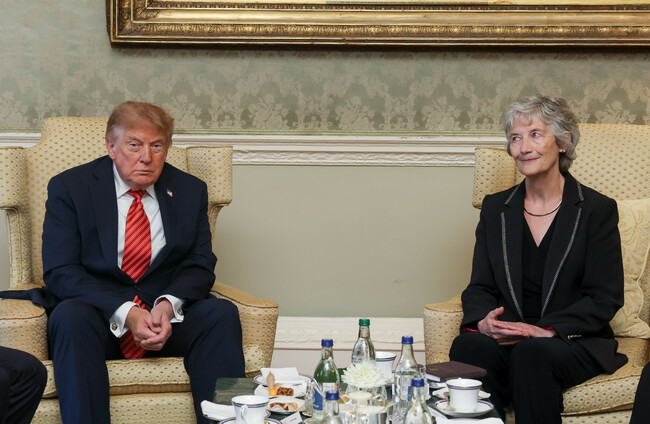
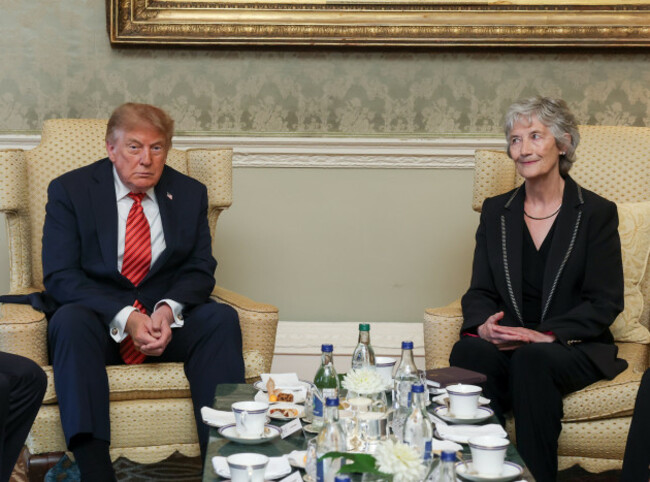
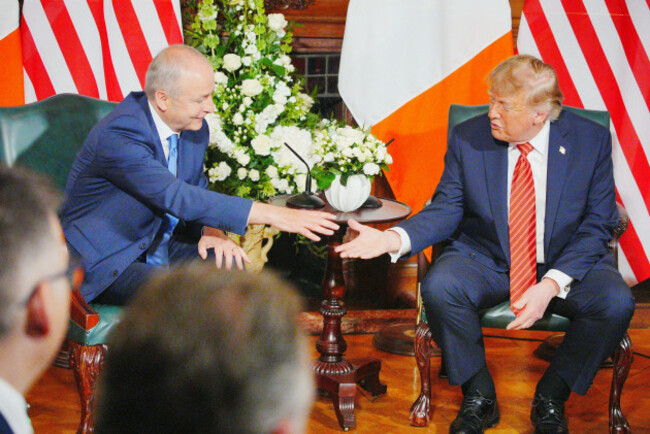
There were sullen faces for both Trump and President Catherine Connolly at Áras an Uachtaráin on Saturday, with many onlookers remarking on how uncomfortable the pair appeared together.
Questions had been mounting all week about what Connolly would say to Trump.
In a statement after her sit-down with Trump, Connolly said she “conveyed the strong view of the Irish people that the normalisation of war and genocide can never be accepted”.
“As a country which has suffered famine, colonisation and the violence of the Troubles, but also the importance of the long and challenging road to peace, I emphasised the unique insight which Irish people can bring to the resolution of conflict,” she added.
In Farmleigh, Trump was questioned about his conversation with the Irish President.
In an unusual move, Trump didn’t answer the question himself.
He asked his head of protocol, Monica Crowley, to respond. She said it was a “constructive” meeting and involved energy.
Trump, asked again if the Middle East conflicts were brought up, only said it was an interesting discussion.
Trump, who was questioned twice on the matter, did not want to go there and did not want to discuss what Connolly had brought up with him.
A win for Connolly for raising the point in a diplomatic fashion, an important point that many that voted for her wanted her to make on their behalf.
She gets extra points for gifting him a book of poetry, in which one of the poems is titled ‘ceasefire’.
Séamus McGrath
There has been a lot of talk this week about what measures will be included in this year’s budget, which is just over a month away.
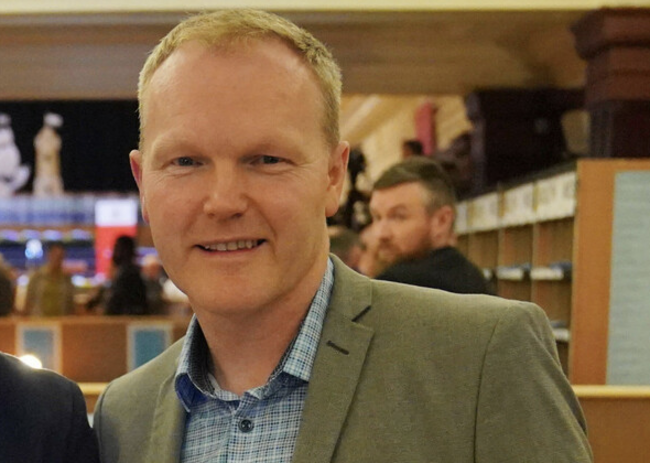
One of the topics that has sparked a bit of contention between Fianna Fáil and Fine Gael has been around stamp duty for first-time buyers – a debate that, this time around, can be traced back to Fianna Fáil TD Séamus McGrath.
McGrath, who is his party’s housing spokesperson, is on our winners’ list this week for kicking off the debate back in April, when he appealed to his party leader, Micheál Martin, to introduce a stamp duty relief for first-time buyers.
As things currently stand, buyers must pay stamp duty of 1% of the purchase price on the property they are buying if it is valued at under €1 million. It rises to 2% on properties worth between €1 million and €1.5 million, and 6% on any amount thereafter.
First-time buyers were entirely exempt from stamp duty before 8 December 2010, when specific exemptions were abolished to make way for a new, “simplified” system.
Finance Minister and Fine Gael leader Simon Harris has poured cold water on the possibility of any changes to the tax, telling The Journal‘s political podcast The Candidate last month that it would not be happening.
Fast forward to this week, and the Tánaiste doubled down on this position after Taoiseach Micheál Martin said he has a “favourable disposition” towards scrapping stamp duty for first-time buyers.
Who wins out on this one remains to be seen, for now.
Mary McAleese
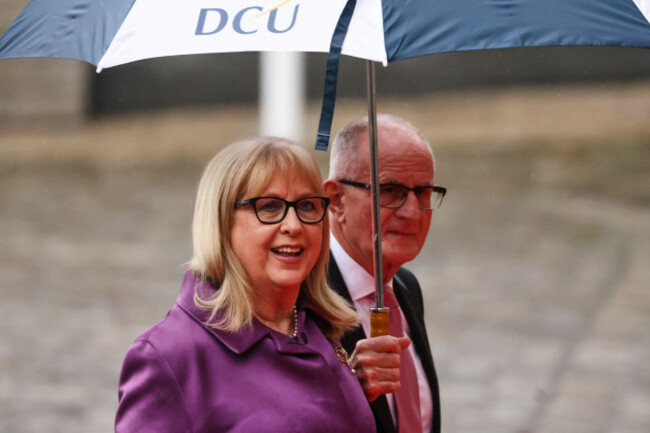
On Tuesday, former president of Ireland Mary McAleese resigned from her position as chair of the Integration Committee overseeing the amalgamation of the GAA, the Ladies’ Gaelic Football Association (LGFA) and Camogie Association.
In explaining her decision, she said it was because it had become clear the process would not be complete in 2027 as planned.
She did not hold back in her assessment of the management committee, declaring they had blocked any chance of progress and had no vision for the future of Gaelic games.
She also said she was shocked by GAA president Jarlath Burns’ lack of support and that there was an absence of leadership from her experience of dealing with the committee.
Asked if Burns and GAA director general Tom Ryan were supportive, McAleese said: “I think you’d have to ask them, and I’ll leave it at that.
“I’m broken-hearted for the parents of young girls.”
In response, Burns blasted McAleese’s comments as “regrettable” and “offensive”.
While not strictly a political issue, it became one this week.
McAleese is on our winners’ list for forcing a much-needed conversation and examination of how the GAA is working towards integration.
Let’s not forget, the GAA, LGFA and Camogie Association are all organisations in receipt of significant amounts of public money via both core funding and grants.
The process around integration has been ongoing for a significant amount of time already, McAleese’s decision to resign from the committee should be a wake-up call that a change in approach is needed.
As Labour TD and Oireachtas Sports Committee chairperson Alan Kelly said this week, McAleese’s resignation has to be “a line in the sand” with regard to equality.
“Ordinary people across the GAA, female and male, really need to stand up and hopefully will in relation to this issue, because it’s 2026. We need to treat everyone equally,” Kelly said.
Micheál Martin
We’ll keep this one simple.
The Taoiseach and Fianna Fáil leader is on our winners’ list this week for managing to get through his party’s think-in without facing the prospect of a leadership heave.
It’s the first Fianna Fáil think-in in recent years when backbenchers weren’t scheming behind their leader’s back on how to get him out.
“He’s in flying form,” said one minister, who pointed out that the Taoiseach didn’t appear to be a man who thought he was going anywhere soon.
Now, this can largely be attributed to the fact that the EU Presidency is acting as a sort of firewall around the Taoiseach, but take the wins when you can get them, right?
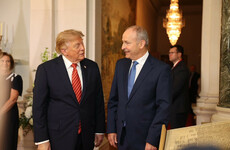
He gets an additional nod this week for his meeting with US President Donald Trump. The Taoiseach managed to come out unscathed, and he managed to highlight how aid must be allowed get into Gaza more freely.
Richard Boyd Barrett
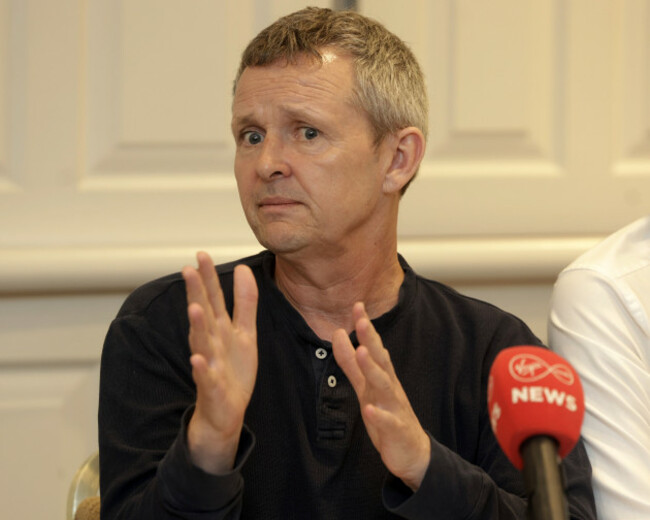
People Before Profit leader Richard Boyd Barrett made a rather embarrassing confession this week when he admitted that the Social Democrats and Sinn Féin have not been answering his emails about a left-wing alliance.
Poor Richard.
To be fair to him, his party has long been banging the drum on a left-wing pact ahead of the next election.
But it seems to be falling on deaf ears.
Both Sinn Féin leader Mary Lou McDonald and Green Party leader Roderic O’Gorman were less than enthused this week when asked about the prospect of working more collaboratively with their compatriots on the left.
“There’s no alliance right now,” O’Gorman told RTÉ’s Morning Ireland on Wednesday.
The unionists
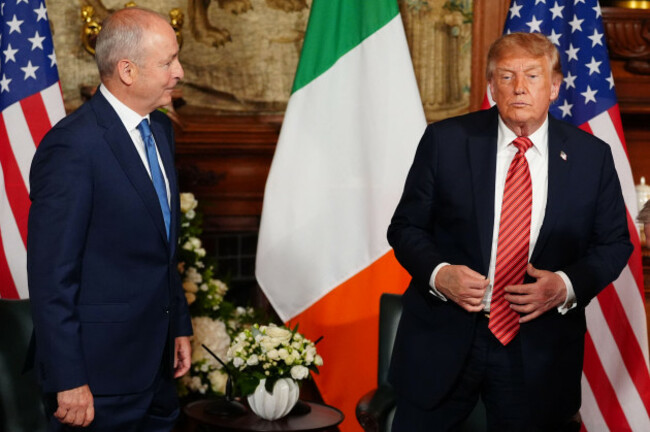
Trump has riled up the unionists in Northern Ireland with his comments about supporting a unified Ireland.
The US President knew his response would attract criticism and that it has.
DUP leader Gavin Robinson posted on X to say that unionists “are not interested in the destruction of our country by joining with the Irish Republic.”
“Northern Ireland’s constitutional future will be decided by the people of Northern Ireland, not by commentary in London, Dublin or Washington. Northern Ireland is part of the United Kingdom because that is the settled democratic will of its people,” he said.
Jim Allister of the hardline TUV said that Trump “is not the first US president to meddle in the affairs which don’t concern him”.
He added: “Northern Ireland is not a pawn in Trump’s fall-out with the UK. Our constitutional future does not depend on him or any other foreign dignitary.”
All in all, not great for the unionists to have the most powerful in the world say that it is inevitable that there will be a united Ireland.
Tell us in the comments who your winners and losers are this week.
To embed this post, copy the code below on your site













have your say