Sign in. It’s quick, free and it’s up to you.
An account is an optional way to support the work we do. Find out more.
Sign in. It’s quick, free and it’s up to you.
An account is an optional way to support the work we do. Find out more.
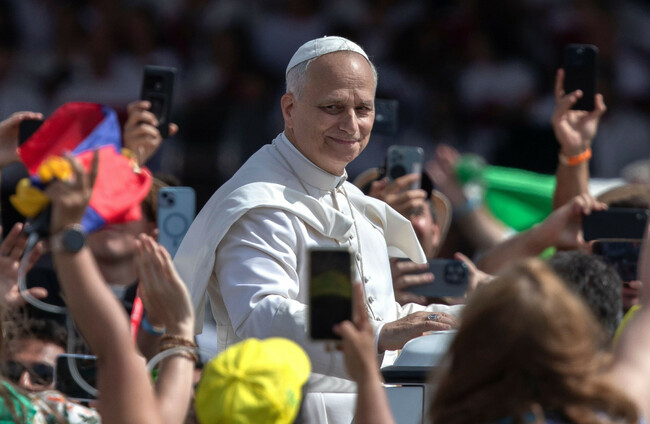
EARLIER THIS WEEK, pop icon Madonna called on Pope Leo XIV to visit Gaza “before it’s too late”.
Madonna, who was raised Catholic, called on the Pope as a “Man of God” to “bring your light to the children”.
She claimed that Leo is the “only one of us who cannot be denied entry”.
Politics Cannot affect Change.
— Madonna (@Madonna) August 11, 2025
Only consciousness Can. Therefore I am Reaching out to a Man of God.
Today is my Son Rocco’s birthday.
I feel the best gift I can give to him as a Mother - is to ask everyone to do what they can to help save the innocent children caught in the… pic.twitter.com/y2B3BsXAMt
“There is no more time,” said Madonna in her post to social media. “Please say you will go.”
Colleen Dulle is a Vatican correspondent with the Catholic media outlet America Magazine and author of “Struck Down, Not Destroyed: Keeping the Faith as a Vatican Reporter.”
She told The Journal that Madonna is “sorely mistaken” in her claim that Pope Leo is the “only one of us who cannot be denied entry”.
“Israel has complete control over the country’s borders and would have to facilitate the pope’s entry, which it is highly unlikely to do,” said Dulle.
And while some religious leaders have occasionally been allowed in, such as after a recent Israeli strike on a Catholic church in Gaza, foreign heads of state have not.
“Nor have foreign journalists,” noted Dulle, “whose travel with the pope is practically mandatory, as it is a key part of how the Vatican covers the cost of papal trips.”
However, the new pope has yet to venture outside Italy since becoming pontiff and Dulle said it would “certainly be a powerful gesture for the pope to enter Gaza, or even to publicly demand entry”.
She also noted that there are precedents of popes not being able to enter conflict zones due to security concerns, such as when Pope John Paul II was prevened from visiting Iraq in 2000 due to an air exclusion zone over part of the country.
However, Pope Francis did visit an active war zone in 2015 when he visited the Central African Republic.
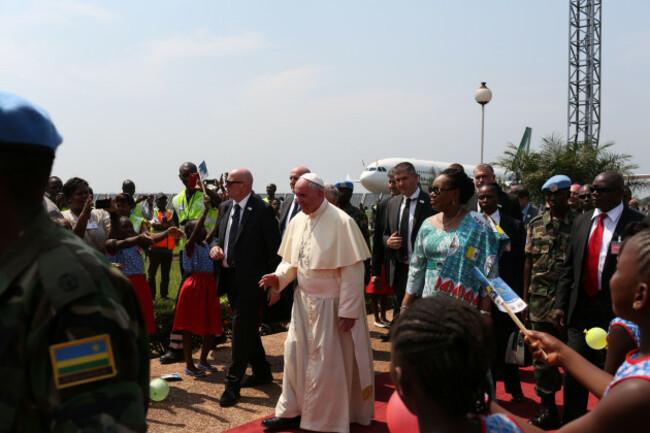
In a show of solidarity, he visited a mosque that had been under siege from armed Christian militias in the capital Bangui and delivered a message of peace and reconciliation.
“Although some positive steps were made, including free and fair elections at the end of that year, the conflict has continued to this day,” said Dulle.
Meanwhile, Dulle remarked that she is “struck that at a time of crisis, when people feel powerless to stop the violence and starvation, they still see the pope as someone with the moral weight to make it stop”.
While Pope Leo may not be able to stop the conflict, such a visit would cement the Vatican’s increasing role as a diplomatic power.
In February, it seemed as though the relationship between the US and Ukraine was broken beyond repair after Donald Trump berated Volodymyr Zelenskyy in the White House.
But around two months later, St Peter’s Basilica became the location of an impromptu peace summit between Trump and Zelenskyy, minutes prior to the late Pope Francis’s funeral.
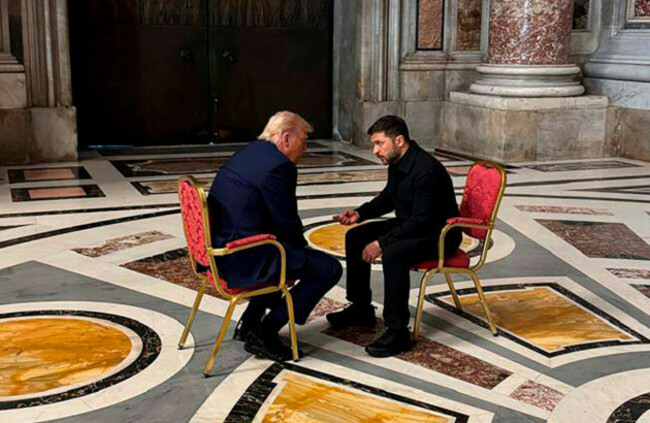
Trump would even go on to suggest the Vatican as a location for a meeting between Zelenskyy and Russian president Vladimir Putin, something Pope Leo said he was willing to facilitate.
However, a trip to Gaza would be sure to irk Israel, a state which has long been at odds with the Catholic Church.
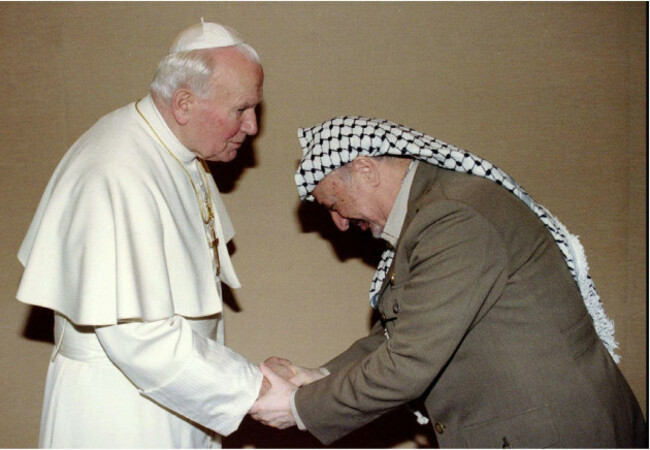
In 1987, Pope John Paul II met with Yasser Arafat, who was then the chair of the Palestine Liberation Organisation – he met with Arafat on 10 occasions in total.
During a visit to Bethlehem in 1999, Pope John Paul II, in the presence of Arafat who was by now president of Palestine, reaffirmed what he said was the Palestinians’ “natural right to a homeland.”
Then during Pope Benedict’s papacy, a 2010 gathering of Bishops called for the “end to the occupation of different Arab territories”.
Israel’s then-Deputy Foreign Minister Danny Ayalon claimed that this gathering of Bishops had been “hijacked by an anti-Israel majority”.
Benedict went on to endorse a move by the Vatican to recognise the State of Palestine.
It was Pope Francis who then formally recognised the State of Palestine and signed an accord between the Church and Palestine in 2015, something which angered Israel.
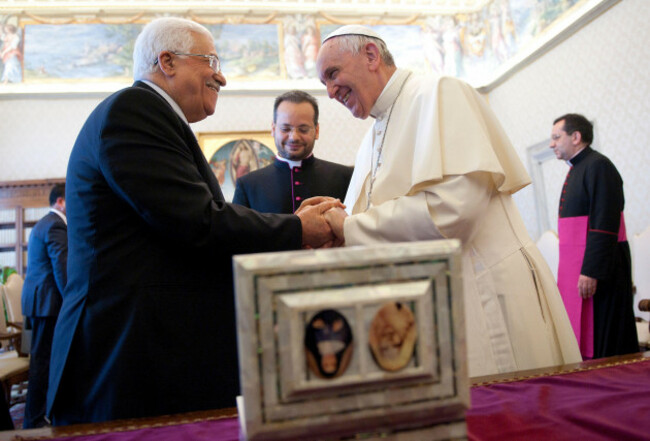
Israel described it as a “hasty step” that “damages the prospects for advancing a peace agreement”.
Israel also claimed the accord was “one-sided” and “ignored the historic rights of the Jewish people in the Land of Israel and to the places holy to Judaism in Jerusalem”.
The Vatican accord supported a State of Palestine that included all of the West Bank and Gaza Strip, as well as East Jerusalem.
Israel also warned that the accord could have “implications for future cooperation between Israel and the Vatican”.
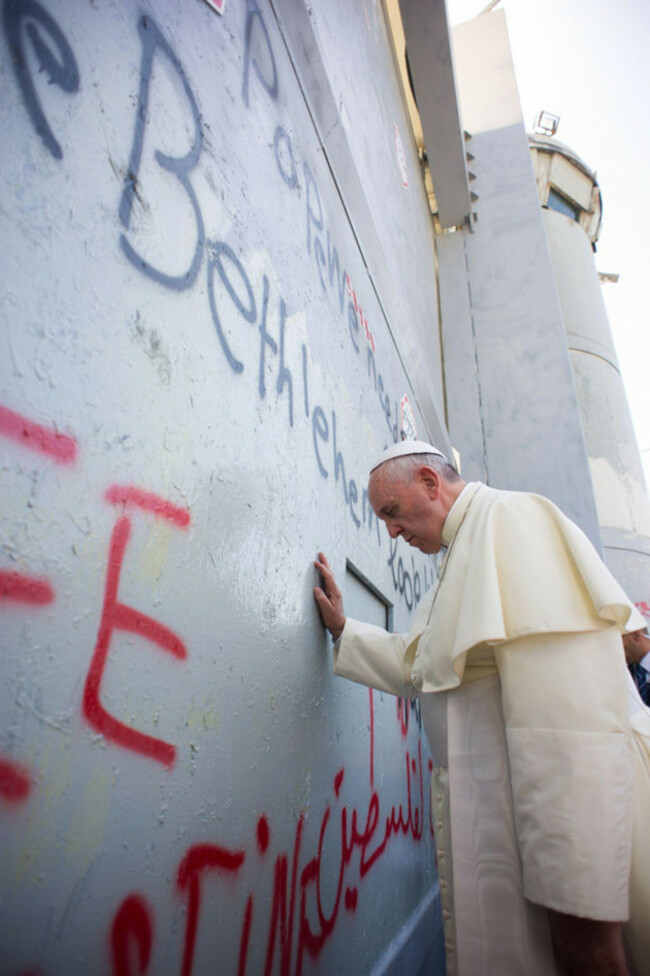
The year before the Church recognised Palestine, Francis visited Israel and the West Bank and angered Israel by making an unscheduled stop to pray before the Israeli separation wall in Bethlehem, surrounded by a group of young Palestinians.
In his memoir, Hope, Francis said the unplanned stop “caused a few security worries”.
The following day, Israeli Prime Minister Benjamin Netanyahu requested that Francis make another unscheduled stop at a memorial to Israeli victims of terrorism.
This was seen as an attempt by Netanyahu to appease people who were angered with Francis’s stop at the separation wall.
Netanyahu posted to social media after the visit: “I explained to the pope that building the security fence prevented many more victims that Palestinian terror planned to harm.”
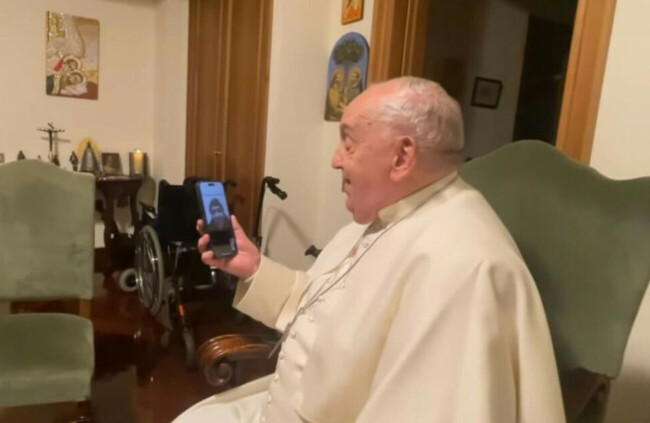
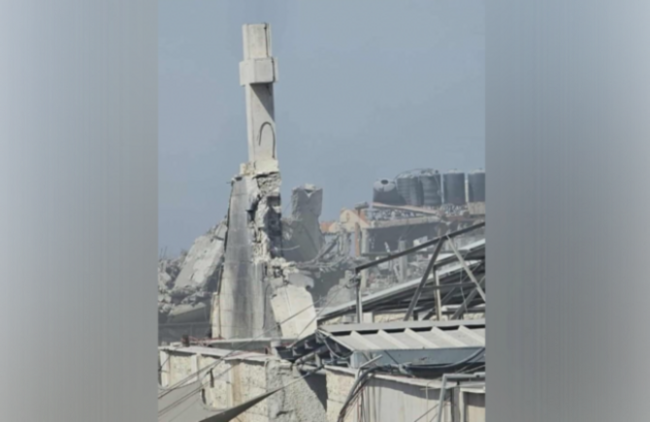
Last month, an Israeli strike on the church killed three people in the parish Francis called daily.
Israel claimed that the strike on the complex, sheltering around 600 displaced persons of different faiths, the majority of whom are children and 54 of whom have additional needs, was a “mistake”.
However, Cardinal Pierbattista Pizzaballa, the top Catholic official in the Middle East, publicly disputed this and said that “they hit the church directly”.
He noted that Catholic churches had been struck at other points during the war and that the explanation “every time” is that it was a “mistake”.
Pizzaballa, who was a front-runner to become pope, added that Israel’s actions in Gaza are “unacceptable and morally unjustifiable”.
He made a four-day visit to Gaza following the attack on the Holy Family Church and arrived with 500 tonnes of aid.
However, he later said “not a gram” had been able to enter the region.
Pope Leo spoke on the phone to Netanyahu following this strike and expressed concern about the “tragic humanitarian situation for the population of Gaza, whose children, elderly and sick are paying an agonising price”.
Meanwhile, Francis went so far as to label some of Israel’s actions in Gaza as “terrorism”.
In his memoir, Francis described the Hamas massacres of 7 October, 2023 as “diabolical and brutal”.
He then went on to recount the deaths of Nadha Khalil Anton and her daughter, Samar Kamal, who were killed by gunfire from an Israeli army sniper as they approached the convent of Mother Teresa’s Missionaries of Charity.
“Others too were killed in cold blood in the parish precincts,” said Francis. “This too is terrorism.”
Elsewhere, some people felt that Francis expressed support for Palestine by praying before a nativity scene last December which included a wooden figurine of the baby Jesus swaddled in a keffiyeh.
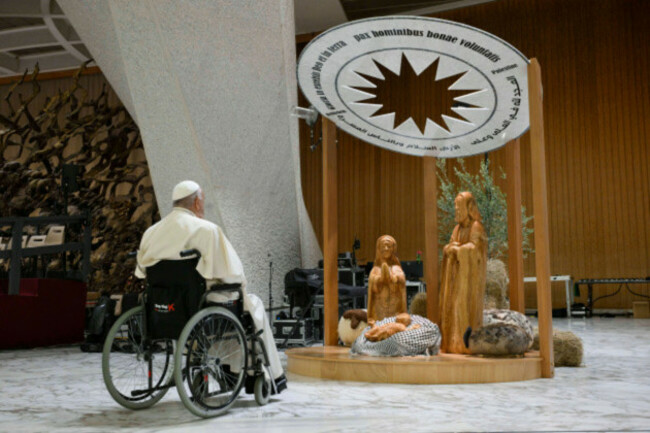
The keffiyeh, a headdress worn in the Middle-East, is worn by many as a symbol of support for Palestine.
Palestinian artisans created last year’s “Nativity of Bethlehem” which was displayed in the Vatican’s Paul VI Hall.
Representatives from the Embassy of the State of Palestine were present for its inauguration on 7 December, as were those who created the Nativity.
As is customary, the figurine of Jesus was then removed from the Nativity scene until Christmas Eve.
However, when the public was next able to view the Nativity scene in the Paul VI Hall on 4 January, the keffiyeh had been removed.
When Francis died in April, Israel was notable in its muted response.
The Prime Minister of Palestine, Mohammad Mustafa, attended Francis’s funeral and described the late pontiff as a “friend of the Palestinian people”.
“Pope Francis shared in the sufferings of the Palestinian people and always supported their right to self-determination,” said Mustafa.
Israel however sent a low-level ambassador to Francis’s funeral and it took four days for Netanyahu’s office to send a two-sentence message of condolence.
It read: “The State of Israel expresses its deepest condolences to the Catholic Church and the Catholic community worldwide at the passing of Pope Francis. May he rest in peace.”
Prior to his death, Francis gave his blessing for the popemobile he used on his 2014 visit to the West Bank to be converted into a mobile health clinic for children in Gaza.
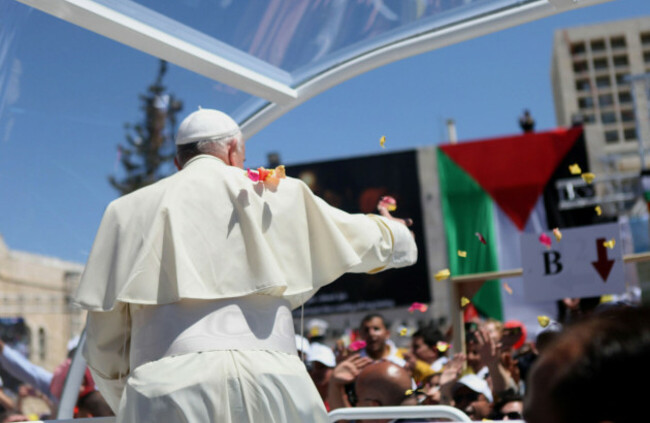
“Yes, it’s a beautiful idea, go for it,” said Francis when the initiative was brought to him for approval.
However, the vehicle has not yet been granted entry into Gaza.
A trip to Gaza for Pope Leo would likely come with a heightened security risk.
However, this was not something that deterred his predecessor.
Francis had said he was “determined” to visit Iraq in 2021 and to “meet those people who have suffered so much”.
“Almost everyone advised me against the journey,” said Francis.
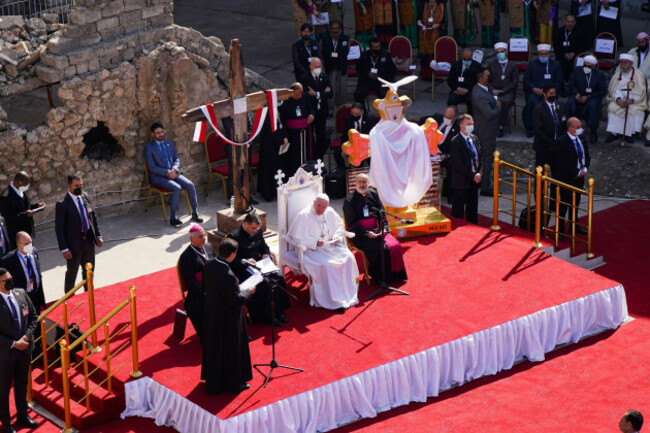
The day before he flew to Iraq in 2021, British security services informed the Vatican of two assassination plots – one involved a female suicide bomber, the other a truck full of explosives.
The journey went ahead regardless and Francis said he was informed later by Iraqi police that the two “bomb attackers” had been “intercepted and exploded”.
“This shocked me deeply,” wrote Francis. “This too was the poisoned fruit of war.”

To embed this post, copy the code below on your site






have your say