We need your help now

Support from readers like you keeps The Journal open.

You are visiting us because we have something you value. Independent, unbiased news that tells the truth. Advertising revenue goes some way to support our mission, but this year it has not been enough.

If you've seen value in our reporting, please contribute what you can, so we can continue to produce accurate and meaningful journalism. For everyone who needs it.

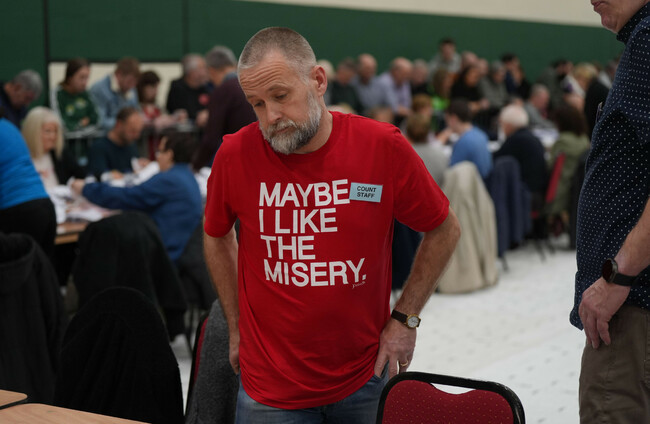
Count staff at Nemo Rangers GAA Club in Cork, after voters went to the polls during last year's General Election Alamy Stock Photo

Ireland's next president: The votes have been cast, but when will we know the official result?

We could know the next president by this evening.

THE TALKING IS over and the nation has spoken at the ballot box.

After a 14-year stint in Áras an Uachtaráin, a successor to President Michael D Higgins will soon be named.

At the beginning of the campaign, there stood three candidates – the fewest since the 1990 election.

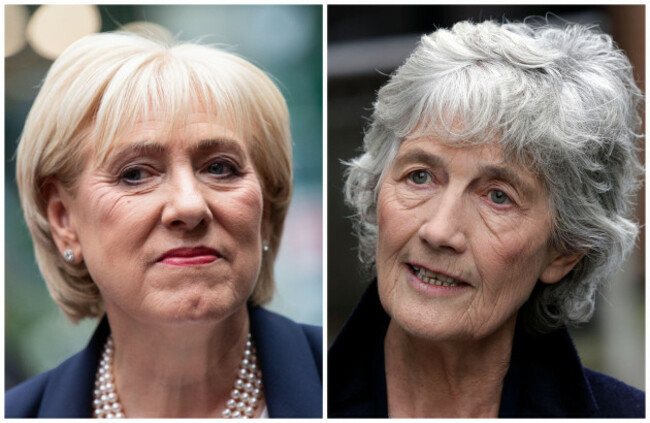
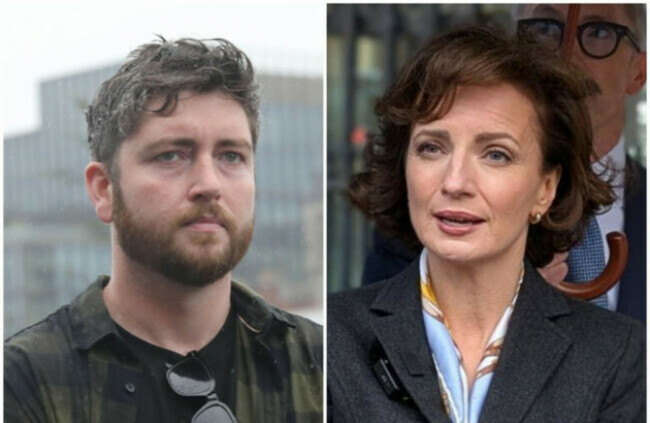
But after the withdrawal of Fianna Fáil candidate Jim Gavin, it’s now a two-horse race between Fine Gael’s Heather Humphreys and the Independent TD Catherine Connolly.

FotoJet Heather Humphreys and Catherine Connolly.

And while bookmaker Paddy Power felt confident to pay out early on a Connolly win, the public has had the ultimate say.

So, when will we know what they decided?

Sorting the votes

The public went to the polls yesterday and the ballot boxes for the 43 Dáil constituencies will be opened at counting centres around the country from 9am.

Ireland uses the PR-STV system, in which voters indicate who they would like to see elected in order of preference.

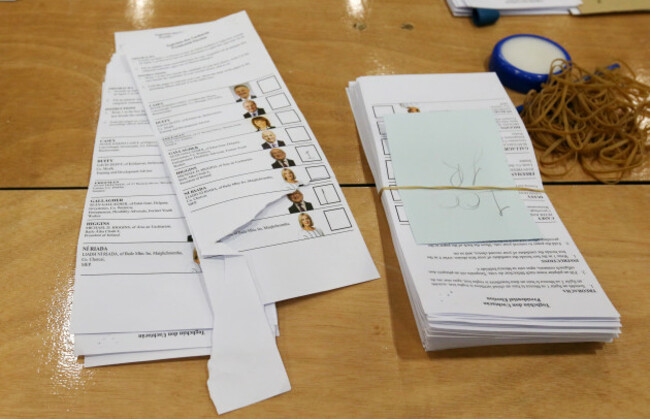
When the counting starts, staff will tally the first preference votes for each candidate, which can take some time.

This process will be sped up this time round by the smaller field of candidates.

Spoiled votes will also be placed to one side and tallied.

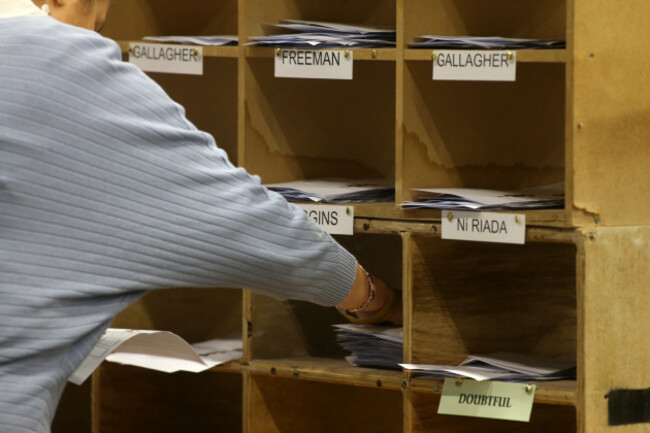
count 429_90557291 Ballot papers sorted into first preference piles for each candidate in the 2018 Presidential Election. RollingNews.ie RollingNews.ie

The results of the first count from centres across the country are sent to the Presidential Returns Officer (PRO) in Dublin Castle, using a standardised format that includes total poll, spoilt votes, total valid poll and first preference count.

The results are then checked and verified in Dublin Castle.

Following the submission of all first count results from across the country, the PRO then calculates the quota for election.

The quota, or the number of votes required to be elected president, is 50% of the total valid poll plus one vote.

However, should there be a marked uptick in spoiled votes, this process could take longer because spoiled votes have to be independently verified by the returning officer and adjudicated upon.

The PRO then announces the national result of Count 1, at which point a winner will be declared or we move into Count 2. A candidate needs to have secured over 50% of the vote in Count 1 to be declared the winner. 

Turnout

In 2011, the year President Higgins was first elected from a field with multiple candidates, the turnout was 56.1%. Higgins was elected on Count 4 – around 4pm on the second day of counting.

Seven years later, when President Higgins was re-elected for a second term, again from a large field, the turnout dropped sharply to a lowly 43.9% and he was re-elected on Count 1 – around 7.45pm on the first day of counting.

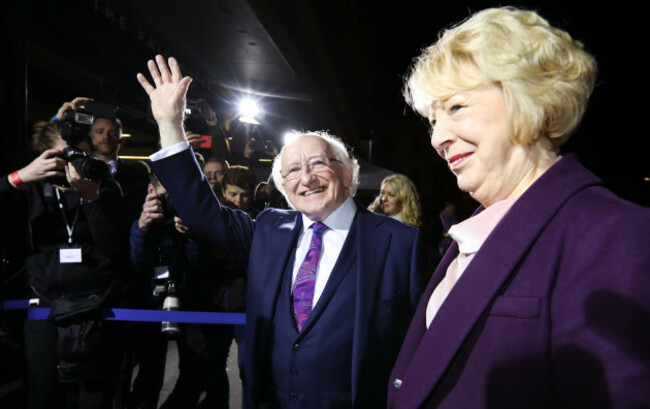
2319 Michael D Higgins_90557408 President Michael D Higgins with his wife Sabina arriving at the Presidential election centre at Dublin Castle in 2018 RollingNews.ie RollingNews.ie

If the turnout is similar to what it was in 2018 – and most indications point to a low turnout – we could know who the next president will be by around 7pm this evening or even earlier.

Theresa Reidy, a political scientist at University College Cork, this week noted that the general pattern regarding election turnout is downwards and this decline is sharpest in presidential elections.

She added that there are “reasons to believe turnout will be even lower” than it was in 2018 and it “wouldn’t be surprising for turnout to be below 40%”.

She pointed to “downward pressures” such as there only being two candidates in the running.

She added that campaigning which is perceived to be “negative” can also drive down turnout - Fine Gael had been accused of using the “Trump playbook” in casting aspersions on Connolly’s previous work as a barrister.

She also noted that many people are “dissatisfied with the choice on the ballot paper and that’s a factor in terms of motivating people” to vote.

Spoiled votes

While some people may opt to stay away from the polls due to a dissatisfaction with the names on the ballot, others may choose to register their disapproval by intentionally spoiling their ballot.

In 2011 and 2018, around 1% of voted were spoiled.

This time around though, there is a concerted effort to spoil the vote effort.

A recent Ipsos/B&A poll showed that a significant 6% of voters plan to spoil their vote.

Should the number of spoiled voted jump to as high as 6%, it could add to the counting process as each spoiled vote needs to be independently verified and adjudicated by the returning officer. 

While Reidy said the spoil the vote campaign is “vocal”, she added that it “remains to be seen” how active it turned out to be.

“We would certainly expect it to be higher than it is at usual elections,” she added, “but how high remains to be determined”.

She noted that even a doubling, or a tripling, of the number of spoiled ballots could slow down the count.

As invalid votes do not count towards the calculation of the quota, this adjudication is carried out at the start of the count process.

Many invalid votes are unintentionally spoiled but there had been momentum behind a campaign to intentionally spoil votes in this election.

Only three candidates made it onto the ballot – the fewest since 1990.

And while Gavin’s name will be on the ballot, his withdrawal from the campaign leaves it between Humphreys and Connolly.

Some 55% of people in the Ipsos/B&A poll said they favour a change to the constitution to make it easier to get on the ballot. 

Conservative campaigner Maria Steen and businessman Gareth Sheridan came closest to getting on the ballot.

river (23) Gareth Sheridan and Maria Steen. RollingNews.ie RollingNews.ie

Sheridan secured the backing of two local authorities but ended up two short of what he needed

Steen meanwhile went the Oireachtas route, getting nominations from 18 TDs or Senators, two short of what she needed.

Counting

The results from the first counts usually become available in the late afternoon and the first national account is announced later that evening.

A lower turnout this time round and fewer candidates could bring this timeline forward.

However, tallies from the count centre will give a good indication as to how the election will unfold.

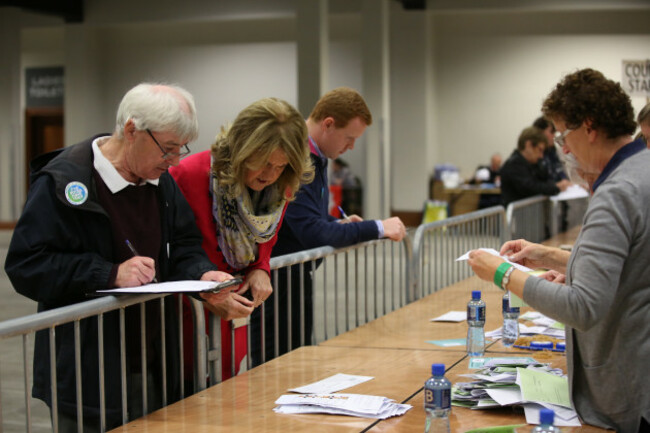
Tallies are unofficial observations which are compiled by people who watch the sorting of ballot papers at a count.

Back in 2011 when President Higgins was elected for the first time, counting began at 9am and concluded at around 4pm on the second day of counting.

However, before 10am on the first day of counting, early tallies had already shown President Higgins with a lead in a field of seven contenders.

2334 Election Results_90557280 Labour's Joan Burton will a tallyman during the 2018 presidential election at the Citywest Convention Centre Sam Boal Sam Boal

And while the official results were not known until the second day of counting in 2011, less than an hour and a half into the count some journalists were willing to call the election for President Higgins.

Last time out in 2018, it was a more straightforward task and only one count was needed to re-elect President Higgins.

In a field of six candidates, President Higgins easily surpassed the quota on the first count, taking in close to 56% of the first preference votes.

count 292_90557252 Image of counted ballots during 2018 presidential election RollingNews.ie RollingNews.ie

With only two viable candidates in the field this time round, it is likely that a winner will be declared on the first count.

Should a second count be needed, it is likely that a winner would be named by Saturday night or perhaps in the early hours of Sunday.

Meanwhile, President Higgins’s term as Uachtarán will officially come to an end just before midnight on 10 November.

The new president will be inaugurated the following afternoon in St Patrick’s Hall in Dublin Castle.

Readers like you are keeping these stories free for everyone...
A mix of advertising and supporting contributions helps keep paywalls away from valuable information like this article. Over 5,000 readers like you have already stepped up and support us with a monthly payment or a once-off donation.

Close
96 Comments
This is YOUR comments community. Stay civil, stay constructive, stay on topic. Please familiarise yourself with our comments policy here before taking part.
Leave a Comment
    Submit a report
    Please help us understand how this comment violates our community guidelines.
    Thank you for the feedback
    Your feedback has been sent to our team for review.

    Leave a commentcancel

     
    JournalTv
    News in 60 seconds