Sign in. It’s quick, free and it’s up to you.
An account is an optional way to support the work we do. Find out more.
Sign in. It’s quick, free and it’s up to you.
An account is an optional way to support the work we do. Find out more.

LAST UPDATE | 20 Mar 2025
This article contains references to gender-based violence and includes spoilers relating to Netflix’s new drama, Adolescence.
MARGARET ATWOOD ONCE said, ‘Men are afraid that women will laugh at them. Women are afraid that men will kill them.’
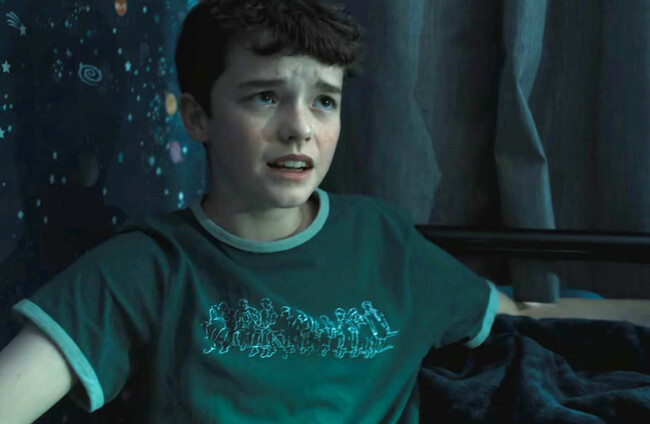
This dystopian maxim becomes a grim reality in Stephen Graham’s and Jack Thorne’s chilling teenage drama Adolescence, one of the most talked about and socially impactful television dramas to reach our screens in years.
Inspired by the ‘kitchen-sink drama’ style of British social realism, Adolescence has strong shades of both Ken Loach and Shane Meadows, directors known for making drama that interrogates injustice, reveals structures of power and asks difficult questions.
In Meadows’ This is England, we saw the complex social and psychological factors which led skinhead Combo, played by Stephen Graham, to be radicalised by the far-right in a community destroyed by Thatcher’s dismantling of local industry and the welfare state.
Rarely since then have we seen this kind of socially engaged drama outside the Nordic countries, and its overwhelmingly positive reception points to an appetite for nuanced social commentary that eschews simplistic explanations in favour of asking hard questions.
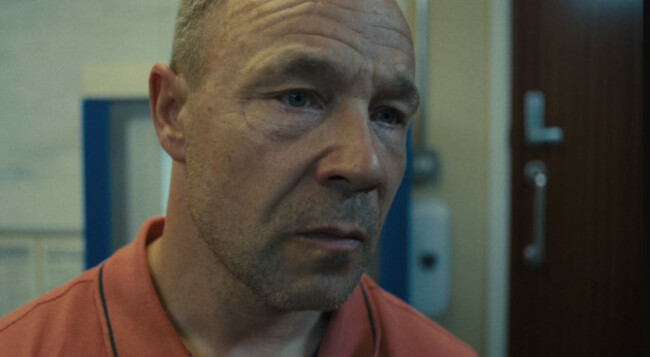
In the first of this four-part drama, a family and community are left reeling in the wake of a brutal and fatal stabbing of a teenage girl in a car park. A 13-year-old boy, Jamie (Owen Cooper), is arrested under suspicion of the murder and undergoes intense questioning by DI Luke Bascombe (Ashley Walters) and DS Misha Frank (Faye Marsay).
Shot in long, single takes, and featuring outstanding performances from all its cast, Adolescence immerses us in intense atmospheres of panic, claustrophobia, shock and grief. When presented with CCTV footage of himself stabbing the victim, Jamie strenuously denies that he did it. The remainder of the series is less concerned with whether he is guilty than with his motive, which is beyond the comprehension of the police, his parents and his teachers.
That all the reasons are in plain sight, but none of the adults can see them delivers a powerful message in itself and also opens up different types of audience engagement.
Those conversant with the manosphere, social media and Gen Z heterosexual dating rituals can join the dots that lead from Jamie’s socialisation into patriarchal masculinity to the insecurities underpinning his fragile masculinity to his indoctrination into the Red Pill and finally his recourse to violence.
Viewers, on the other hand, to whom these worlds are alien must follow the same painful trajectories as the police, Jamie’s parents and, to a lesser extent, the child psychologist who partly gains his trust, to piece together a coherent explanation for his behaviour.
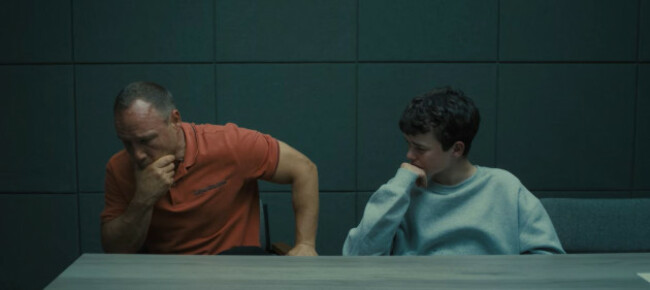
Irrespective of our starting point, however, there is no simple or singular explanation. When Jamie loses his temper with his psychologist and threatens her in a chilling display of performative male domination, it is unclear whether he is channelling the scripts of masculinity influencers or those of real men in his life. When he explains that his father has never hit anyone in the family but once tore down the garden shed in a fit of rage, we get a glimpse into how boys come to internalise and normalise acts of violence, whether real or symbolic.
The power of a kidney bean emoji to humiliate, the peer pressure to make degrading comments under photos of women, Jamie’s conviction that he must be ugly because he hasn’t had sex, the cluelessness of teachers who have lost the respect of their students in under-funded schools, and the inability of parents to know where they went wrong are all significant parts in the puzzle.
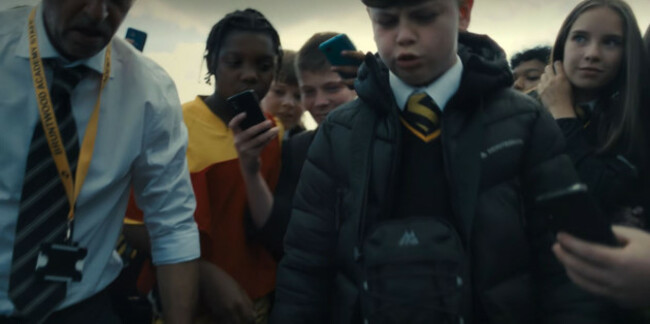
Adolescence also subtly challenges reductive attempts to blame fatherlessness and the feminisation of education, suggesting that both fathers and male teachers can also be part of the problem.
Importantly, therefore, while the manosphere’s toxic messaging about women and dating clearly plays an incendiary role, Adolescence shows us that patriarchy has long been a damaging force in the lives of boys and men. The show has sparked extensive media coverage and debate, in particular about the challenges that boys face in becoming men in a world riven by competing progressive and regressive forces and characterised by economic, ecological and epistemic insecurity.
Above all, it is a call to action regarding the urgent need for education and intervention, as well as supportive spaces in which boys can challenge and reject the pressure to always be in control, repress emotion and empathy, and measure their self-worth in terms of physicality, wealth and the sexual subjugation of women.
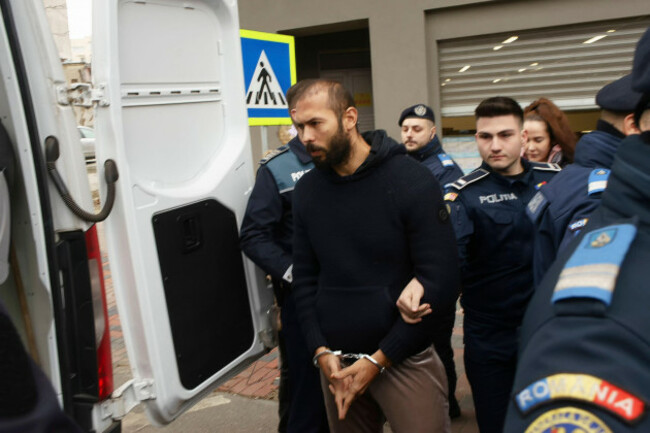
Jamie’s insistence on his innocence until the final episode, when he claims that ‘videos can be faked’, is a particularly damning indictment of the moral impact that strongman politicians and manfluencers charged with rape can have on boys in a ‘post-truth’ era. As a rogue’s gallery of megalomaniac billionaires and far-right grifters send pernicious signals to boys about power, truth and accountability, calls for mandatory ethics and philosophy modules to be embedded across all our educational systems have never been so exigent.
We need to create healthy and inclusive educational and social ecosystems in which boys can become men unrestricted by gender straightjacketing. As Niobe Way has long argued, a paradigm shift is required, from framing boys’ problems as a crisis of masculinity to understanding them as a crisis of connection. In Ireland, the Boys in the Making programme, led by the Rialto Youth Project and Dr Fiona Whelan in NCAD, is an inspiring example of how boys can be included in the conversation and given agency precisely through connection around their anxieties, challenges and vulnerabilities.
Sexual rejection is an inevitable part of adolescence for everyone. But as long as schools fail to deal adequately with laddism, homophobia, consent and critical digital literacy, disaffected masculinities will continue to become radicalised into hate movements. These issues cannot be dealt with by assembly talks – they require whole-school commitment to change and the involvement of parents, including an acknowledgement of the role that schools, parents and society more broadly play in both perpetuating and challenging sexism and gender stereotyping.
Debbie Ging is Professor of Digital Media and Gender in the School of Communications at Dublin City University and Director of the DCU Institute for Research on Genders and Sexualities.
To embed this post, copy the code below on your site















have your say