We need your help now

Support from readers like you keeps The Journal open.

You are visiting us because we have something you value. Independent, unbiased news that tells the truth. Advertising revenue goes some way to support our mission, but this year it has not been enough.

If you've seen value in our reporting, please contribute what you can, so we can continue to produce accurate and meaningful journalism. For everyone who needs it.

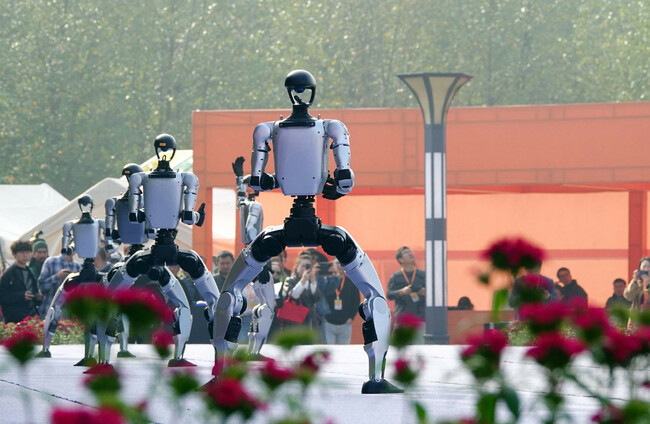
Robots Dancing at Chrysanthemum Exhibition in Yichang, Hubei, China on October 28, 2025. Alamy Stock Photo

The AI arms race Are we sleepwalking into the abyss?

With Silicon Valley, Beijing and Brussels shaping the future of artificial intelligence, who is protecting humanity, asks Jason O’Sullivan?

EVERY DAY ON all forms of media, we are being told by various influencers, commentators and experts that humanity is at an unprecedented crossroads, a path unknown and paved with risk.

The threat and rise of artificial intelligence (AI) have become an overwhelming factor in our lives, where many try to ignore and dismiss, while others are intrigued or obsessed in trying to understand this foreign visitor. In truth, I fall into the latter camp, and this explains why my online algorithms are skewed towards such content. While this is feeding my research, it is also growing such anxiousness and fascination in equal measures.

It is a difficult subject to get one’s head around, and even the so-called pioneers of the field, industry experts and thought leaders demonstrate much uncertainty on how things will eventually pan out for the human race, which is not comforting.

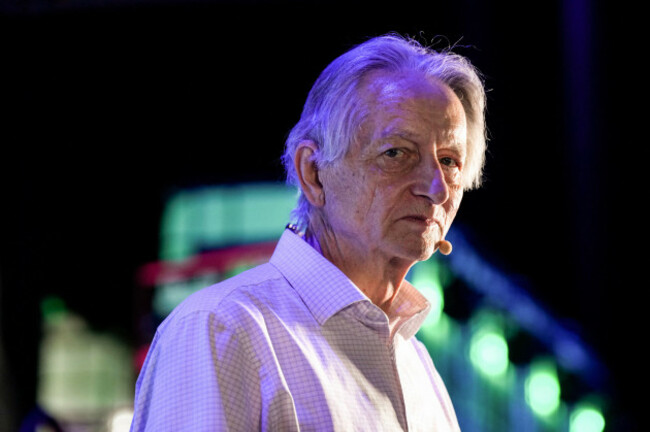
The original creators of AI have begun issuing stark public warnings about the risks of losing control. Geoffrey Hinton, widely known as the godfather of AI, for instance, has cautioned that “it is hard to see how you prevent the bad actors from using it for bad things,” urging that the global AI race “will not stop unless we put guardrails in place.”

geoffrey-hinton-is-seen-backstage-before-speaking-at-the-collision-conference-in-toronto-on-wednesday-june-19-2024-the-canadian-presschris-young Geoffrey Hinton, the computer scientist known as the 'godfather of AI'. Alamy Stock Photo Alamy Stock Photo

The sheer speed at which AI is advancing is a factor to be aware of, and the reasoning for such expeditious growth lies solely with the competitive trait of humans and in this context, the race between the five companies vying to win the AI race and claim bragging rights.

The tech titans

There is an obscene and inconceivable amount of money being pumped into the infinite AI black hole by those companies and investors alike, with much of the investments being channelled through each other’s companies, creating a type of symbiotic rivalry built on co-dependence and co-propaganda.

The tech titans in question are NVIDIA, Microsoft, Alphabet (Google/DeepMind), Amazon, and Meta, each investing tens to hundreds of billions of dollars annually in AI infrastructure, chips, cloud platforms and frontier research, which is reflected in their enormous market capitalisations of $2.8 trillion (NVIDIA), $2.6 trillion (Microsoft), $2.3 trillion (Alphabet), $2.1 trillion (Amazon), and $1.7 trillion (Meta), which demonstrates both the scale of resources they command and the unprecedented levels of capital flowing into the AI race.

Then you couple this with the geopolitical contest between such leading superpowers as the United States (US) and China, which is fuelling expeditious AI advancement, in the absence of little oversight or regulation.

The breakneck advances also in humanoid robotics in China, in particular demonstrates such capability that will not only influence future warfare and conflicts but signal a future where human labour will be increasingly displaced across manufacturing and service sectors. 

CCTV Video News Agency / YouTube

At the heart of AI and humanoid robotics advancements is the goal to reshape the global labour landscape. The speed and scale of these high stakes contest raises urgent questions about job displacement, economic inequality and the absence of global oversight in deploying machines designed to perform human work.

What about regulation?

As already noted, uncertainty prevails in predictions. The best-case scenario ranges from AI transforming society in a positive manner and improving health care, education, environment and industries, while co-existing in harmony.

This scenario is idealistic and does not address the fallout of potential job losses, societal upheaval and the possibility of losing our agency and control.

Also, the fact that certain leaders and those in powerful positions will find ways to use AI for self-gain or a competitive edge will leave the poorest and most vulnerable as collateral damage.

During an appearance on The Joe Rogan Experience, Elon Musk warned last year that advanced AI carries “a 20% chance of human extinction,” reiterating his long‑held view that while AI may bring enormous benefits, it also poses a genuine existential threat if it surpasses human control.

That is why one fears the doomsday warnings might be more worthy of heeding, of what reality might transpire. It is a cynical view, granted, but when you examine the main players in this crisis, the rhetoric and intent appear focused on the human traits of greed and ego. The desired traits of selflessness or acting in the common good appear to be absent from those leading the AI charge.

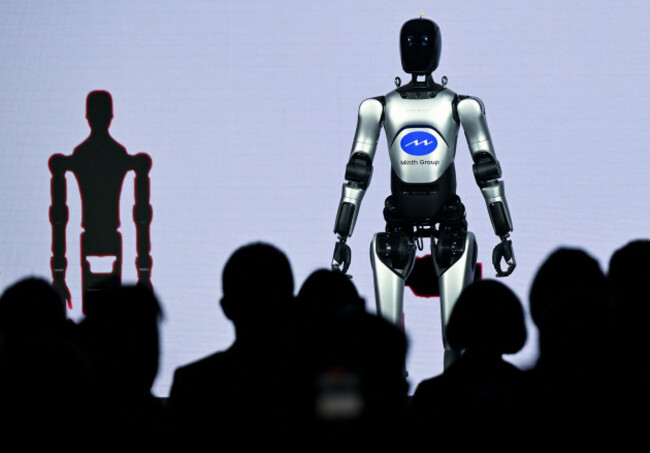
munich-germany-24th-feb-2026-a-robot-from-the-manufacturer-agibot-x2-stands-on-stage-during-a-presentation-the-shanghai-based-company-manufactures-humanoid-robots-and-wants-to-conquer-the-europ Munich, Germany. 24th Feb, 2026. A robot from the manufacturer AgiBot (X2) stands on stage during a presentation. Alamy Stock Photo Alamy Stock Photo

Regulation has also been largely absent when it comes to AI on an international scale, apart from the European Union, which has positioned itself as the global frontrunner on AI regulation through initiatives like the EU Artificial Intelligence Act (AI Act). This piece of legislation is a world‑first, comprehensive regulatory framework for governing AI.

This has significant implications for Ireland, requiring the State to enforce strict risk‑based rules on high‑risk AI systems while simultaneously positioning Ireland as a key European regulatory hub. The Irish Government has begun to implement the AI Act domestically under the Regulation of Artificial Intelligence Bill 2026.

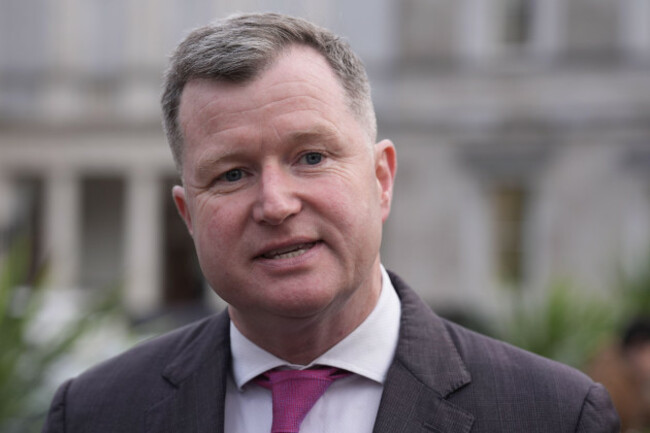
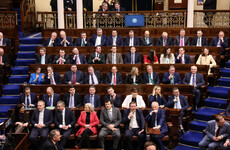
It is also a positive step from an Irish perspective that our government established the Joint Committee on Artificial Intelligence in May last year, with the remit to examine how Ireland should develop, use, regulate and ethically manage AI. It is also tasked with recommending how this can be done in a way that encourages growth and innovation while protecting people’s rights and reducing risks.

malcolm-byrne-from-fianna-fail-arrives-at-leinster-house-in-dublin-ahead-of-the-first-sitting-of-the-new-dail-since-the-irish-general-election-the-174-tds-will-vote-by-secret-ballot-to-elect-a-new-ce Malcolm Byrne is chair of the committee on Artificial Intelligence. Alamy Stock Photo Alamy Stock Photo

Such overall regulation from Europe is encouraging, when compared with the US, where AI oversight remains soft touch and industry‑led, and China, where regulation is tied to state priorities rather than independent safeguards.

The EU’s rules are unquestionably more structured and rights‑focused. However, critics argue that the EU’s approach is too slow and not sufficiently aligned with the speed of frontier‑model development, especially as major players in the US and China continue to accelerate investment and deployment with minimal constraints. This may leave the EU vulnerable to becoming a rule‑maker but not a rule‑setter, risking a future where the real direction of AI is determined in Silicon Valley or Beijing, not Europe.

For the EU to genuinely lead, commentators are suggesting it must pair regulation with industrial strategy, greater research investment, and a more agile governance framework capable of responding to developments in real time. This will at least be difficult in the short term, whereby a joint consensus requirement is integral in EU policy making, where delay upon delay can occur, due to a fragmented framework of nations with opposing policy views, when compared to the autocratic power and leadership demonstrated by US President Trump or China’s President Xi Jinping.

So, are we sleepwalking into oblivion? Likely the answer is yes, unless we slow down the advancement and bring in more regulation and oversight into AI development. Some experts feel we are still not at the point of no return, but time is running out fast to ensure checks and balances are put in place.

Jerry Seinfeld, comedy legend, perhaps summed up best the absurdity about AI, on the Jimmy Fallon US talk show in 2024, when he joked, “We’re smart enough to invent AI, dumb enough to need it, and so stupid we can’t figure out if we did the right thing”.

Therefore, now is the time for governments, nations and citizens to place focus on this existential threat and try to wrangle back some level of control from those industry leaders, for the sake of society and our humanity.

Jason O’ Sullivan, is a Solicitor and Public Affairs Consultant at J.O.S Solicitors.

Readers like you are keeping these stories free for everyone...
A mix of advertising and supporting contributions helps keep paywalls away from valuable information like this article. Over 5,000 readers like you have already stepped up and support us with a monthly payment or a once-off donation.

Close
6 Comments
This is YOUR comments community. Stay civil, stay constructive, stay on topic. Please familiarise yourself with our comments policy here before taking part.
Leave a Comment
    Submit a report
    Please help us understand how this comment violates our community guidelines.
    Thank you for the feedback
    Your feedback has been sent to our team for review.

    Leave a commentcancel

     
    JournalTv
    News in 60 seconds