Sign in. It’s quick, free and it’s up to you.
An account is an optional way to support the work we do. Find out more.
Sign in. It’s quick, free and it’s up to you.
An account is an optional way to support the work we do. Find out more.
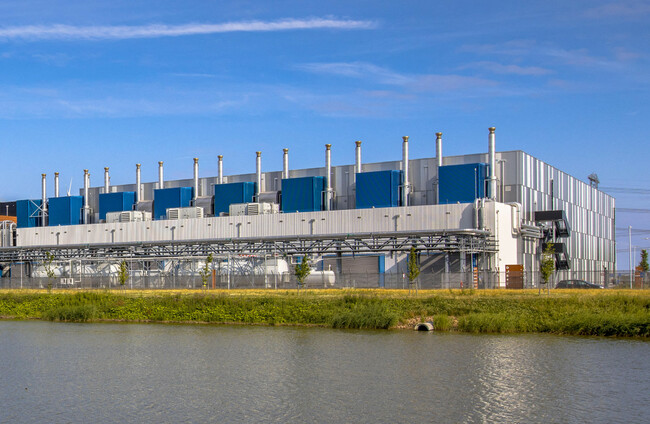

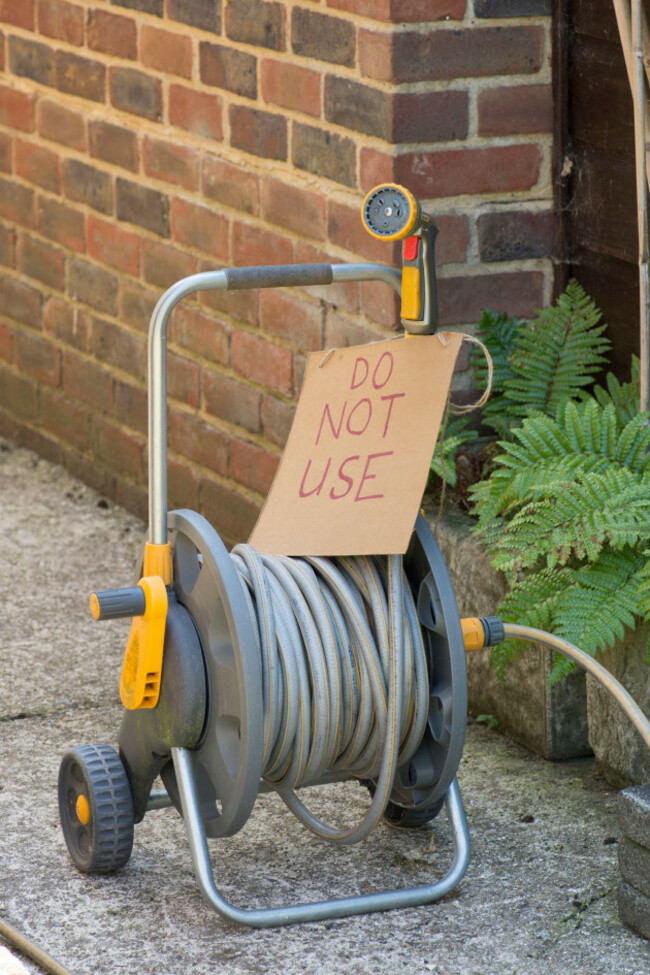
THE HOSEPIPE BAN has recently been extended across Ireland, and in the aftermath of near-record-breaking heatwaves, houses are still being urged to do their part to reduce their water use. Meanwhile, some of the largest water consumers, data centres and other heavy industry, continue to draw on the public water supply without meaningful restriction or oversight.
Responsible governance and an informed public debate require reliable data to base decisions on. However, when it comes to data centres, the information is patchy and confusing, and what information we do have is often the result of journalistic efforts. It’s clear an environment of secrecy has favoured this sector amidst its ever-growing impacts.
The footprint of this sector in Ireland is significant, as these vast warehouses of servers produce intense heat, requiring sophisticated cooling systems to work effectively. Their impact has led to some headline-grabbing statistics, such as the 23% of annual electricity usage last year (more than all urban homes across the country) to the more recent revelation of almost one billion litres of water consumed in the same period (the same usage as Sligo Town).
Given this footprint, it’s surprising that the government has admitted it does not even know the exact number of data centres located in the country. According to EU estimates, there are likely 123+ data centres operating in Ireland, although the exact number varies due to the lack of an official government source.
Unlike electricity, where the CSO provides reliable figures, the full picture of how much water the sector consumes remains unclear. While Uisce Éireann has reported that data centres use less than 0.3% of drinking water, at a rate of five million litres per day (depending on the weather), the accuracy of that figure is questionable.
The Journal’s recent investigation has provided much-needed clarity, but important questions still remain, as the reported figure of one billion litres of water accounts for only 48 of the 57 data centres currently connected to the water mains.
In addition, there are 60+ data centres not connected to the water mains. Even if they primarily use air-cooling, these facilities likely also rely on water abstracted directly from surface and groundwater when temperatures rise too high for air-cooling to be effective (such as during a heatwave).
Again, the numbers are unclear, as the EPA’s abstraction register does not list a single identifiable data centre. In fact, there is no standalone category for data centres to register under. Simply put, we do not know how many of these facilities draw from freshwater rivers and lakes, and what impact this has on our already stressed flora, fauna and aquatic ecosystems.
Current corporate reporting practices do little to clarify this picture, and where data is voluntarily disclosed, it is often inconsistent and non-comparable. Meta tends to be the most comprehensive, reporting total water withdrawals in Ireland over the last five years in megalitres.
Microsoft discloses only one year, also in megalitres, and compares the amount to seven Olympic-size swimming pools. Google discloses by location, but in gallons rather than megalitres, and golf courses rather than swimming pools. Other hyperscale data centre operators in Ireland, such as Amazon and Equinix, do not appear to release comparable figures.
So, where will transparency come from? The EU’s Energy Efficiency Directive aims to provide the answer, as a three-stage process is currently unfolding at EU level to assess data centre performance. It started with the establishment of an EU database, and now the creation of a rating and labelling scheme (much like a household BER certificate). There is then the promise of setting minimum performance standards across the sector, subject to further negotiations.
Ireland’s implementation of the data centre reporting requirements has been limited so far, and a 2025 performance report found that only 18 of Ireland’s 123 data centres had reported to the mandatory database. This is due in part to the Irish government’s failure to fully implement the EU directive into Irish law, which has already resulted in an active infringement case from the European Commission.
Unsurprisingly, the EU’s transparency effort has already faced strong opposition from the data centre lobby. As The Journal has previously reported, a “secrecy provision” written by sector lobbyists was added almost word-for-word into regulations. This change allows data centres to display aggregated national figures rather than per-facility data, effectively obscuring the impacts on local communities. And more recently, the Financial Times reported that the sustainability labels are also being watered down, meaning that even if the EU’s plan is implemented in full, it will still leave us with a frustratingly incomplete picture of the environmental impacts of Ireland’s data centres.
There is, however, a chance for the Irish government to legislate for greater transparency from data centre operators. In adopting the Energy Efficiency Directive, Member States have the autonomy to strengthen it, beyond the minimum requirements. The previous government chose not to, actively resisting the national database requirement and opting instead to let data centres report directly to Europe.
At a minimum, the government could require comprehensive, facility-level disclosure of water and energy consumption, along with other sustainability metrics. Ideally, this would also include provisions to reduce their environmental impacts and impose penalties when they fail to do so.
The industry may push back, citing commercial sensitivity, competitiveness and even potential job losses. However, given the enormous impact of the sector on Ireland’s natural resources, and, in turn, our ecological, economic and social stability, transparency and accountability should not be too much to ask for. At a certain point, the public good must outweigh corporate interests.
Dr Aideen O’Dochartaigh is an Associate Professor in Accounting at DCU, Dylan Murphy is a PhD Candidate at UCD researching the environmental sustainability of Data Centres, and Dr Elaine McGoff is Head of Advocacy at An Taisce. AI Declaration: Generative AI tools were not used in any aspect of the research and writing of this opinion piece.
To embed this post, copy the code below on your site














have your say