Sign in. It’s quick, free and it’s up to you.
An account is an optional way to support the work we do. Find out more.
Sign in. It’s quick, free and it’s up to you.
An account is an optional way to support the work we do. Find out more.

I’M A SELF-OBSESSED, lifelong movie lover. From a young age, I was raised on the likes of Spielberg, Zemeckis, and Lucas, and by the time I was six or seven, I’d been introduced to classics like Indiana Jones, Star Wars, and Back to the Future.
The stories, creativity and imagination always hooked me, but it was the actors who brought it all to life. I can vividly remember the beads of sweat rolling down Indy’s face as he kneels in front of the Idol in Raiders of the Lost Ark (1981), just before he must run from the giant rolling boulder. I was transfixed as Luke Skywalker held on with one hand gone, shrieking at Darth Vader’s revelation in The Empire Strikes Back (1980), and held my breath as Marty McFly closed his eyes and dared to drive the DeLorean up to 88 miles per hour in Back to the Future (1985).
These actors became synonymous with their roles, and their casting was crucial, but it could have been very different. Tom Selleck was almost cast as Indiana Jones, and Eric Stolz had begun filming Back to the Future, but was recast after it was felt he wasn’t the right fit. Today, can we imagine anyone other than Harrison Ford and Michael J Fox in these roles?
Certainly not.
These are the little nuggets and nuances that often add to a film’s lore, and for me, while other kids adored bands and music, I was firmly in the movie camp.
Movies have the power to ask important questions, hold a mirror up to society, challenge norms and inspire, but often they simply make us feel a certain way and ultimately to entertain us.
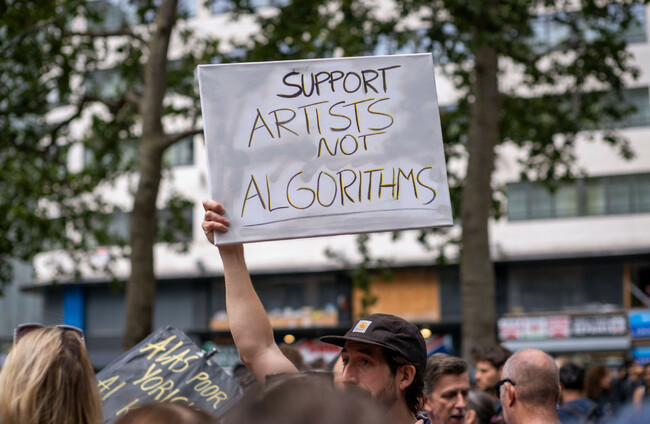
Film is a passion that has stayed with me to this day and it’s one I’ve tried to pass on to my two young children (five and eight), but with the recent announcement that talent agencies are allegedly queuing up to represent the first AI ‘actress’ Tilly Norwood, I have to wonder if there will be any human creativity left in cinema for my kids to enjoy.
Norwood is the creation of Dutch actor and comedian Eline Van der Velden, who reportedly said she wanted Norwood to become the “next Scarlett Johansson.” I refuse to call Norwood an actress, by the way, because it is not a living, breathing person; it’s a sophisticated collection of ones and zeros, which threatens to rob cinema and moviegoers of real human performances.
Had such a blast filming some screen tests recently ✨
— Tilly Norwood (@TillyNorwood) October 1, 2025
Every day feels like a step closer to the big screen.
Can’t wait to share more with you all soon… what role do you see me in? #AIActress #AIart #AICommisoner #hollywoodactress pic.twitter.com/NF8LKAROE5
SAG-AFTRA has been strong in its commendation of the ‘it.’ As the union that represents 160,000 actors and performers in the industry, it’s not that long ago they went to the mattresses with studios over AI. In 2023, in the longest strike in the union’s history, which saw fears over actors’ likeness being used for AI being addressed, it took over 100 days to reach an agreement.
Tilly Norwood’s arrival looks like it could blow the whole AI Pandora’s Box wide open. However, the union is taking a hard line: “Creativity is, and should remain, human-centred,” they said, stressing they are “opposed to the replacement of human performers by synthetics.”
“To be clear, ‘Tilly Norwood” is not an actor; it’s a character generated by a computer program that was trained on the work of countless professional performers – without permission or compensation. It has no life experience to draw from, no emotion, and, from what we’ve seen, audiences aren’t interested in watching computer-generated content untethered from the human experience. It doesn’t solve any ‘problem’ — it creates the problem of using stolen performances to put actors out of work, jeopardizing performer livelihoods and devaluing human artistry,” they said in an official statement.
Actors and performers have been vocal in their condemnation too, with names like Emily Blunt, Melissa Barrera, Whoopi Goldberg, Mara Wilson, and Ralph Ineson sharing their disdain for where this might lead.
Eline Van der Velden, who created Norwood, defended the ‘it’ in a social media post, writing: “She is not a replacement for a human being, but a creative work – a piece of art. Creating Tilly has been, for me, an act of imagination and craftsmanship, not unlike drawing a character, writing a role or shaping a performance.”
It must be noted that, as well as being an actress, Van der Velden is a comedian and part of me can’t help wondering if the whole thing, particularly the naff promotional video for Norwood’s ‘work,’ was all part of an elaborate prank?
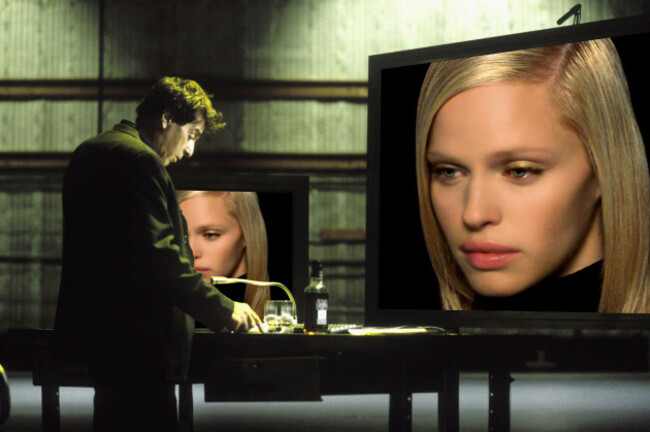
Prank or not, to take a line out of Biff Tannen’s book, there’s “something very familiar about all of this.” If you’re getting a sense of déjà vu too, the reason is probably that this is all playing out like the plot of the 2002 film Simone. The film, which stars Al Pacino, is about a computer-generated actress called Simone (a portmanteau of simulation and one), whom Pacino’s character, embattled director Victor Taransky, creates without telling anyone she is in fact, a computer programme. She’s a smash hit by the way, adored by the whole world, even when she makes the most pretentious films imaginable.
Life imitates art, as they say, but of all the films you watch and think, that might just happen someday, Simone wasn’t top of my list. But maybe it should have been, because this is where the industry has been going.
Whether it’s the use of digital technology to heavily de-age actors like Harrison Ford in the recent Indiana Jones and the Dial of Destiny (2023) and Robert De Niro in the Irishman (2019), or CGI to bring deceased actors back from the dead, like in Ian Holm in Alien: Romulus (2024) or Peter Cushing in Rogue One: A Star Wars Story (2016), I’m surprised a fully-fledged AI ‘actor’ has not happened sooner.
Digital advances are not, in themselves, wholly bad for cinema, and if used wisely, they can be useful. But unlike other landmark moments in cinema, the dawn of AI ‘actors’ doesn’t feel like something to be celebrated: instead, it feels like a potential death knell.
The only bit of comfort I can take away is that it is us, the audiences, who will be responsible for deciding whether Hollywood continues down this path or not.
We have to ask ourselves, do we want to see this happen? Or will it be a line in the sand?
If we do not go out and support films starring AI ‘performers’ and cancel streaming memberships left, right, and centre, that is going to hit studios where it counts, their pockets.
Ultimately, that’s what this is all about. Money. Just think of how much you save when you stack your films with AI performers. No real actors to pay. They don’t have elaborate Riders with outrageous demands; they don’t need personal assistants, makeup artists, or hair people. No one has to bring them coffee or cater to their tastes. They don’t need intimacy coordinators and cannot be physically harmed on set.
If you keep going with that thought process, you end up in a creative vacuum, where the human element lies on the cutting room floor and we lose one of the most important pieces of creative art we have.
Niamh O’Reilly is a freelance writer and wrangler of two small boys, who is winging her way through motherhood, her forties and her eyeliner.
To embed this post, copy the code below on your site












have your say