Sign in. It’s quick, free and it’s up to you.
An account is an optional way to support the work we do. Find out more.
Sign in. It’s quick, free and it’s up to you.
An account is an optional way to support the work we do. Find out more.
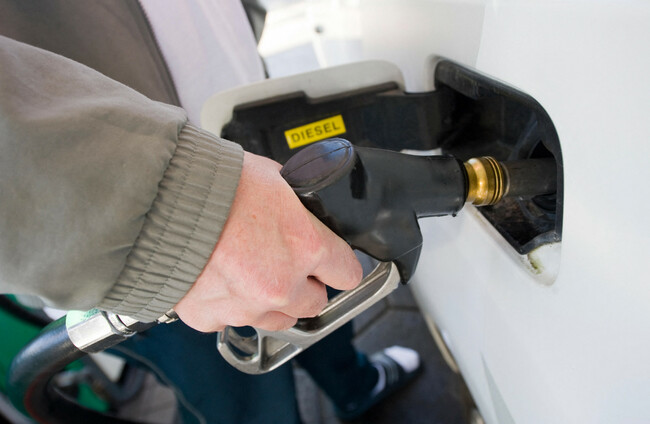

THE TAOISEACH’S COMMENTS on fuel prices bring an important choice into focus.
Micheál Martin has acknowledged that the elevated petrol and diesel prices motorists are now experiencing may represent a “new normal”. He has also indicated that the government will consider further measures in the coming weeks and that the future of the carbon tax will form part of that discussion.
If the government decides that motorists and businesses need further protection from rising fuel costs, there is a better option than slowing or postponing carbon tax.
Proceed with the carbon-tax increase, but reduce excise duty by an equivalent amount so that the overall tax burden on petrol and diesel does not rise.
It would protect motorists and businesses from an additional policy-driven increase at the pump, while preserving the purpose and trajectory of carbon tax. That distinction matters.
Carbon tax is not simply another charge on a litre of petrol or diesel. It has a specific policy purpose: putting a price on emissions, encouraging the transition towards lower-carbon alternatives and generating revenues that are ringfenced for climate action.
Excise duty does not perform that same function.
So if the government believes the overall level of taxation on fuel has become too high in the current circumstances, why should carbon tax automatically be the tax that gives way?
There is no reason it has to be. The government has more than one lever available to it.
A corresponding reduction in excise would allow the scheduled carbon-tax increase to proceed without adding to the overall tax burden on conventional fuels.
If Government wants to reduce the pressure on motorists, reduce the tax that has no emissions-reduction function before weakening the tax that does.
That is a much more coherent approach than repeatedly changing the carbon-tax trajectory whenever international energy prices rise. It would also provide greater certainty.
Carbon tax is meant to send a long-term signal to consumers and businesses about the direction of travel. If that signal is weakened every time geopolitical events push oil prices higher, the State risks creating uncertainty around one of the principal instruments it is using to support decarbonisation.
At the same time, nobody should pretend that affordability is a secondary concern.
For a household that depends on a car to get to work, a small business running a fleet of vehicles or a haulier moving goods around the country, the total price at the pump is what matters.
The challenge for the government is therefore not to choose between affordability and climate policy. It is to design taxation so that it advances both.
That requires looking beyond the assumption that carbon tax is the obvious measure to postpone whenever fuel prices become politically difficult.
Over many years, the government has built up a much wider set of taxes, obligations and regulatory costs around transport and heating fuels.
There is excise duty, carbon tax and VAT. There are renewable-fuel and energy-efficiency obligations, strategic stock holding requirements, sustainability rules and further costs associated with the transition towards lower-carbon energy.
Most of those measures exist for legitimate reasons, but they have largely been developed individually, while consumers experience their cumulative impact.
The motorist sees one number on the forecourt sign. The household sees one total on a heating bill. The business sees the overall cost of operating vehicles, moving goods or heating premises.
That is why the government needs to become much more deliberate about which policy levers it uses when prices rise.
Last week, Fuels for Ireland argued that the government should not alter the carbon-tax trajectory without first understanding the full range of public-policy costs affecting fuel prices. The Taoiseach’s comments make that argument more urgent.
If they want to shield consumers from the next scheduled increase in the tax burden on fuel, they can do so without abandoning the carbon-tax trajectory. Increase carbon tax as planned and offset it through excise. Then address the wider problem.
Fuels for Ireland has proposed an independent, time-bound expert group to examine the combined impact and effectiveness of the taxes, levies, obligations and regulatory costs affecting transport and home-heating fuels.
That work should establish whether the overall system is coherent, whether individual measures are delivering what they were designed to achieve and whether some are working against others.
It should also give the government a better basis for deciding which taxes or obligations should be increased, reduced, redesigned or retained in future.
An expert group should not become an excuse for avoiding the immediate choice. The government is already discussing what to do next. The answer should not be another ad hoc postponement of carbon tax.
If €2 diesel and persistently high energy prices are becoming a new normal, the State cannot continue responding with temporary changes to whichever tax happens to be next in the calendar.
We need a more intelligent distinction between taxes designed to raise revenue and taxes designed to change behaviour.
Protect motorists where protection is needed, but do it in a way that does not undermine the transition the government says it wants to achieve.
Kevin McPartlan is the CEO of Fuels for Ireland.
To embed this post, copy the code below on your site














have your say