Sign in. It’s quick, free and it’s up to you.
An account is an optional way to support the work we do. Find out more.
Sign in. It’s quick, free and it’s up to you.
An account is an optional way to support the work we do. Find out more.

LAST UPDATE | 31 Aug
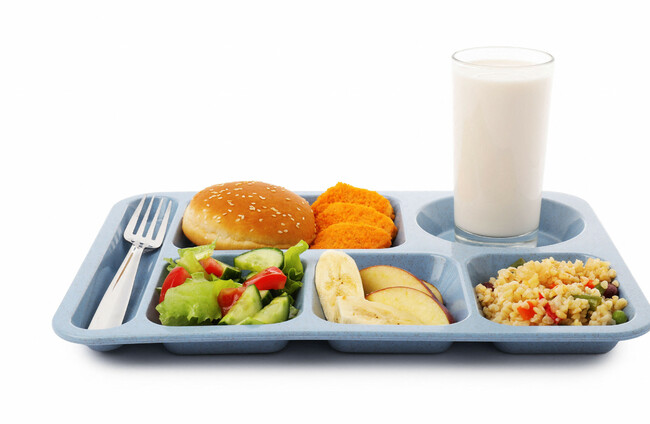
IF YOU’RE STILL packing a lunchbox for your child as they head back to school this week, despite the presence of the Hot School Meals Programme in your classroom, you’re far from alone. While it’s tempting to assume the government-funded initiative has magically removed the need for parents to send in snacks and full lunches for their children regularly, the evidence from parents on the ground is that it has not.
Earlier this year, a national survey of more than 8,000 parents, teachers and suppliers of the scheme found that 80% of parents send in another lunch for their children. Founder of the Cool Food School Deirdre Doyle, who teaches children about healthy eating, recently put out a call on social media asking if parents were still interested in lunchbox ideas, given the scheme. The response was overwhelming.
“I was quite surprised, as I thought most kids were getting the hot school meals, so there was no longer a need for home packed lunches,” she says. “But it was interesting to read from some parents that they need to supplement the lunches as they’re not big enough or their kids don’t like them. Some parents have opted out as their kids are not enjoying them or the quality is not great. And some schools still don’t have hot school meals,” she explains.
“Many parents were also looking for ideas for what to provide their children for ‘little break’ as that is typically not covered by the hot meals scheme. I hadn’t considered that,” she adds.
While the hot lunch scheme has broadly been accepted as a positive step in the right direction, and for some children it may mean having access to a hot, nutritious meal they might not otherwise have had, the feedback from many parents is that it’s patchy.
While open to every primary school in the country, not all have signed up to the programme, citing issues around basic logistics or access, waste or lack of demand for the current offering. Many who do have it in their school raise issues around the quality of the meals. According to the recent national review, almost two-thirds (64%) said they felt the food wasn’t nutritious, while three-quarters reported their children do not enjoy the variety of food. Other issues often highlighted are around the look or texture of the reheated food, the lack of centralised cooking facilities, and the one-portion-size-fits-all approach, which bizarrely sees the same size lunch presented to a junior infant and a sixth-class student.
Many wanted more cold lunch options, and most people also stated that more than half of the food provided is left uneaten. The waste is a massive problem with the scheme, and when the leftover food is brought home, cold and congealed after hours in a school bag, it doesn’t look like the most appetising thing in the world, even if at the time of eating it was perfectly passable.
But what if the biggest issue with our children’s school lunches, be it hot or cold, is the one that doesn’t get discussed enough, yet is staring us right in the face? It’s the one our children tell us frequently when they get home from school.
I didn’t have time to eat it, mum.
The lack of time allocated for children to sit down and actually eat their lunch is, in my view, the single biggest issue we need to address if we want to ensure our children are well-fed and fuelled for learning. In a straw poll I put out, 76% said their children do not get enough time to eat in school, and it’s one of the most consistent issues parents raise, regardless of whether their kids are availing of the hot lunch scheme or eating a packed lunch.
While the powers that be have called for a review of the current structure of the school day, which presumably will look at how much time is allocated for eating, for now it’s not being addressed seriously, with the national review by Fine Gael making only passing remarks, like-
“School lunch breaks may be too short to properly consume a hot meal.”
That’s hardly a startling revelation though, is it? Considering many children didn’t have enough time to eat a cold sandwich before the scheme was rolled out to every primary school in the country. Surely, it wasn’t much of a leap to assume they wouldn’t have enough time to eat a hot meal either?
According to primary school teacher and author Cormac O’Donoghue, “children generally have around 10 minutes to eat their lunch, although this can vary between schools. The actual eating time can be much shorter once children have settled, washed their hands, opened containers and, of course, spent time chatting and socialising with their friends. Slower eaters, younger children and those who need help opening packaging can be particularly affected,” he explains.
When we give our children mere minutes to eat lunch, forcing them to either wolf it down without thinking about what they’re eating or take just a bite or two before the lure of the yard becomes too much, are we in danger of creating a negative relationship for them with food and eating?
O’Donoghue, who is working with Lidl Foodies on a free national education programme to build a more positive relationship for children with fruit and vegetables, says, “We need to consider the quality of lunchtime, not only the official number of minutes allocated to it. Giving children a calm, protected period to sit, eat more slowly and develop positive habits around food is important. The goal should not be to force children to clear their lunchbox, but to give them a fair opportunity to eat enough at their own pace and to develop the healthy habit of not rushing their food.”
It’s a philosophy some schools are already taking on board. Dr Orla Kelly, Principal at John Scottus Primary School Old Conna, who has students all sit and eat the same meal together, believes that “lunchtime is not simply a break between lessons, they are a core learning opportunity.” It’s important that children have “sufficient time and a relaxed, unpressurised environment in which to enjoy meals,” she says, adding “it gives children valuable opportunities to talk, listen, share experiences and build connections with one another.”
The positive impact of making school lunchtimes a more social, slower-paced activity is one Deirdre Doyle has also seen firsthand. “I work with preschools, and I see that the children all get the same meal (allergies catered for), they eat off plates, they use proper cutlery, in some cases they serve themselves,” she explains. “They all sit down together to eat. Then they go off to big school, and everyone’s eating different things, served in disposable containers with disposable cutlery,” she says.
“It’s such a missed opportunity for our kids,” adds Doyle. “I feel there is no respect given to the food served in schools – it’s just another job that has to be done. There is no focus on enjoying the food,” she adds. “As it stands, we are treating food in schools like an inconvenience, almost, instead of something to be valued and savoured. We have generations of children growing up thinking that food must be rushed instead of being a valuable social event,” cautions Doyle.
The dream scenario would be for every school to have dedicated cooking and eating facilities. A canteen that’s just for sitting and eating, and a more social approach to mealtimes, backed up by food education in the classroom. It’s something Doyle echoes.
“If I was in government, I would firstly channel all the money for the hot school meals scheme into building kitchens in schools in disadvantaged areas. Employ local people to cook, use Irish ingredients and suppliers, get the kids to help prep and cook. When they are up and running, move the same model to other schools. Use plates, proper cutlery, and limit options,” she adds.
While that would be the sensible solution, it may be asking a little too much of a government that has struggled with the basics like getting a children’s hospital built and opened on time and on budget. So, perhaps canteens in schools and giving children more than 10 minutes to eat are simply beyond its current skill set?
Niamh O’Reilly is a freelance writer and journalist.
To embed this post, copy the code below on your site











have your say