Sign in. It’s quick, free and it’s up to you.
An account is an optional way to support the work we do. Find out more.
Sign in. It’s quick, free and it’s up to you.
An account is an optional way to support the work we do. Find out more.

LAST UPDATE | 14 Aug 2025
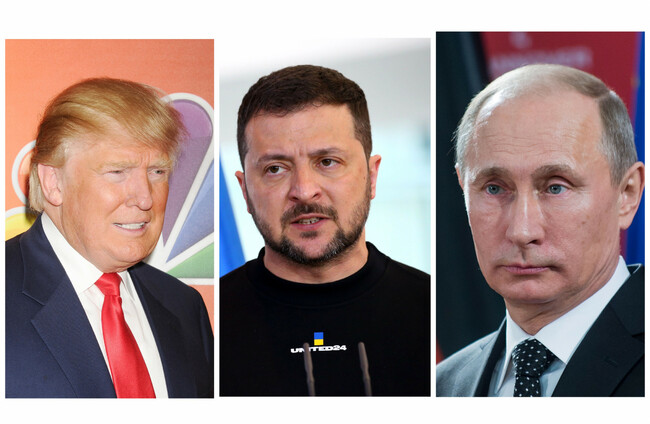
WHEN DONALD TRUMP and Vladimir Putin sit down in Alaska tomorrow, it will be the first meeting between US and Russian presidents on American soil since 2015.
Alaska — sold by Russia along with its people to the US in 1867 — provides a symbolic backdrop. It is a reminder of history’s imperial transactions, when the price is paid not only in dollars, but in freedom and lives.
Trump would surely consider it outrageous if a foreign power met Putin abroad to discuss transferring Alaska or California to Russia. And yet, the US president will meet the Kremlin leader to discuss Ukraine’s future without any Ukrainians in the room. As the adage goes, if you’re not at the table, you’re probably on the menu.
This Alaska summit has been planned at lightning speed. Trump only announced it on 8 August, touting it as a chance to “end the war in Ukraine”. Usually, summits are many months in the planning and are convened to sign off on what has already been agreed.
But Putin has given no advance indication of compromise. On the contrary, he has reiterated the maximalist demands the Kremlin set out in June: formal recognition of Russian sovereignty over five Ukrainian regions, Ukraine’s “demilitarisation”, a ban on foreign military aid, and new elections. Ukraine and Russia’s aims remain diametrically opposed.
The optics already favour Putin. If Zelenskyy is excluded at Moscow’s request, the summit will have granted Russia a de facto veto over Ukrainian participation, a symbolic victory before the meeting even begins. The worry in European capitals is that Trump’s impatience will benefit Putin’s long game.
For Putin, a summit without Ukraine offers the chance to make his pitch for a deal that would lock in Moscow’s territorial gains, perpetuate Ukrainian insecurity, and allow Russia to return to the battlefield later if more land can be taken.
The EU has stated — minus a conspicuously absent Hungary — that any settlement must respect Ukraine’s territorial integrity and the principle that borders cannot be changed by force. Europe now contributes more military and financial aid to Ukraine than the US, and holds leverage in the form of €200 billion in frozen Russian assets.
Since returning to office, Trump has pursued a pattern of phone(y) diplomacy and behind-the-scenes talks with Russia. He signalled readiness to make major concessions to Moscow: allowing continued Russian control of occupied Ukrainian regions, ruling out NATO membership for Ukraine, and easing sanctions pressure. Despite this, Russia has escalated missile and drone strikes on Ukraine to an unprecedented level.
Trump’s rhetoric has consistently mirrored core Kremlin narratives. He has suggested that Ukraine’s aspirations to join NATO provoked Russia’s invasion, has labelled Zelenskyy a dictator, and implied Ukraine is to blame for the war. He is on record describing Russia’s invasion of Ukraine as “so smart”.
Trump very much shares Putin’s worldview that militarily strong states should dominate weaker neighbours and that that “great powers” deserve “spheres of influence”. Since taking office, he has vowed to “take back” the Panama Canal, wrestle Greenland from Denmark and spoken of making Canada the USA’s 51st state.
Last week, Trump floated the idea of a “swap” of territories “to the betterment of both” Ukraine and Russia. However, Ukraine holds no Russian land. Every area in question is Ukrainian territory currently occupied by Russia. It’s as if someone robbed a portion of your bank account savings and then came back and said they’d swap some of the money they’d stolen in return for some of the money still in your account. That’s not a genuine exchange — it’s still robbery!
The Kremlin would be most likely to offer up land it has acquired but does not claim to have “annexed”. One suggestion is that Russia might relinquish some recently occupied areas in the Sumy and Kharkiv regions — about 1,700 square kilometres — in exchange for uncontested control over much larger territories in Donetsk and Luhansk. But Ukraine rejects such “trades” outright and will not give up territory it has successfully defended for more than a decade.
Nothing concrete will probably emerge from Friday’s summit. In that sense, the meeting is an end in itself. For Trump, the attractions are obvious: the spectacle of summitry, the photo-op with Putin, the ability to claim he is bringing the war to an end, whatever the terms.
For Putin, it is the chance to break isolation, ease sanctions and legitimise his land grab without facing Ukrainian negotiators. For Ukraine, it’s about survival and avoiding being carved up in absentia by two leaders with their own agendas.
A bad peace might seem better than no peace. But history suggests that rewarded dictators return for more. Putin’s goals — subverting Ukraine, strengthening Russia, and avoiding accountability — have not changed. Without enforceable guarantees, any agreement will likely prove to be little more than a pause before the next round of genocidal aggression.
Trump approaches foreign policy as theatre. Summits are stages, History, the will of “great men”. The complexities of sovereignty, occupation and war crimes dissolve into a photo-op handshake.
Trump’s impatience, inexperience, arrogance and transactional mindset are among Putin’s greatest assets. The US president measures success in days and headlines; Putin measures it in years and strategic gains. One man seeks a quick win; the other seeks to reshape Europe’s security map for decades.
For Putin, Alaska is a potential step towards a grand bargain with the US: the lifting of sanctions, renewed business ties, cooperation on resources, Russia pocketing 20% of Ukraine’s territory and a seat back at the global table — all in exchange for “ending” a war he started and can resume at will.
Any understanding between Putin and Trump that doesn’t have the buy-in of Ukraine or its many supporters in Europe is doomed to failure and will simply prolong Russia’s war.
We face a stark choice: stand by Ukraine as a sovereign equal in deciding its future, or legitimise the seizure of territory by force and signal to every would-be aggressor that the principles underpinning the UN Charter are illusory.
Donnacha Ó Beacháin is Professor of Politics at Dublin City University. For more than two decades, he has worked and researched in the post-Soviet region and has been published widely on the subject. His new book, Unfinished Empire: Russian Imperialism in Ukraine and the Near Abroad, is out now.
To embed this post, copy the code below on your site









have your say