Sign in. It’s quick, free and it’s up to you.
An account is an optional way to support the work we do. Find out more.
Sign in. It’s quick, free and it’s up to you.
An account is an optional way to support the work we do. Find out more.

In this brand-new series, journalist and spoken word artist Cormac Fitzgerald travels to a different town or suburb each week to cover the gigs and cultural experiences you rarely see covered by Irish media outlets.
This week’s subject: Soft rock and smoke machines as a Dublin cinema complex plays host to a Pentacostal service.
*****
THE OMNIPLEX in Santry, north Dublin, was my local cinema growing up.
I have many memories of going there for birthday parties as a child in the 90s to see movies like The Lion King, Casper The Friendly Ghost and (for some reason) Speed 2: Cruise Control.
In later years, I hung around there with friends trying to get into 15-rated movies when we were 14 and trying to get into 18-rated movies when we were 16. I think the last movie I saw at the Omniplex was The Longest Yard back in 2005, a truly diabolical Adam Sandler remake.
So, it was from the profane to the sacred as I stepped into the old Omniplex (now IMC Santry) on a bright early summer morning to attend the Sunday Service of the Lighthouse Church.
Over the last decade or so, Evangelical and Pentecostal Christian churches in Ireland have started to use empty cinema screens early on Sundays to conduct their services.
The arrangement is mutually beneficial – giving less-established churches a big, well-equipped, comfortable auditorium for their services, while giving cinemas some extra revenue to make up for declining attendance.
I wanted to get a sense of what one of these cinema services was like, and what kind of people were going to them.
It was like no religious ceremony I had ever been to before.
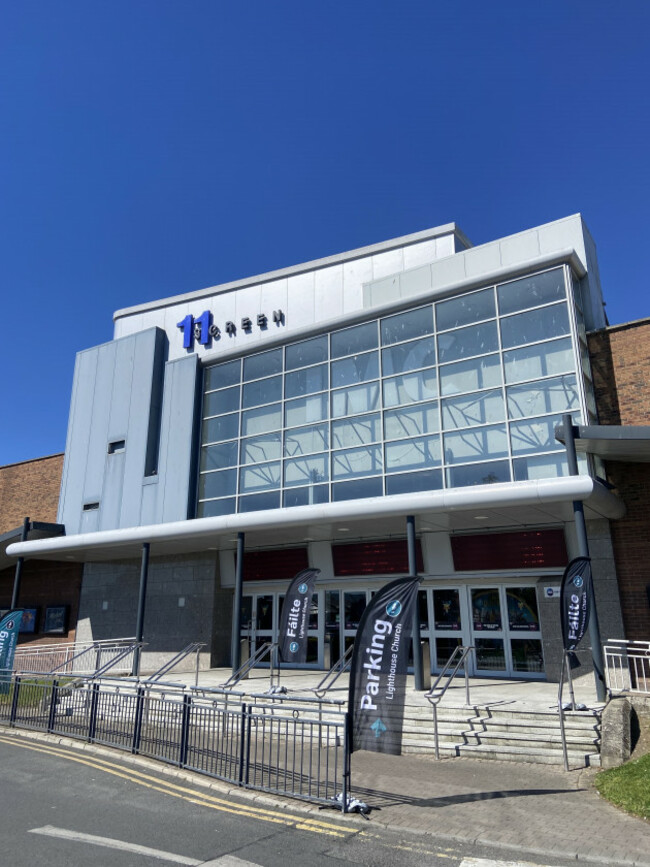
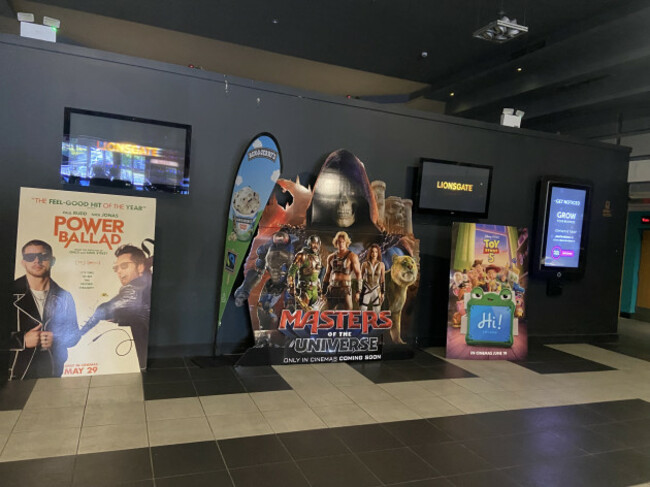
The IMC still had the billboards advertising all the latest movies and the waft of buttery popcorn floating about the place.
As I entered, I was clocked immediately by two church volunteers who enthusiastically greeted me and asked me my name. (I had checked in with the church ahead of time to tell them I’d be coming along to report – but it appeared the message hadn’t been passed around. I was warmly welcomed nonetheless).
There would be no anonymous skulking around for me, like a lapsed Catholic sneaking into the back of Mass. If you were present, you were greeted and invited into the fold. The Lighthouse, like most Pentecostal churches, are actively focused on growing their congregation.
After a quick hello to Gift Qakamfana, this location’s young pastor, everyone headed towards Screen 2 – passing cardboard cutouts of the Masters of the Universe and the Toy Story gang – to wait for the service to begin.
Pentecostal Christianity – a subset of the wider Evangelical Christian movement – is a significant worldwide religion.
There are hundreds of millions of adherents in places like Brazil, West Africa, and the United States. Its pastors in the US often hold strong political sway, and are closely linked with the Republican Party and President Donald Trump (in some cases running vast mega-churches and becoming multi-multi-millionaires in the process).
In Ireland, it is a relatively tiny – but growing – minority religion. According to CSO figures, the number of people who identify as ‘Apostolic or Pentecostal’ rose by over 10,000 between 2002 and the last census in 2022. The increase reflects the acceleration of immigration to Ireland during the post-2000 Celtic Tiger period in particular. Numbers have been more-or-less static since 2016.
It is common for Pentecostals to try out different churches until they find one that suits them. In contrast to the focus on liturgy in the Catholic Church, the idea is to have a direct relationship and personal encounters with Jesus and God.
In Ireland, many churches fall under the common banner of Christian Churches Ireland (CCI), as well as a wider international network of the Association of Christian Churches (ARC).
There is a strong emphasis on “planting” churches in new areas, proselyting (converting people), and attempting to grow the religion.
The Lighthouse was founded in Navan, Co Meath, in 2008 by Jamie Corcoran and his wife Ludmila. It now has four branches where services are held: Navan, Dundalk, Blanchardstown in West Dublin, and its newest location in the north city suburbs.
The church makes significant use of modern technology, with an active social media presence, youth groups, and slick video and music production, all used to spread their message.
The Sunday services are the main church gatherings, but there are multiple other group gatherings and events throughout each week.
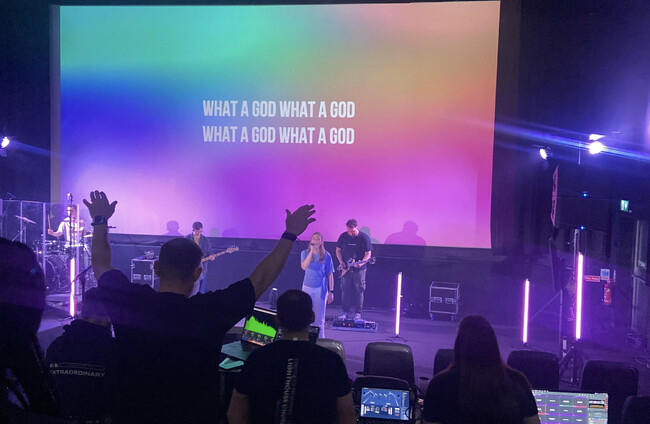
Entering the cool cinema screening room was like walking into a concert venue. A full band, with drummer, guitarist, bassist and two singers, was just finishing setting up.
There was a professional sound and lighting desk, and the screen had a countdown clock for when the service would begin.
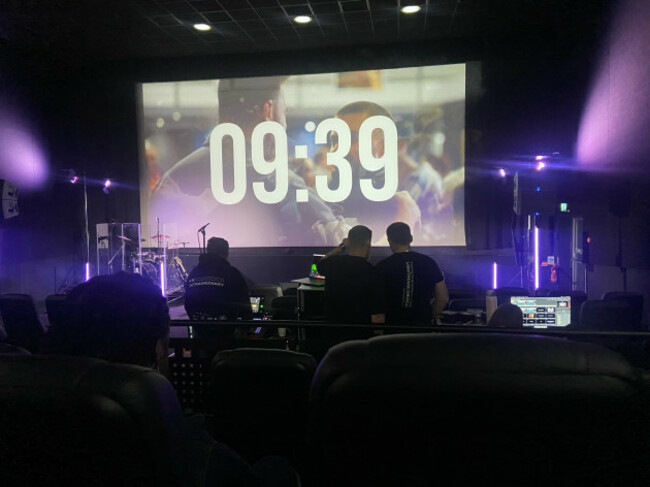
People filed in slowly, dressed casually and holding take away coffees and drinks. In total, including the band and main volunteers, there were about 30 people present at the service.
I took my seat about four rows back, and was joined by a friendly young woman, Lola, who introduced herself and apologised in advance, saying she liked to sing and dance and worship enthusiastically throughout the service.
After a few advertisements and church messages beamed through the big screen, smoke fulled the auditorium and the band kicked off with an original soft-rock song all about worshipping Jesus.
The words were displayed behind the band on the big screen, so people could join in, and straight away Lola and others were on their feet, dancing and singing along to the music.
After the first song, one of the volunteers, Ruth, took the mic and gave a short speech about the church and God.
“Our prayer for you today is that you would have an encounter with Jesus,” she told the assembled crowd, as a guitar plucked quiet mood music behind her.
Another volunteer, an American man named Josh, also took to the stage to talk about the importance of Jesus and God in everyday life.
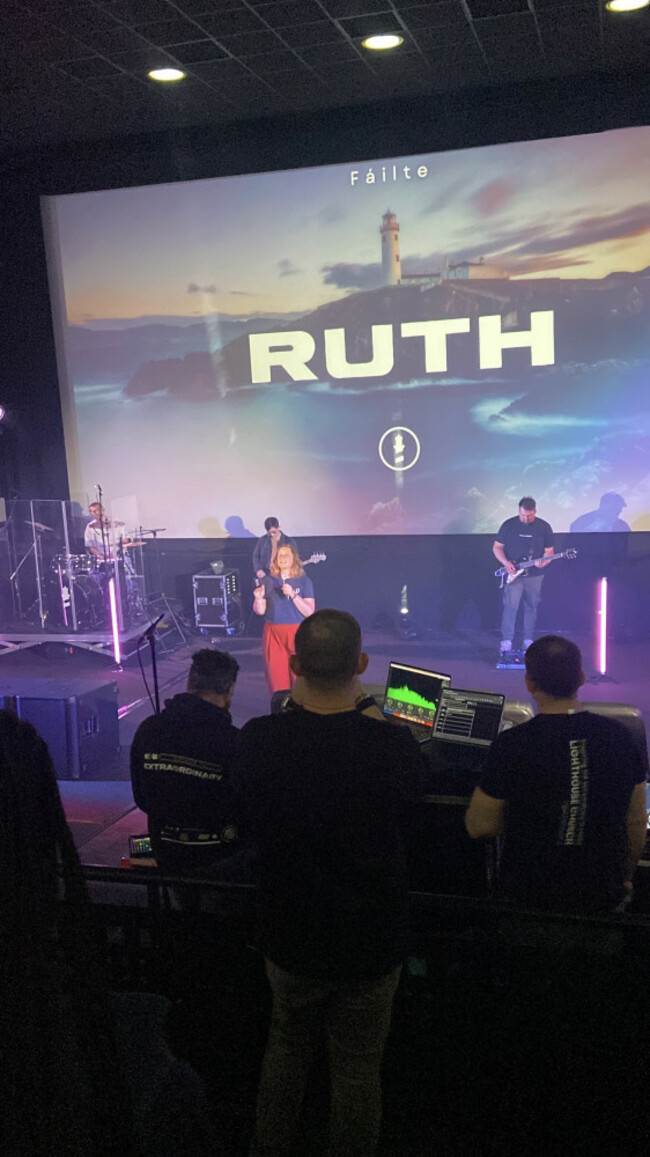
Following this, it was time for another song, this one more rousing than the last as the two singers and the crowd belted out the simple chorus: “What a God! What a God!”
The production values and set up were really something else. The sound was better than most concerts I have been to, and I later learned volunteers arrived at 7am to start setting up.
The whole service – which lasted about an hour but felt far shorter than your typical 40-minute Irish Mass – was geared towards the “event”. The idea was to feel God personally through the music, movement and prayers.
People danced and worshipped to the music, waving their arms and singing at the top of their lungs. It made a stark difference to the mumbled refrains of the Catholic masses I am used to. This was something else entirely: religion as a soft rock gig; religion as spectacle.
I am not religious. I had planned to not get involved at all in the ceremony, but found myself involuntarily swaying and tapping my feet without realising what I was doing.
Was this my encounter?
Was this Jesus I felt reverberating in my chest, or just a kick drum?
I decided it was the latter, but I can imagine if I had come primed to have an experience with God, the dazzling spectacle that morning in Screen 2 might well have convinced me He was talking to me.
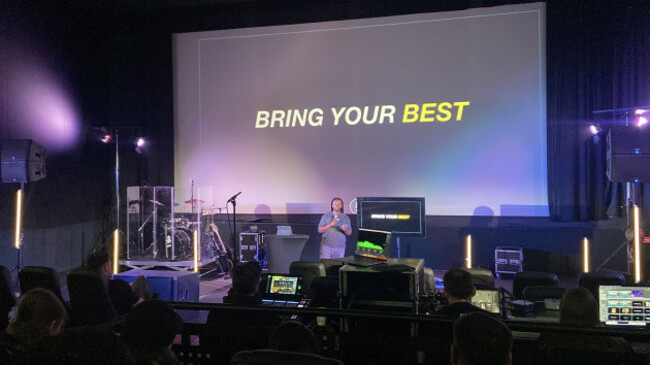
After the second song, Qakamfana took to the stage to give his sermon focused on welcoming Jesus and God into your life, and “bringing your best” to every situation, with pictures and Bible passages displayed on the screen behind him.
There was one more song at the end, the most rousing number yet, followed by a few announcements and calls for donations, and that was it.
While the service differed from Catholic Mass in many, many ways, they both had at least one thing in common: people hung around afterwards to have a good chat.
I took the chance to speak to a few members of the church to find out what it was that drew them to the Lighthouse. First up was Ololade (Lola) Oluwadele, the friendly, enthusiastic woman who had sat next to me during the service. She has been a member of the Lighthouse for two-and-a-half years.
So, what drew her to this church?
“I was just looking for a fresh start, because I obviously grew up in a Christian household,” the 32-year-old told me.
But I was just trying to see… I felt like God was telling me to move on from my previous place, and my husband and I, we were just kind of praying and seeing where God wants us to go.
She attended her first service across the city in Blanchardstown and immediately felt like she was welcomed and at home.
The wide range of different nationalities and backgrounds, with people from Romania, Ireland, Nigeria, England, Brazil and other countries, appealed to her, as did the friendly positive attitude of everyone she met.
Ruth O’Brien, who spoke during the Service, was raised a Catholic in Ireland, but converted to a Pentecostal after she had a religious experience at a Christian event in the UK, where she was training to be a nurse.
She was part of a large church when she lived in England, and volunteered running a medical service for homeless people, before she felt called back to Ireland in order to help plant a church here and spread the word of God. She eventually found her home in the Lighthouse.
While she wants her religion to grow, O’Brien believes it must be a specifically Irish iteration, and should not follow the adversarial, politically focussed example set by churches in the US (the Lighthouse is connected to these churches through the ARC umbrella).
“One of the most important things to us as a church is that we’re a church in Ireland for Irish people,” she said.
Whether that’s Irish people who are like native, historically Irish, or who are what we like to call the new Irish.. we have our culture, and we’re not trying to build a church that looks like it fits in a culture of other countries.
Finally, as people start to file out into the bright, sunny afternoon, I talked to Gift Qakamfana, the young pastor.
Qakamfana (27), grew up in Navan, and has been attending The Lighthouse since he was 15. He described himself as a troubled youth who found the church at an important time in his life. He began playing the drums in the band and his commitment grew from there.
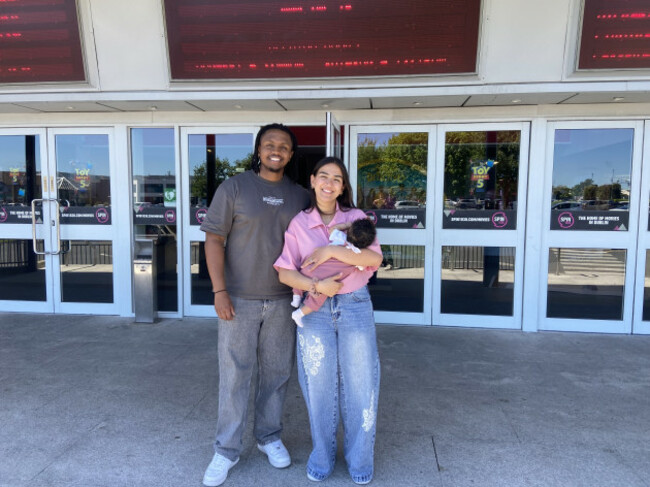
He has dedicated much of his young life to the church, first moving to Dundalk to help plant the Lighthouse there, and then relocating with his wife Karoline, and their young daughter, Alora, to set up the North Dublin location.
Despite being the location pastor, Qakamfana still works full-time in Costa Coffee in Swords. What does he see as his progression and future in the church?
“Honestly, I could not be a pastor and go back to playing drums. I’d still be happy out,” he said.
“For me, it’s just the passion. I just love, I love serving, and I genuinely love the town that I live in… and I love Ireland. It’s all I know.
For me, there’s no big master plan in the next 10 years. Hopefully, we’re still here. If we’re not, we’re not. But we’ll keep doing what we’re doing.
All the music and spectacle aside, the people I spoke to seemed to have found this church for the main reasons most people seek out any religion: community, meaning, and to try to believe in something larger than themselves.
Cormac will be back next Tuesday evening with another exploration of how Ireland spends its spare time (in ways that might surprise you).

To embed this post, copy the code below on your site







have your say