Sign in. It’s quick, free and it’s up to you.
An account is an optional way to support the work we do. Find out more.
Sign in. It’s quick, free and it’s up to you.
An account is an optional way to support the work we do. Find out more.

FORMER UN SECRETARY General Kofi Annan once said: “Education is the premise of progress in every society, in every family.”
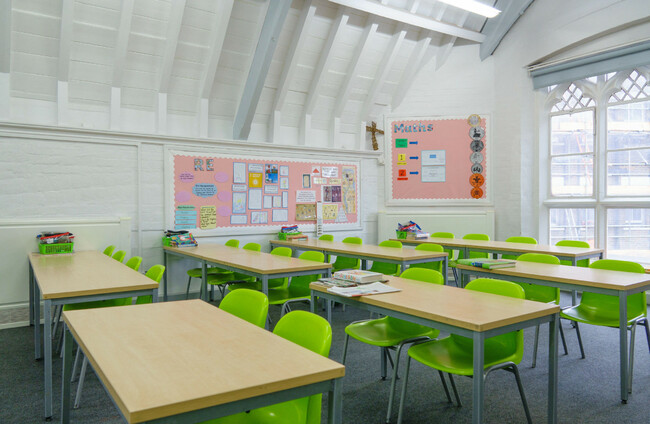
Yet as another school year begins, Ireland’s primary education system finds itself at a critical juncture. Long-standing underinvestment is impossible to ignore. It is jeopardising the future of the next generation.
In Ireland, only 11% of overall government expenditure goes to education. Thirty years ago, it was 14.5%. Successive governments should have raised it to at least 16% by now to show that we are serious about having the best education system in the world.
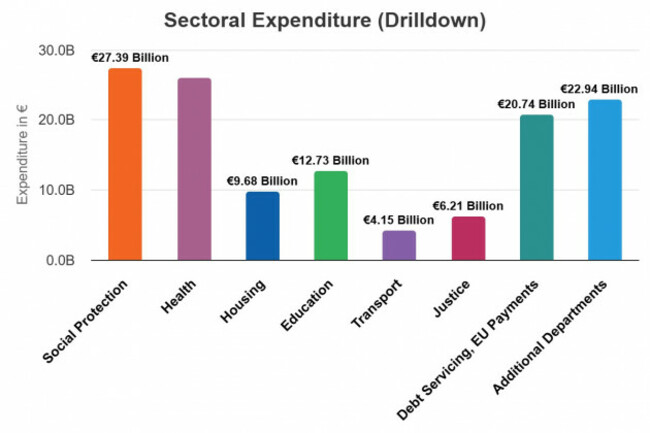
Our government’s spending decisions do not reflect the needs of primary and special schools. The main reason the DEY needed a supplementary budget earlier this year is because the Department of Public Expenditure left 4,000 schools well short of the funding they needed to thrive in 2026. This shortsightedness is guaranteed to cause problems.
The penny pinchers should heed the challenge issued by celebrated academic Howard Gardner: “If you think education is expensive, try estimating the cost of ignorance!”
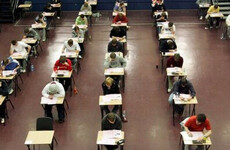
Despite growing surpluses in public finances, overcrowded primary school classes persist. The Department of Education and Youth (DEY) recently confirmed that 428,941 children attended classes larger than the EU average of 19 this year. Indeed, the number of children in classes with 35 or more pupils increased.
The government reneging on its own programme, which committed to reducing the appointment and retention figures for classroom teachers, has led to this scandalous situation.
Instead of doing what they promised, they have presided over the unfilled posts for 900 mainstream class teachers since June 2024. That leaves our children languishing behind their European peers in supersized classes.
In Ireland, classroom teachers are provided for 23 pupils – whereas average class sizes in Croatia, Greece and Latvia are well below the EU average of 19.
Lately, there appears to be more interest amongst certain ministers (including An Taoiseach) and some media outlets in soundbites relating to militarisation rather than investing in public services such as education.
Yet Nelson Mandela highlighted a powerful form of defence, stating: “Education is the most powerful weapon which you can use to change the world.”
Education makes our young people more compassionate and empathetic. It leads to better living standards. On the other hand, negligence of education leaves the door open to extremism, racism, fascism, intolerance and division. Countries with sinister intentions can exploit such tensions online (á la Brexit) a lot more easily than mounting any supposed military attack.
Dear reader, would you choose the extra €640 million funding for children’s education – which has been framed by some cynics as a ‘bailout’ – or a proposed €680 million per year for capital defence projects (the latter demanded by Tánaiste Simon Harris)? What is a better investment: a tank or a teacher? What are we “defending” if we don’t invest in our children?
Regarding the Tánaiste, a further glimpse into the possible attitudes of some within the Fine Gael party towards education was given this month. The constituency director for Simon Harris believes that “if there was a way not to work, teachers will find it”.
This comes off the back of other highlights from the Fine Gael back catalogue, including a room full of party members laughing at Michael O’Leary’s disrespectful and disgraceful comments about teachers two years ago. Interestingly, when asked about laughter at the event, Simon Harris said he had ‘no idea’ if Mr O’Leary had donated to Fine Gael.
This type of rhetoric in Irish public life is serving no one, least of all the young children in this country, and is merely targeting and scapegoating teachers as they try to navigate an under-resourced education system.
Just last month we heard that there are 1,251 classes with 30 children or more in Irish primary schools. This is an indictment of Fine Gael’s record in successive governments over the past 15 years.
In fact, since Fianna Fáil’s Donogh O’Malley reduced the figure for the fourth mainstream primary teacher from 140 pupils to 130 in 1966, there have been nine ministers for education from Fine Gael.
Of the total historical reduction from 140 to 75 pupils for the fourth teacher, Fine Gael ministers reduced it by just two pupils in total. In fact, 63 of those reduction points were delivered by Labour and Fianna Fáil ministers.
So, it could be said, some with platforms and power in Ireland aren’t just laughing at teachers – they’re laughing at our children’s education. One wonders if Jack Chambers, Fianna Fáil’s minister for purse strings, will take more inspiration from O’Malley or from his coalition colleagues when assessing departmental funding?
John Boyle is General Secretary of the Irish National Teachers’ Organisation (INTO).
To embed this post, copy the code below on your site








have your say