Sign in. It’s quick, free and it’s up to you.
An account is an optional way to support the work we do. Find out more.
Sign in. It’s quick, free and it’s up to you.
An account is an optional way to support the work we do. Find out more.
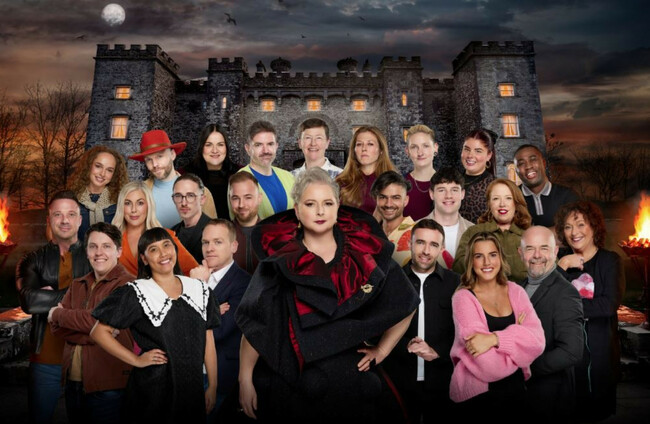

AS MUCH AS we like to tell our young children that honesty is the best policy, it’s not always strictly true and nowhere is our love of a bit of smooth deception more evident than with hit TV show The Traitors.
I’m going to hold my hands up and confess that I am a superfan of this highly addictive show. I’ve been firmly on The Traitors train since it first dropped on the BBC in 2022, as a strange sort of November filler no one really knew about.
The show, which is based on a Dutch programme, is all about deception and lies. It was an instant hit and has since made its way to Irish screens, with the second series airing now on RTÉ One and hosted by the brilliant Siobhán McSweeney.
If you’ve not succumbed to its devilish charms yet, here’s how it works. It follows a group of contestants who are competing to win a cash prize, and each day they complete a series of challenges to bank as much money as possible in the prize pot. At the start of the show, the host secretly chooses usually three contestants to be ‘traitors’, and their mission is to anonymously ‘murder’ or vote off the rest of the players who are known as ‘faithfuls.’
Each night, the entire group gathers for a round table, where the ‘faithfuls’ try to figure out who the ‘traitors’ are and banish them one by one through a group vote. If they manage to get rid of them all, the ‘faithful’ or ‘faithfuls’ left at the end get the cash, but if there are any secret ‘traitors’ left, it is they who pocket the spoils and the ‘faithful’ or ‘faithfuls’ go home with nothing.
It’s a simple but ruthless concept that deliberately pits people against each other, where even the strongest alliances can be shattered when true identities and motivations are revealed. One watch and it’s not hard to see why it’s so popular, because it taps into that very human fascination with lying, deception and figuring out who you can trust when someone is a stranger. It’s something we’re all doing on the daily. We all make snap judgments about the people we meet, and often it’s based on very little real evidence.
It’s a gut feeling: what they are wearing or how someone speaks. Often, though, it’s all about what is not being said and is all about body language instead. Mostly, though, we don’t probe too deeply beyond the surface and get on with our day, whereas The Traitors forces people to dig deeper.
The other big draw of the show is that we the viewers are in on pretty much everything. We know all the players’ identities; we can see the social train wrecks playing out in real time, when one player pledges they 100% trust another, but are then crushed to find out their bestie was in fact lying the whole time.
It’s absolute drama, and while my two children are a little too young yet to sit down and get as stuck into the show as I seem to be, they are both fully aware of it and the talk about lies, because it’s simply too popular to avoid. Discussions about it are everywhere, on the radio or TV or social media; adults are yapping endlessly about it, teenagers are watching it, and the merch is in high street shops.
Then there’s the skits, the jokes, the hot takes and the wild speculation. As much as I love it, it’s hard to put something like The Traitors in a vacuum, away from little ears, who inevitably start to question why I’m so invested in a show about lying. As my eldest plainly asked me the other day, “So to win the money, you’ve basically got to be the biggest liar, right?”
After all my years insisting honesty was the best policy, I felt a bit hypocritical as I answered in the affirmative and was ready to go into how it’s just a game and not real life, etc. But when I sat and thought about it, aren’t most households just like smaller versions of The Traitors most of the time? Don’t most of us engage in a few white lies for the greater good occasionally, and what parent hasn’t felt like a faithful when trying to spot a lie from their kids, whether they be a toddler or a teenager?
“Did you brush your teeth?” – “Yes.” Except you find that their toothbrush is bone dry or just chewed to bits.
“No, I’m not tired, Mum,” they’ll say while practically unhinging their jaw to let out the world’s biggest yawn.
“Did you do your homework?” – “I thought we didn’t have any.”
“I’m staying over at Mary’s house tonight, Mum” – when they are in fact going out on the batter with a naggin in their pocket.
It’s gaslighting worthy of the round table, but it’s not just kids who do it; the adults, who try to hit home the honesty is the best policy line, are at it too. What parent hasn’t turned to the dark arts of deception when their children are toddlers and told a few white lies to survive?
No, the ice cream van only plays the music when they have RUN OUT of ice cream, kids.
Be good… because (Insert mystical seasonal deity here) – Santa/The Easter Bunny/Christmas Elf is watching.
“Mum, can we go to the park tomorrow?” – “We’ll see,” when in fact you have no intention of seeing or going.
As adults, we all use a certain amount of deception in our daily lives, and maybe it’s not always a bad thing? Be it telling the hairdresser that you love your new do, only to absolutely hate it, but you don’t want to hurt their feelings or telling someone you can’t make it tonight because one of the kids is sick, when in reality you just don’t want to go. White lies sometimes spare us those awkward conversations we want to avoid. Plus, show me a job seeker who hasn’t padded out their CV or bluffed their way through an interview to get a job or promotion?
I’m not saying we should all start raising compulsive liars. I think most of us want to instil that honesty is usually the best policy, but by the time they can talk, most children will test out a few white lies themselves for size.
Knowing when it’s appropriate and when it’s not is the key, but on a much more serious level, raising streetwise children who can spot when someone is lying is a hugely important life skill. Arguably, it’s as crucial as anything else you’re going to teach them about life.
So maybe I can pass off my Traitors’ obsession as an important life lesson for my kids after all, rather than just an addiction to drama, deceit and lies?
Niamh O’Reilly is a freelance writer and journalist.
To embed this post, copy the code below on your site














have your say