Sign in. It’s quick, free and it’s up to you.
An account is an optional way to support the work we do. Find out more.
Sign in. It’s quick, free and it’s up to you.
An account is an optional way to support the work we do. Find out more.
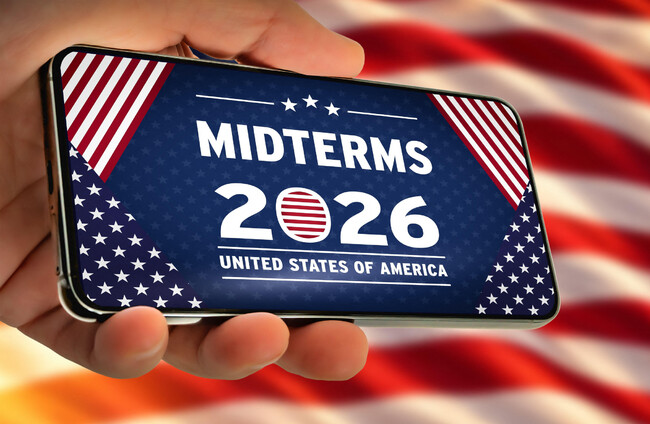

WHAT MANY PUNDITS are saying may be the most consequential midterm elections in the United States in a generation or more, have finally arrived. Thanks to early voting, by post, and in-person, tens of millions of Americans have already cast their ballots. Despite not having lived in my native Massachusetts for a quarter of a century, I made my choices over the weekend for federal, state and local office, as well as on nine referendum questions, on my iPhone.
As an aside, while democracy in the US is commonly claimed to be in jeopardy – and there are undeniably serious problems – it has never been easier to vote. Some commentators seize upon images of women and men in queues and suggest that things are terrible and that voter suppression is rampant. That is, however, directly at odds with my and the vast majority of the citizenry’s experience.
In Ireland, for all but a tiny segment of the population, there is no early voting. There is no postal voting. There is scant absentee voting for those who happen to be away from their constituency on the day. And votes for Irish citizens living abroad? Forget about it. The fact is that it is easier to exercise this sacred right in the US than it is here.
Returning to today’s contests, the amount of attention paid to the midterms globally has been extraordinary to behold. The question regularly posed to me by onlookers here is “what will it mean for Trump if the Democrats win?” ‘It’s complicated’ is my stock answer. Above all, I suspect people in Ireland and elsewhere are wondering whether there will be a pushback, having watched an American president who is increasingly unhinged of late.
Both the conditions – Trump’s approval rating is in the proverbial toilet and the cost of living continues to skyrocket – and the precedent – a second term president’s party usually gets a kicking – favour the Democrats. Indeed, if they don’t perform well, the oft-discussed identity crisis within the party will be to the fore in the post-mortems.

It is highly likely that the Democrats will get control of the US House of Representatives, given that Republicans only have three more seats at the moment. It will be interesting to see how big the Democratic gains will be. It also appears likely, though definitely not certain, that the GOP will lose the US Senate.
A key point is that the Republicans are in this unenviable political position in large part due to President Trump’s litany of unforced errors. He bears the lion’s share of the blame. Not only did he fail to solve inflation, as he pledged to do, his tariffs and war on Iran have made matters immeasurably worse.
He squandered the significant advantage conservatives had on the immigration issue by unleashing masked Immigration and Customs Enforcement (ICE) agents on the streets of cities and towns with multiple deaths ensuing. And Trump abandoned one of his most resonant slogans: America First! Instead, his administration has pursued an incoherent, meddling foreign policy which has self-enrichment at its heart. People are mad as hell about the corruption they are witnessing.
So what should those who are planning on a long night be watching for? If you aren’t pulling an all-nighter, hitting the sack early and setting the alarm for around 1am, when polls will be closing and the networks will start making projections, is a good idea. From 1 to 3am Irish time, we should start to acquire a decent sense of the verdict rendered by the electorate.
Assuming the Democrats will win the US House, there are a number of tight races for the upper chamber. Republicans could lose in places where they shouldn’t. Texas, Kansas, potentially even South Carolina and Mississippi, are actually in play. With the caveat that it is foolish to extrapolate excessively from any single contest, Texas, where James Talarico has leaned into his Christian faith as he seeks to defeat the ethically challenged, not well-regarded Republican, Ken Paxton, could tell a lot.

If Texans opt for Talarico, who would be the first Democrat to represent deep red oil country in the Senate in decades, it signals very strongly that a big blue wave, perhaps a blue tsunami, is sweeping across the US. Similarly, if the incumbent liberal Republican Susan Collins falls to Troy Jackson in Maine, then it probably portends a really bad showing for the GOP.
The hard-fought battle in Michigan between Abdul El-Sayed and Mike Rogers has garnered the most media coverage, especially after Democrat Haley Stevens endorsed Republican Rogers over her colleague, El-Sayed.
El-Sayed is an impressive, articulate, unapologetically left-wing candidate. He is a Muslim and has come under fire for his past relationship with the controversial Hasan Piker, who has made vile comments about 9/11 and other topics. Rogers is a fairly standard Republican. He has pivoted expediently toward President Trump, yet it is difficult to tar him with the far-right brush.

Regrettably, Islamophobia, explicit and implicit, has been a feature. President Trump despicably makes fun of El-Sayed’s name and refers to him as Mohammed. More subtly – and this is a tactic that could work – he tries to sow doubt: “Imagine that guy on the Senate intelligence committee?” He and others have attempted to plant a seed in voters’ minds: you mightn’t say it in polite company, but when you pull the curtain behind you in the polling booth, you know what you need to do.
In Maine, Michigan, Texas and elsewhere, these midterms are inescapably a referendum on Donald Trump. Democrats who triumph will surely take all the credit for themselves, but they will have prevailed primarily because Americans in the mushy middle of the ideological spectrum are displeased with the commander-in-chief and want to send a message.
Republicans cling to the truths that polls in 2026 have overestimated support for leftists and that President Trump typically fares better than expected. This cannot be discounted entirely. We shall soon see.
Without wishing either to dismiss the assertions of knowledgeable analysts who opine (correctly) that these midterms are of mammoth importance or to dissuade the legions of Irish addicts to American politics from staying up to the wee hours, keep two things in mind when it comes to the land of the eternal campaign. They’ll do it all again in two years. And the 2028 race for the White House begins on Wednesday morning.
Larry Donnelly is a Boston lawyer, a Law Lecturer at the University of Galway and a political columnist with The Journal.
To embed this post, copy the code below on your site















have your say