Sign in. It’s quick, free and it’s up to you.
An account is an optional way to support the work we do. Find out more.
Sign in. It’s quick, free and it’s up to you.
An account is an optional way to support the work we do. Find out more.
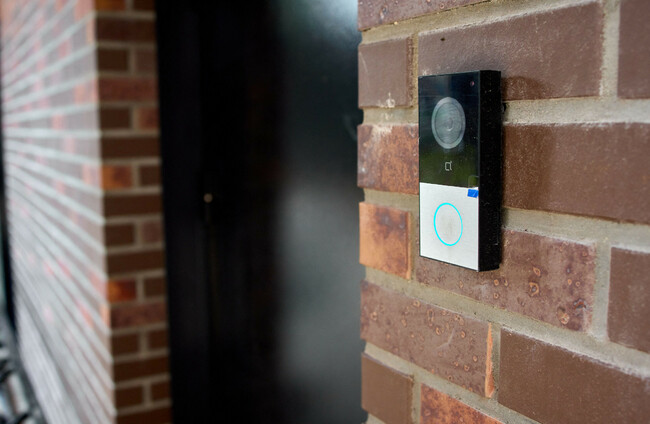

SURVEILLANCE IS NOT a new phenomenon. Each day, we’re all filmed by dozens (or even hundreds) of CCTV cameras, but we’ve largely become desensitised to the presence of security cameras. Perhaps this is because we rarely see the footage that’s collected, which lends a bit of psychological distance.
CCTV can even offer a sense of reassurance. People feel safer knowing there are cameras in public places. Cameras don’t prevent crime, but they make it easier to figure out what happened and who was responsible, when something does go wrong.
It’s no surprise people were quick to embrace doorbell cameras. Many still find them creepy and invasive because they have expanded the audience of who can replay footage of us going about our daily lives. Sure, most of the footage goes no further than a data centre, though some of it ends up online – often without the consent of those filmed.
Smart doorbells might be handy for accepting parcels when you’re out of the house, but there might be something deeper here: a manufactured pathology of fear and paranoia that we’re succumbing to.
Think back to the 90s, an objectively more dangerous time in Ireland. The only supervision that many kids had was a parent in the front room watching The Weakest Link. They’d throw an eye onto the street every now and then. There were no doorbell cameras, just Neighbourhood Watch stickers plastered on everyone’s porch doors.
Comparing then with now, the normalisation of doorbell cameras paints a picture of a deteriorating sense of community. Strong communities don’t thrive on the presence of personal CCTV systems. But it’s harder to sell these products to people who feel safe.
Not too long ago, people’s biggest concern was the fear that their phones were listening to them. Things they had spoken about appeared in their social media advertisements, leaving many uneasy. While it was never that simple, there are plenty of concerning ways in which we’re tracked online.
Upon learning this, we still weren’t collectively interested in parting ways with smartphones and social media apps. This has helped normalise an environment where privacy is a trade-off for some instant gratification. Since then, what we’re willing to tolerate has begun to spiral out of control.
With that said, smart glasses seem to be a step too far for many people. A privacy campaign called Stop Smart Glasses was launched in Ireland and the UK a couple of weeks ago, calling on people to act now before we normalise non-consensual filming in public. The initiative encourages people to contact opticians and high street retailers, urging them to stop selling smart glasses.
The Dublin Rape Crisis Centre (DRCC) has outlined the threats that smart glasses pose, facilitating violations ranging from mockery to coercive and sexual abuse. DRCC CEO Rachel Morrogh has said: “Restricting our lives is not an acceptable response to men’s violence against us” and she has previously spoken about how the tech aims to make the lives of women and girls as small as possible.
Coming down the tracks are some even more alarming developments that should inspire disquiet.
Recently, Apple revealed that it is integrating “Audio Intelligence” into the latest Apple Watch. This feature listens to what is going on throughout your day – without requiring a trigger like “Hey Siri” which was previously the case.
Users can avail of two new features facilitated by this capability. Firstly, “Live Rewind” on the Apple Watch continuously records audio from the wearable’s microphone. This can enable users to read a recap if they’ve missed something someone said. In a social setting, this is undeniably more awkward than just asking someone to repeat themselves.
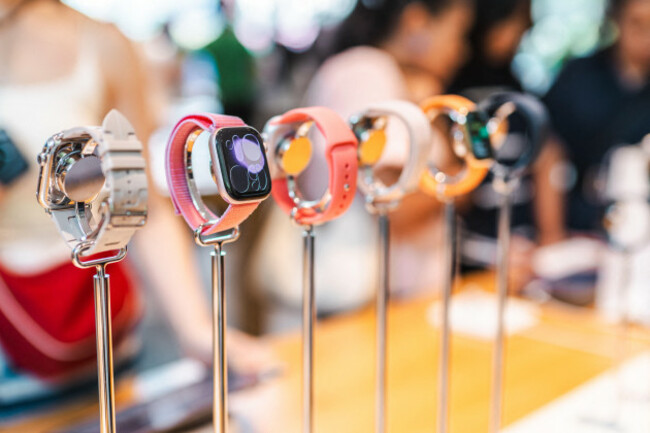
Secondly, we have “Siri Recap” which is another feature that listens all day long. It can transcribe your conversations throughout the day and use AI to repackage everything that has happened into a summary so that you can revisit important conversations later on. This might be a nice feature for people who ruminate on what was said during arguments, but most of us will feel like we’re involuntarily being placed in an episode of Black Mirror.
Parallel to this, rumours are swirling of new smart home products from the iPhone-maker. These devices reportedly include a doorbell, a thermostat, a smart lock and potentially, security cameras. These devices are expected to be made in partnership with LG. Yes, the same LG that saw itself at the centre of a smart TV privacy controversy in September.
It’s not just the big names that are leaning into this trend. A start-up called Pocket has created its own device for recording every conversation, meeting, phone call and doctor’s appointment. It also uses AI to transcribe and summarise all of your conversations in a manner similar to the latest Apple Watch.
It’s hard to parse through all of the doom and pessimism to find any real benefits to all of this. We’re continuously sold the idea that the world around us is unsafe and that we need to arm ourselves to the teeth with gadgets that will save us.
The reality is, the more invasive that this technology becomes, the more unnecessary distress we’re all going to experience. Surveillance tech poses a threat to individuals (and even national security). We’re at the tipping point where it no longer offers reassurance, but rather, is the cause of our problems.
Even without all of these passive listening devices, people were already struggling with the impacts of social media and smartphones.
For young people in particular, the way that they behave in public has been shaped by the underlying fear of being recorded and having their words and actions posted online. It’s becoming more and more difficult for young people to express themselves because paranoia quashes vulnerability and individuality.
When we look at the big picture, where there’s a material risk posed by fascism in the west, it’s worth questioning the close ties that many figures within the tech industry have with certain political regimes. We should keep that in mind as we blindly adopt tools that record our every move.
Kelly Earley is a writer and podcaster from Coolock, who has a deep interest in culture, technology, community and social justice. She writes for The Journal every week.
To embed this post, copy the code below on your site
















have your say