Sign in. It’s quick, free and it’s up to you.
An account is an optional way to support the work we do. Find out more.
Sign in. It’s quick, free and it’s up to you.
An account is an optional way to support the work we do. Find out more.

LAST UPDATE | 2 Apr 2025
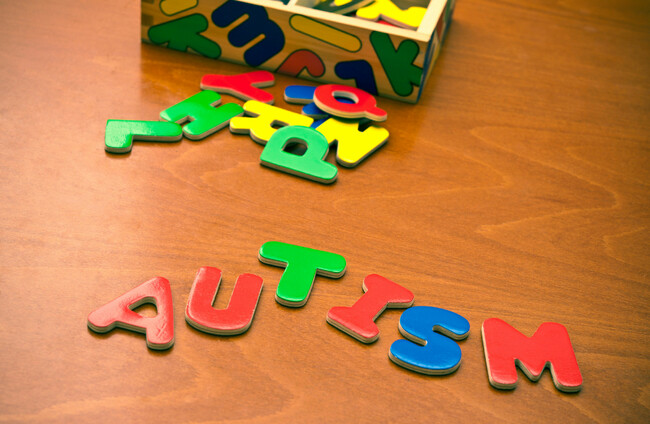
ON WORLD AUTISM Day, my husband and I look at our two children and feel so very grateful to them for enriching our lives and teaching us everything we now understand about disability. They have challenged our assumptions and helped us understand what inclusion actually is. Among many other things, this is their huge value.
Our daughter is seven and has an epic imagination. She spends hours writing and illustrating books. Our son is the calmest, most placid giant of a six-year-old. He is the king of regulation! The pals in his class stay by his side throughout the day, co-regulating because he makes everyone around him feel really good. They are great kids, deserving as much as any other child to feel good about who they are.
However, sadly and persistently, they are devalued, and I think we really need to take a moment to question and interrogate how we all value autistic children. It’s exhausting as parents to constantly grin and bear it as we watch the sometimes well-intended, sometimes not, make decisions which affect but don’t include them. Careful not to discourage well-meaning efforts, we process feelings of frustration and hurt while their value in progress is repeatedly missed. You quickly learn the terrible mistake we have all made in designing everything — schools, the health system, communities — without them.
You can feel a bit like a pioneer; one of the first to recognise how it’s supposed to be. But year after year you wait, as your children grow up, for everyone else to catch on. It’s a lonely place, and you ask yourself all the time, how can I make everyone else see the contribution my children can make to changing this rigid society, which is built for some but not for all?
Our son has an intellectual disability. His language of choice is non-speaking. He teaches us a very different and valid way of learning and of communicating. Yet this diversity appears not to be of interest to most schools. He is not supported to thrive at school in his own community; despite having the same educational rights as other children. He is shipped away every morning on a school bus. While we are grateful for the beautiful school he does attend, we see first-hand the negative impact this has on his life within his neighbourhood. Without him physically in his community, he is judged and stigmatised. When we give our children the chance to grow up with difference, we empower a future which eradicates misunderstanding, misinterpretation and misjudgment.
Our daughter has been the victim of a toxic perception of autism — reduced expectations. She was left with no choice but to leave a school recently because the decision makers could not believe she could thrive with the support she needed. The final nail in the coffin was being denied a reasonable accommodation. What is a ‘reasonable accommodation’? Well, it’s an adjustment which helps to knock down often invisible barriers or to level the playing field so autistic and disabled children can access the environment like their peers. It is deemed reasonable because it may have a nominal cost, or no cost at all.
It’s never a good sign when you have to go to lengths to explain why a reasonable accommodation – a right under the Equal Status Act — matters. But with the support of her Psychologist, Occupational Therapist and parents, she did go to this effort. She described in detail her particular disability and the vital role that trusted and safe relationships play in nourishing her nervous system and lowering anxiety. She asked for the SNA she had for two years to stay on with her into first class to provide her with that personalised support. It would have cost the school nothing. Her therapists wrote compelling letters to ensure the school understood. It didn’t matter. The reasonable accommodation was declined, and she was not afforded engagement on a decision which would so adversely affect her.
And affect her it did. As predicted, for months later, she had to contend with severe anxiety. She became unrecognisable. She was not sleeping, not being her usual creative self. The skills all children should have access to at school — processing, communication, playing, etc – were not afforded to her. She was placed on a reduced school day plan due to the severity of her school-based anxiety. A reduced timetable to 11 am – a sizeable portion of which she could not access, and during which she sat outside the classroom on her own with her new SNA. Her friends observed her, absent every day for many hours, or displaying behaviours they did not understand. We do not yet know the impact this will have on these relationships and on what those children have learned about valuing difference and disability.
Why did a fixed policy take precedence over the educational rights of a child? I believe it was because of a deeply ingrained belief that the value of her human life is lower. When this mindset is allowed to thrive, a power imbalance is born and the disabled child is silenced, while the system protects itself.
So where do we go from here as a nation? We need to recognise the role the autistic community plays in informing environments in which they, and everyone else, can access and thrive in. Autistic children are the experts in their differences and disability. If any of the autistic children who came before our daughter were valued, she wouldn’t have had to justify a reasonable accommodation request, never mind have it denied at her last school. Valuing children leads to learning, to seeing it differently, to evolving and becoming inclusive. It is not for the rest of us to decide what is an inclusive environment. It is for us to listen and value the perspective of those who are experiencing that environment. The onus must not be on children accessing school through barriers, but on grown-ups making school accessible. The Department of Education and the NCSE must get behind schools that are committed to this, and address the schools that hide their ableism behind not being “an appropriate setting”.
The mainstream media has a significant role to play too. Recently, I listened to a national radio interview which left me feeling we were even further behind what I had given our country credit for. An offensive, harmful stereotype of autism was depicted by someone resistant to autistic affirmation and the beautiful variety of autistic experiences. A variety we see in our own household, which speaks to the value of individualised support — learning to create adaptations for one person that work for others. Universal design at its best. When we accept the expertise of autistic children in achieving this, we make new decisions with them to ensure they can reach the same opportunities as everyone else.
None of this is possible when we strip children of autistic identification. It’s extremely difficult to grow up developing confidence, self-worth, strong mental wellbeing, etc when you don’t know or understand your own self. It encourages learning to mask or to not be yourself – from childhood, through teenagehood, all the way up to adulthood. Autistic identity has had a hugely positive impact on both our children, giving them a strong foundation for self-acceptance. They leave behind neuro-normative expectations and focus on being who they are, exploring their own unique strengths and embracing their differences. They learn from autistic role models how to validate, what supports might look like, how to ask for support, and how to self-regulate. They have the chance to grow up being the strongest version of themselves, and when you are the best version of yourself you thrive.
Our daughter is now in a school, a Gaelscoil, since January, in which she doesn’t need to spend energy advocating because she is just listened to. Starting again in a new school with a new SNA, teacher and new friends has been extremely difficult for her. Aside from the shift in relationships, she has always found transitions threatening, particularly the transition into school because she is leaving the connection and safety that her family provide her. She often self-regulates in this situation through imaginative play. One morning during the transition into her new school, she made up a game with an invisible torch and chased the light around her school. Her SNA observed this, valued the little girl in front of her, and learnt from her. And when our daughter arrived the next morning at the school gates, her SNA pulled out of her pocket a small torch.
That torch said: “We know it’s hard, we recognise your strength in self-regulation and think it is amazing.” It said: “You don’t always have to be the one adapting. We will too.”
Inclusion isn’t complex. It’s just placing equal value on every human life.
Lucinda Murrihy is the proud Mum of two autistic children, Head of Strategy & Innovation at Inclusion Ireland and Non-Executive Board Director for AsIAm, Ireland’s national autism charity.
To embed this post, copy the code below on your site













have your say