Sign in. It’s quick, free and it’s up to you.
An account is an optional way to support the work we do. Find out more.
Sign in. It’s quick, free and it’s up to you.
An account is an optional way to support the work we do. Find out more.
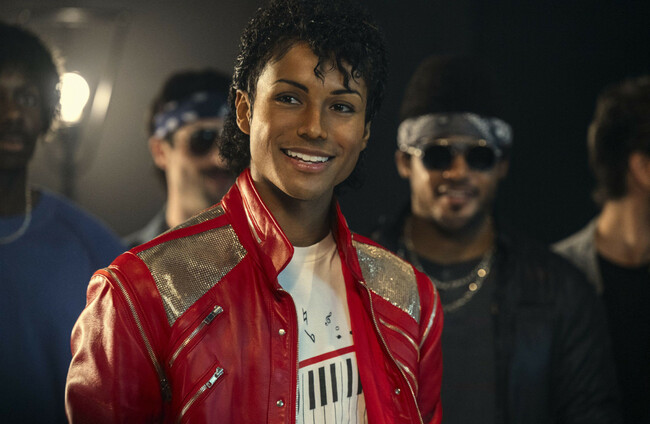
THINKING OF HEADING to see Michael this week? Critics have a fairly clear message: maybe don’t.
Reviews for the long-awaited Michael Jackson biopic dropped this afternoon after an embargo lifted at 2pm, suspiciously close to the premiere of the film across the UK and Ireland tomorrow. They are, by and large, brutal.
Across the board, critics have taken aim at what they describe as a glossy, sanitised retelling of the singer’s life, one that leans heavily on spectacle while sidestepping the most controversial aspects of his story.
That criticism echoes concerns already raised ahead of the film’s release.
The biopic, which is backed by the Jackson estate and stars his nephew Jaafar Jackson, had previously drawn scrutiny for reportedly omitting allegations of child sexual abuse made against the singer, allegations that resurfaced in recent years following the documentary Leaving Neverland.
Allegations against Jackson first emerged in 1993, when Evan Chandler accused him of sexually abusing his 13-year-old son, Jordan. The case was settled out of court.
Reports suggest scenes referencing the allegations were later removed from the film after the Jackson estate identified a clause in that agreement preventing Jordan Chandler from being mentioned or depicted.
The estate is said to have funded costly reshoots, and was closely involved in the production, with executor John Branca among its producers.
Based on the reviews, the reshoots appear to have slanted the film. Writing in the Financial Times, Danny Leigh awarded the film one star, describing it as “stilted” and overly reverential.
He criticised the film’s lack of insight into Jackson’s creative process, suggesting it reduces a complex artist to a series of carefully curated moments, more concerned with image than understanding.
“The movie goes big on the messianic, and much smaller on the inner life. God knows what it was like to be Michael Jackson. Michael certainly doesn’t, or even seem to want to,” Leigh writes.
The Guardian’s Peter Bradshaw was similarly unimpressed, giving it two stars and calling it a “frustratingly shallow, inert picture”.
He noted the film’s reluctance to grapple with the darker elements of Jackson’s life, saying it “can’t quite bring itself” to examine the more difficult questions surrounding its subject.
“The baffling surtitle flashed up on screen before the end credits roll: ‘The story continues’. It certainly does. Does this mean a second, darker movie is in the works? Maybe.”
Perhaps the harshest verdict came from Kevin Maher at The Times, who described the film as “two hours of pure and unadulterated bullshit” and accused it of attempting to persuade audiences “without any regard for truth”.
“The film stops in 1988, which is handy as it avoids all that unfortunate child sex abuse material,” Maher wrote.
He also, unsurprisingly, awarded Michael one star out of a possible five.
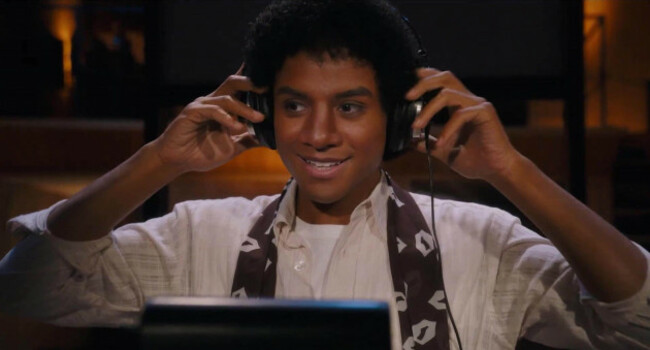
There is some faint praise for the film.
Maher in the Times offers some good words for Jaafar Jackson’s performance: “The music scenes nonetheless are quite brilliant and thrilling — Jaafar is an accomplished impressionist.”
Several other critics acknowledged Jaafar Jackson’s performance, with his physical resemblance and convincing stage presence praised.
And, in a generally more positive review, Variety said the film remains an “engrossing” if conventional biopic, arguing that audiences may still connect with Jackson’s rise and musical legacy.
“Simply put, this is not a movie about Michael Jackson’s dark side,” Owen Gleiberman wrote.
But even there, the absence of Jackson’s later controversies was noted by Gleiberman as leaving “a void at its centre”.
For many critics, that omission appears to be the defining issue.

To embed this post, copy the code below on your site















have your say