Sign in. It’s quick, free and it’s up to you.
An account is an optional way to support the work we do. Find out more.
Sign in. It’s quick, free and it’s up to you.
An account is an optional way to support the work we do. Find out more.
LAST UPDATE | 17 Jun 2021
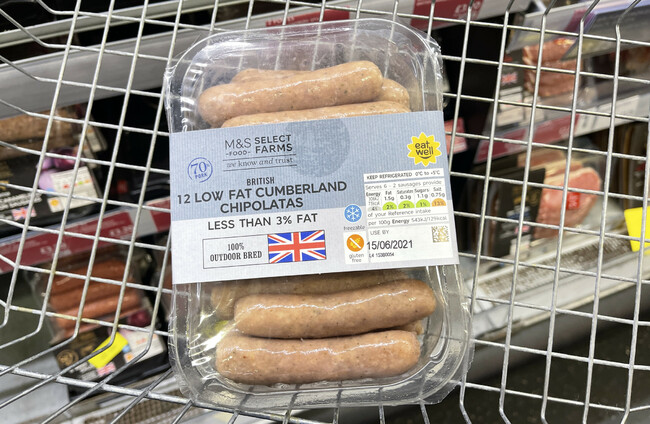
THE EUROPEAN COMMISSION is to “assess” the British Government’s request for an extension of the grace period, which would allow British chilled meats to continue to be sent from Great Britain to Northern Ireland.
Under EU rules, chilled processed meats such as sausages and minced meat cannot be imported to the EU from third countries – which the UK now is after Brexit.
But because Northern Ireland has slightly different post-Brexit rules than Great Britain, in order to avoid a hard border on the island of Ireland, there have been some problems with GB-to-NI trade, including on the trade of chilled meats.
At the start of the year, a six-month grace period was put in place that would mean this ban on chilled meats going from GB to NI would be postponed until July – the UK is now requesting that this is extended for another three months.
Earlier today, the UK’s Brexit Minister David Frost sent a formal request to the European Commission requesting that a grace period be extended until 30 September.
The current grace period on chilled meat trade is to end on 30 June.
It had been thought that Boris Johnson would extend the grace period on chilled meats without consulting the EU – as was done in March with another grace period concerning agricultural goods being sent from Great Britain to supermarkets in the North.
Under the terms of the Brexit trade deal signed before Christmas, both partners of the trade deal should jointly decide whether checks should be waived.
Johnson had said at the weekend that he was willing to “whatever it takes” in relation to the sausage war row, including invoking Article 16 of the Protocol – a nuclear option that would allow a trade-deal partner to take unilateral action as a last resort.
In a statement this evening, the Commission said it has already indicated its openness to finding solutions to the post-Brexit trading problems Northern Ireland has had, if they are “in line with the Protocol”.
“However, for that to happen, the UK must fully implement the Protocol, which is the solution found to protect the Good Friday (Belfast) Agreement, the functioning of the all-island economy, and the integrity of the EU’s Single Market. There is no alternative to the Protocol.”
The row over post-Brexit trade in Northern Ireland
Problems with the clunky post-Brexit trading rules for Northern Ireland, contained in the Protocol, has fed into an already tense political atmosphere in Northern Ireland.
In order to give businesses and citizens time to adjust to the new trading rules and costs, the EU and UK agreed to a number of grace periods at the start of the year:
In March, the UK unilaterally extended the grace period for agri-foods from 1 April until 1 October; the EU responded by launching legal action.
Vice-President of the European Commission Maroš Šefčovič and David Frost have been locked in talks about how to smoothen the Brexit trading relationships.
The EU is asking the UK to agree to its regulations on plant and animal health safety, which it said would eliminate 80% of checks – but the UK has so far refused this option.

To embed this post, copy the code below on your site











have your say