Sign in. It’s quick, free and it’s up to you.
An account is an optional way to support the work we do. Find out more.
Sign in. It’s quick, free and it’s up to you.
An account is an optional way to support the work we do. Find out more.
IT’S A DAY of rest, and you may be in the mood for a quiet corner and a comfy chair.
We’ve hand-picked some of the week’s best reads for you to savour.
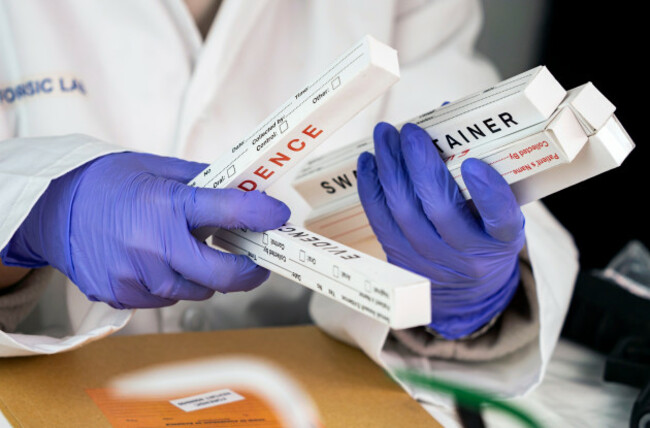
The start-up Texas crime lab has assisted in thousands of investigations and has been publicly credited with helping to solve nearly 350 cases, including murders, rapes and unidentified bodies. Its method could solve many more cases.
(Texas Monthly, approx 30 mins reading time)
When Beaumont detective Aaron Lewallen received Mittelman’s offer to assist with any unsolved crimes, he immediately thought of the Catherine Edwards murder. “This was Beaumont’s most high-profile homicide,” recalled Lewallen, a laconic 26-year veteran who had developed a specialty in cold cases. “With the original detectives ruling out so many of the people who were close to her in her life, it had really become a whodunit.” At Lewallen’s request, local officials agreed to pay Othram about $10,000 to conduct new DNA testing. A few weeks later, a FedEx courier dropped off a Styrofoam box at the lab’s headquarters. Inside, chilled by an ice pack, was a piece of floral-print fabric from Edwards’s comforter and a vaginal swab from the posthumous rape kit.
Unless he was dead or in jail, the man who killed Edwards remained at large. Perhaps he was still in Beaumont. Perhaps he had moved away and started a new life. He had concealed his crime for nearly three decades; surely, he must have thought, the police had given up on the case. There was no way for him to know that in the early 2020s, a small group of detectives and scientists had dedicated themselves to unmasking him.
Sloane Crosley’s beautiful and heartbreaking essay about grieving a pet.
(The New Yorker, approx 15 mins reading time)
The cat is very sick, so a veterinarian whom I have never met is coming over to kill her. She arrives at 10 A.M., which feels wrong. Murders and breakups, these are not interactions for God’s hours. On the phone the afternoon before, she tells me of her pastoral childhood in New Zealand. Her mother once put a cat down by feeding it Valium. “Like, a local cat?” “No, our cat. So, very local.”
This conversation happens in my living room because it feels disrespectful to conduct it in the bedroom, where the cat is resting on her spot, near the pillows. When we hang up, I walk over to the doorframe and lean on it. The cat lifts her head. She’s a gray tabby, but her shock-white belly has been my first sight in the morning for much of my adult life. After she’s gone, I will place wide objects on my nightstand to obstruct the view of the room when I open my eyes. Her emerald eyes, rimmed in black, are narrowed. Gummy. Surely, she is thinking nothing, except for: I feel like shit. She stretches her paws, which are commonly referred to as “snowcapped,” but our private joke is that I hold a paw between my fingers and say, “Ice-cream sandwich.” They’re all private jokes. It’s a cat.

Numerous articles have been written about the rise of AI and the threat to society as a result. But, according to Navneet Alang, the real threat is falling for the hype.
(The Guardian, approx 20 mins reading time)
This is what the utopian vision of the future so often misses: if and when change happens, the questions at play will be about if and how certain technology gets distributed, deployed, taken up. It will be about how governments decide to allocate resources, how the interests of various parties affected will be balanced, how an idea is sold and promulgated, and more. It will, in short, be about political will, resources, and the contest between competing ideologies and interests. The problems facing the world – not just climate breakdown but the housing crisis, the toxic drug crisis, or growing anti-immigrant sentiment – aren’t problems caused by a lack of intelligence or computing power. In some cases, the solutions to these problems are superficially simple. Homelessness, for example, is reduced when there are more and cheaper homes. But the fixes are difficult to implement because of social and political forces, not a lack of insight, thinking, or novelty. In other words, what will hold progress on these issues back will ultimately be what holds everything back: us.
Clodagh Finn writes about a local community’s campaign to oppose a wind farm at Lemanaghan bog, a place with one of the highest concentrations of archaeological finds in Europe.
(The Irish Examiner, approx 12 mins reading time)
Lemanaghan is one of the initial three projects in a portfolio that includes Garryhinch in counties Laois and Offaly and Littleton, Co Tipperary. All three are already in pre-planning. “The proposed development, including the Draft Amenity Plan, will not impact on areas of high ecological or archaeological heritage importance or on any other areas of environmental significance,” the revised proposal says.
The Lemanaghan Bog Heritage and Conservation Group, however, vehemently disagrees, saying that the entire bog, all 1,200 hectares of it, should be left untouched.Local historian and group member Seamus Corcoran says it is not only unique in Ireland, but in Europe, given the extraordinary concentrations of archaeological finds in the area. “You wouldn’t build a wind farm on nearby Clonmacnoise so why build one here on a similar monastic site with the one of the highest density of wetland archaeological finds in Europe?” said group member KK Kenny.
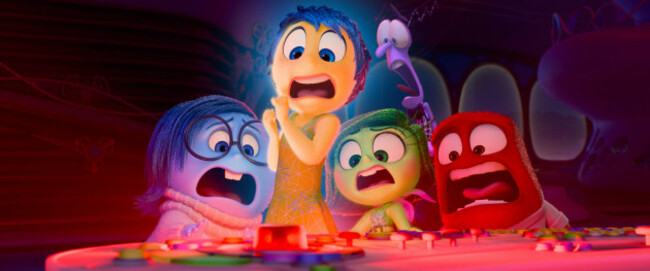
How the Pixar animations about core emotions like joy and sadness have been hailed by therapists and caregivers as “transformational” for therapy.
(The New York Times, approx 9 mins reading time)
Its influence is visible in the themed bulletin boards dotting school hallways, the character-based lesson plans and educators’ many D.I.Y. craft projects. There’s also the popular touring exhibition “Emotions at Play,” developed by the Children’s Museum of Pittsburgh, in conjunction with Pixar; since 2021 it has been inviting visitors to create glowing “memory spheres” or keep the “train of thought” on track. (“Core memory” is a phrase that the first movie helped introduce to the TikTok generation.)
For Carter, a national school counselor of the year for her work at a junior high in Cape Girardeau, Mo., “Inside Out” provided a shared language and a visual iconography that makes abstract concepts concrete. “I have the figurines of each feeling, so students can show me who’s at the control panel,” she said. Like “Mister Rogers,” “Sesame Street” and “Daniel Tiger’s Neighborhood,” it offers a common reference point for families.
It has been 50 years since Richard Nixon resigned after the Watergate scandal. David Frum looks back at what it was all about, and why he might never have stood down if it had happened in today’s political climate.
(The Atlantic, approx 8 mins reading time)
The era of Watergate was one of sweeping political reform. In 1970, Congress reduced the once-awesome power of committee chairs and opened committee work—until then usually closed from public view—to greater public scrutiny. In 1971 and in 1974, Congress passed far-reaching campaign-finance laws. In 1975, Congress launched its first thorough investigation of intelligence agencies; in 1977, that oversight was made permanent in the form of the House and Senate intelligence committees. In 1978, Congress adopted ambitious conflict-of-interest rules for the whole federal government. Along the way, the Department of Justice launched hundreds of investigations into corruption within state and local government. One of those probes led to the downfall of Nixon’s first vice president, Spiro Agnew, for acts committed when he was the governor of Maryland in the 1960s.
For a long time, those reforms seemed the most enduring consequence of Watergate. But at the 50-year mark, that view looks complacent and mistaken. The truth is, the reforms didn’t stick. Some of them are formally defunct; others were simply disregarded. The more open congressional committees have degenerated into buffoonish theater, exiling the real work of Congress to informal dealmaking that is nearly as secret as in the days of almighty committee chairmen such as Wilbur Mills, who almost single-handedly ruled the House Ways and Means Committee from 1958 to 1974, and James O. Eastland, who dominated the Senate Judiciary Committee for two decades until 1978.
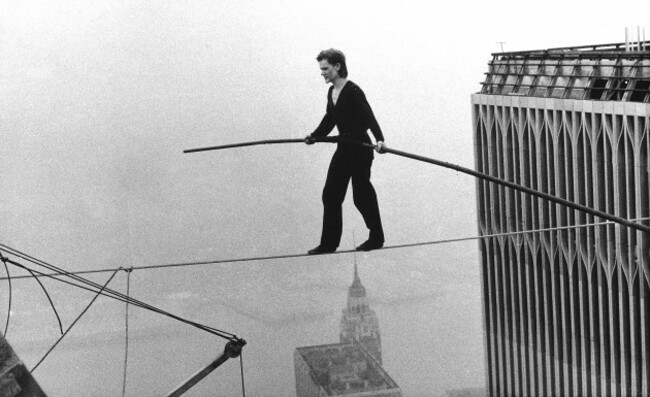
A piece from 1987 about French high-wire artist Philippe Petit’s walk between the Twin Towers in New York.
(The New Yorker, approx 28 mins reading time)
Petit is different. In a battered trunk in a small room on an obscure street in Paris—a room he still rents, although he is rarely there—Petit has squirrelled away his dreams: maps and pictures of eminences and promontories, skyscrapers and other buildings around the world he longs to conquer. He is drawn to the grandiose. In the trunk he has a picture and a model of Niagara Falls. He would like to cross it, slicing through the mists over the boiling cataract’s roar, a mile-long hike. He would like, too, to stroll over the Grand Canyon, with, because of his love of the theatrical, an opera singer or a saxophonist wailing eerily in the red dusk. And ascend from the Palais de Chaillot to the second story of the Eiffel Tower, across the Seine. He would like every performance to be a spectacle of beauty and poetry. On the places on the maps where he imagines walking he has drawn his symbol: a stick figure on a high wire strung between two posts.
Note: The Journal generally selects stories that are not paywalled, but some might not be accessible if you have exceeded your free article limit on the site in question.

To embed this post, copy the code below on your site













have your say