Sign in. It’s quick, free and it’s up to you.
An account is an optional way to support the work we do. Find out more.
Sign in. It’s quick, free and it’s up to you.
An account is an optional way to support the work we do. Find out more.
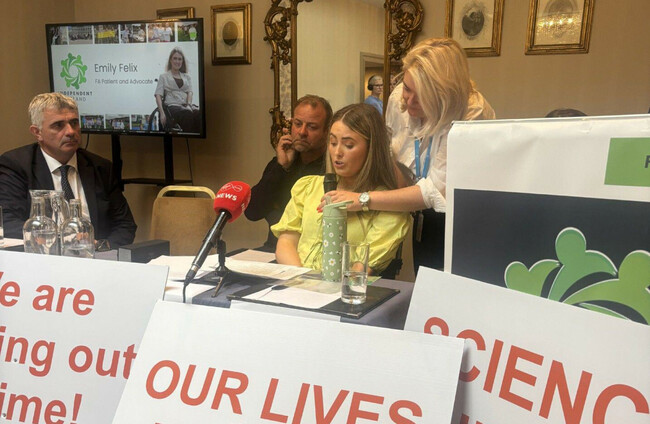
PRESSURE IS MOUNTING on the government ahead of a HSE senior management meeting on Tuesday which will decide whether to reimburse Skyclarys, a drug for Friedreich’s ataxia.
In recent weeks, a HSE drug group recommended against funding the treatment, which costs €288,000 per patient per year.
Friedreich’s ataxia is a progressive, neuromuscular disease that mainly affects the nervous system and the heart. It is a hereditary disease caused by a gene mutation.
While there is no cure for the disease, Skyclarys has been found to slow the disease progression and improve neurological function.
Taoiseach Micheál Martin met families affected by the rare genetic disorder last week.
Speaking about that meeting, Minister of State Christopher O’Sullivan, who was also in attendance, said Emma O’Shea and her family spoke of the loss they have already experienced and the importance of the drug Skyclarys being approved in Ireland.
O’Sullivan said the visit left a lasting impact on himself and the Taoiseach, and he urged the HSE to make the “right decision” on Tuesday.
It is understood that intensive talks have been underway in recent days between the HSE and Biogen, the maker of the drug.
A statement to The Journal from the HSE said Biogen continues to work closely with the HSE to facilitate access to treatment as quickly as possible, recognising the urgency for patients awaiting new options.
“We remain committed to working constructively and respectfully with the HSE through the established process,” it said.
Ahead of the HSE meeting, opposition parties have urged the government to step in.
Labour health spokesperson TD Marie Sherlock has called on Minister for Health Jennifer Carroll MacNeill to personally intervene ahead of the HSE’s decision.
“We are acutely aware of the enormous cost involved, but Friedreich’s ataxia is a debilitating condition. Skyclarys offers the potential to slow that progression. For the small number of people in Ireland living with this condition, that could mean precious additional time with greater independence and a better quality of life. It offers something that patients and their families desperately need: hope,” said Sherlock.
She highlighted it as an example to a wider challenge facing Ireland and other smaller countries when it comes to accessing high-cost medicines for rare diseases.
Sherlock said the government must use the EU Presidency to push for much stronger leadership at EU level when it comes to coordinated negotiations with pharmaceutical manufacturers to secure fairer and more sustainable prices.
“The HSE must end the deadlock with Friedreich’s Ataxia patients and fund the only treatment available for it,” she said.
Meanwhile, Green Party leader Roderic O’Gorman has called on the government, the HSE, the manufacturer and all relevant stakeholders to work together to urgently find a viable route to access.
“Where concerns about cost and limitations exist, the focus must be on overcoming those barriers,” he said.

To embed this post, copy the code below on your site














have your say