Sign in. It’s quick, free and it’s up to you.
An account is an optional way to support the work we do. Find out more.
Sign in. It’s quick, free and it’s up to you.
An account is an optional way to support the work we do. Find out more.

FOR SEVERAL MONTHS, many Catholics around the world had been looking ahead with some trepidation to 1 July.
This was the date that the conservative Society of St Pius X (SSPX) had earmarked as the day on which it would ordain four bishops without the consent of the pope.
The Vatican had warned in advance that such a move would constitute a schism with the Catholic Church.
For the Vatican, consecrating bishops without the approval of the pope is a direct act of insubordination, leading to the automatic excommunication of the bishops involved.
But in a rather surprising move, it’s not just the bishops who find themselves out in the cold.
Priests and lay members of the SSPX could also find themselves excommunicated if they “adhere” to the schism.
The SSPX was founded in 1970 and says that its main aim is the “formation of holy priests using the methods that the Church always used”.
It claims to have around 600,000 followers across the world and has chapels in Dublin, Cork, Athlone, Kilkenny and Monaghan, as well as in Belfast and Newry in the North, with six priests in Ireland.
While the Dublin chapel celebrates Mass everyday, others celebrate Mass several times a week or just several times a month.
And while the SSPX has bought churches in Dublin, Athlone, Cork and Kilkenny, it operates from a community centre in Monaghan, an industrial estate in Newry, and appears to function from the basement of a pizzeria in Belfast.
It has recently had an offer accepted on an old Church of Ireland schoolhouse in Clones, Co Monaghan. The recent SSPX newsletter said this will be a “boon for the about sixty faithful in the area who often travel many miles to Athlone or Newry”.
The SSPX is made up of Catholics who strongly oppose the reforms of the Second Vatican Council – known as Vatican II – in the 1960s.
Among the major reforms of the Second Vatican Council was the ability for mass to be celebrated in local languages, rather than Latin.
It also allowed for more participation in the mass by laypeople and the priest was directed to face the congregation, as opposed to facing the alter.
It also marked a shift in the Church’s relationship with other faiths and called on Catholics to acknowledge and recognise the positive values of other religions.
The SSPX rejects the Second Vatican Council and continues to celebrate Mass exclusively in Latin.
Excommunication is the most serious penalty a practicing Catholic can incur within the church.
It means the individual is placed outside of the “communion” of the Catholic Church and can no longer receive the sacraments, such as the Eucharist.
Catholics are automatically excommunicated for schisms with the Church, and this applies to those who consecrate a bishop without the consent of the pope.
The Vatican has also warned that priests and lay faithful who “formally adhere” to the SSPX are also “considered schismatics and excommunicated”.
When it comes to SSPX priests, they must leave the society, accept the Second Vatican Council, and “write by hand a letter” to the pope in order to be welcomed back to the Church.
The situation for lay people will be assessed on a case-by-case basis but to be welcomed back, they too must leave the SSPX and send a letter to their bishop seeking readmission to the Church.
However, the Vatican also pointed to a 1996 document which states that faithful who might engage in “mere occasional participation” with the SSPX without adopting its “attitude of doctrinal and disciplinary disunion” would not be excommunicated.
The Church meanwhile describes excommunication as a “medicinal penalty” and holds that it can act as a wake-up call for people to return to a correct relationship with the Church.
For example, the Vatican has said in relation to the SSPX schism: “The Church, as a caring mother, will welcome with sincere affection and lively solicitude all those who wish to return to full communion.”
This is not the first time the SSPX has ordained bishops without the pope’s approval.
The SSPX was founded by French Archbishop Marcel Lefebvre and in 1988, Pope John Paul II excommunicated Lefebvre and four bishops he had consecrated without Vatican approval.
In 2009, Pope Benedict XVI lifted these excommunications and remarked that while the SSPX does not have “canonical status” in the Church, it is not in schism.
The Vatican has for decades tried to reintegrate the SSPX into full communion with the Church and Pope Francis also offered concessions to the group, including allowing SSPX priests to hear confessions and celebrate marriages legitimately.
However, in February of this year, the SSPX announced that it would consecrate new bishops without the consent of the pope.
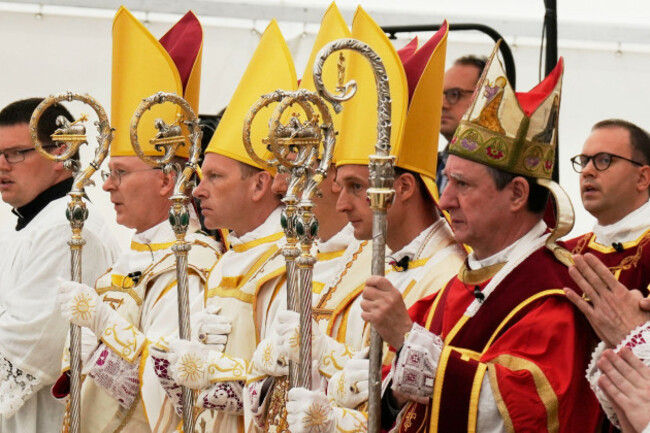
An editorial in Vatican News said the ordinations went ahead “despite repeated appeals and warnings not to proceed, despite repeated invitations to dialogue”.
Pope Leo XIV had personally appealed for the ordinations to not go ahead, and last week wrote a letter to the SSPX in which he said: “I plead with you and ask you with all my heart: please turn back!”
However, he has also said that the Church needs to move on from the issue.
Speaking to reporters last month, he said: “Division among Christians is always a painful matter, but they [the SSPX] refuse to accept certain fundamental elements of the Church, beginning with several points of the Second Vatican Council.
“If that is the choice they make, I am sorry, but we must move forward.”
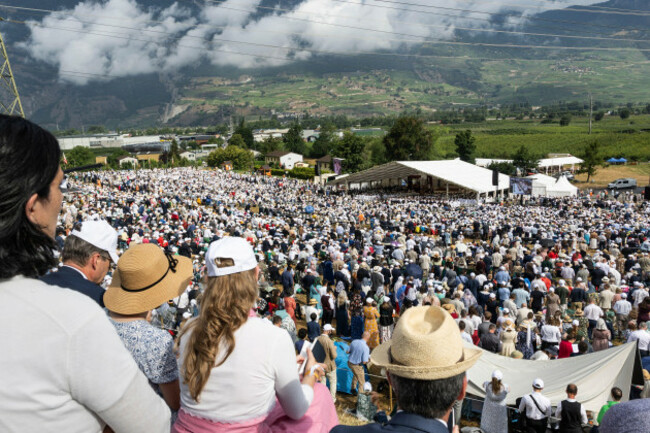
Meanwhile, the SSPX ceremony that has resulted in automatic excommunication happened in Econe in southwest Switzerland.
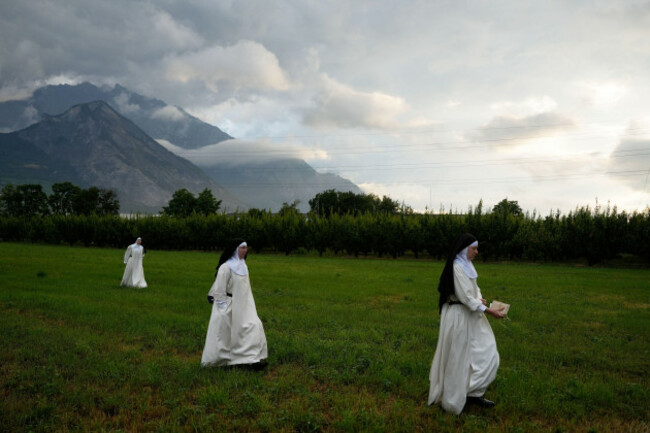
This in the same spot as those performed in 1988, in the meadows near the society’s seminary in Econe, a village in the Rhone valley, with the Alps towering above.
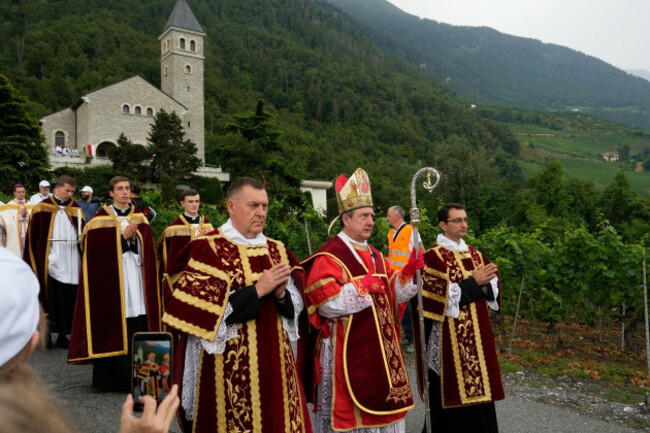
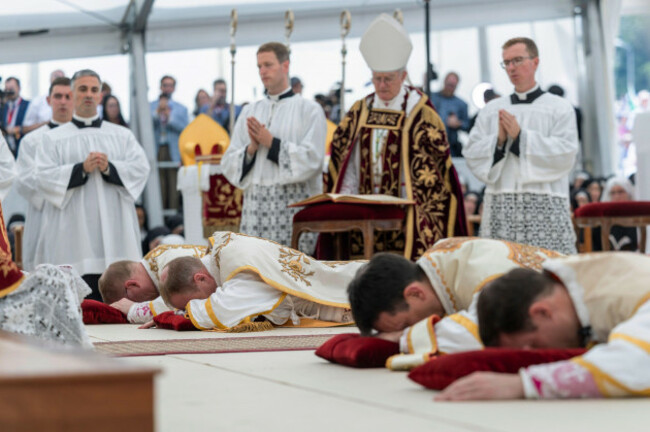
The bishops ordained included two French men, an American and a Swiss.
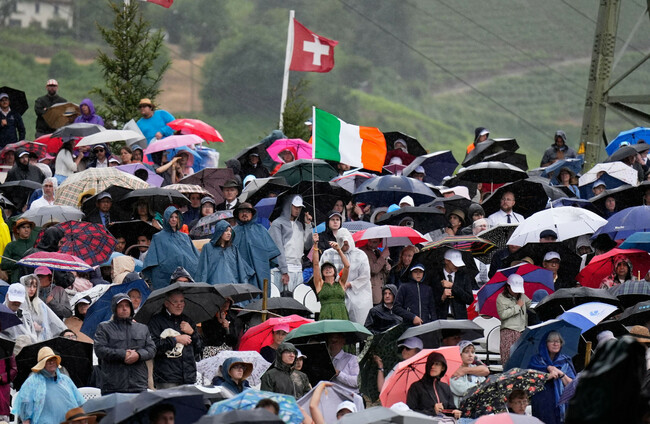
The accompanying mass in Latin, which was interrupted by a thunderstorm and heavy rain, lasted five and a half hours and was attended by thousands of worshippers from around the world.
Una fuerte tormenta interrumpe la ceremonia de las controvertidas ordenaciones episcopales de la Fraternidad Sacerdotal San Pío X (lefebvrianos), consideradas por el Vaticano un acto cismático.
— News Vaticano 🇻🇦 (@news_vaticano) July 1, 2026
Justo antes de la comunión, los celebrantes, los cuatro nuevos obispos y miles de… pic.twitter.com/6itdFkASTX
The ceremony began with the society’s secretary general, Foucault Leroux, claiming that “any penalties and censures… are null and void”.
While the SSPX is now out of communion with the Vatican, there are other Catholic sects who celebrate the Latin Mass yet remain in communion with the Church, though with certain restrictions.
They had been watching carefully to see how the Vatican would respond to the SSPX consecrations and were surprised by the harshness of sanctions.
Joseph Shaw, chairman of the London-based Latin Mass Society, told OSV News said he hopes the situation will “lead to a change” and a “reassurance” for those who with to celebrate Latin Mass but have no “thought of schism”.

To embed this post, copy the code below on your site










have your say