Sign in. It’s quick, free and it’s up to you.
An account is an optional way to support the work we do. Find out more.
Sign in. It’s quick, free and it’s up to you.
An account is an optional way to support the work we do. Find out more.
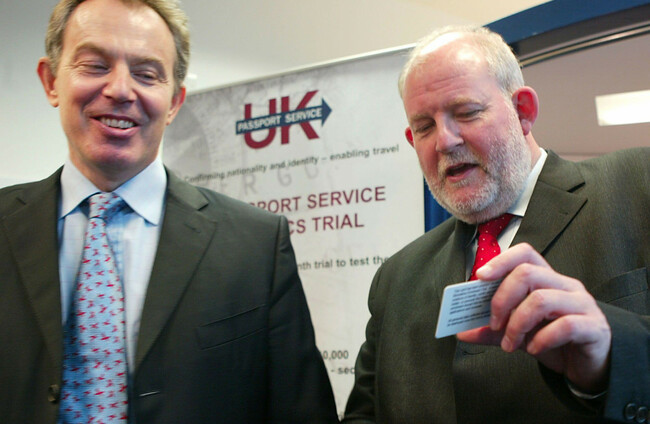
A PROPOSED SCHEME by the UK government to introduce digital IDs led to criticism from Ireland this year but newly released Irish government files shows similar concern has been around for decades.
This year’s scheme, informally dubbed the “Brit-card”, was opposed by parties in Northern Ireland, with UK officials confirming that the Irish government would be brought into the loop on the proposals.
Now, Irish government files from 2005 released to the National Archives have shown that plans for a similar scheme back then was also met with concern on this side of the Irish Sea.
Secret government documents are released annually and sent to the National Archives, providing journalists and historians with a fresh glimpse into historical events.
At the time, the British government argued that identity cards would help combat terrorism, illegal immigration and identity fraud.
Irish officials, however, feared the scheme could complicate the treasured Common Travel Area (CTA) between Ireland and the UK.
Legislation was enacted in relation to the scheme in 2006 but it was ultimately scrapped by the Conservative/Lib Dem coalition after taking office in 2010 due to cost concerns and implementation problems.
Throughout 2005, British Home Office officials repeatedly briefed counterparts in Dublin about the plans and records of these briefings are contained in the files.
A recurring concern on the Irish side was the potential impact on Irish-born people living in Britain, particularly once it became clear that ID cards would be mandatory for anyone resident in the UK for more than three months.
One internal summary of discussions recorded that: “There may be some elements in the Irish community who will be reluctant for the British state to maintain information on them.”
The same note added: “ID cards, for some who live through the 1970s and 1980s, will be objected to as a matter of principle and gut instinct, and it may prove difficult to persuade them otherwise. It is difficult to gauge the degree of opposition, or reluctance.”
From the outset, Irish officials were also concerned about how the cards might interact with the Good Friday Agreement, which guarantees the right of people in Northern Ireland to identify as Irish, British, or both.
Officials warned that some individuals might object to how their nationality was recorded, while those who considered themselves dual nationals “may not be happy to have themselves designated as only British, or Irish”.
The documents also highlight worries about cross-border workers “living on one side of the Irish Border, and working on the other”, as well as broader concerns about the “possible impacts” on free movement and North/South co-operation.
In June 2005, UK officials argued that the scheme complied with the Good Friday Agreement, stating that Northern Ireland residents “were free to designate themselves as Irish, British, or have no nationality listed”.
Despite these misgivings, the files show that Dublin ultimately accepted that national ID cards were not objectionable in principle, noting that 25 EU member states, “all apart from the UK, Ireland, Denmark and Latvia already have” such systems in place.

To embed this post, copy the code below on your site














have your say