Sign in. It’s quick, free and it’s up to you.
An account is an optional way to support the work we do. Find out more.
Sign in. It’s quick, free and it’s up to you.
An account is an optional way to support the work we do. Find out more.
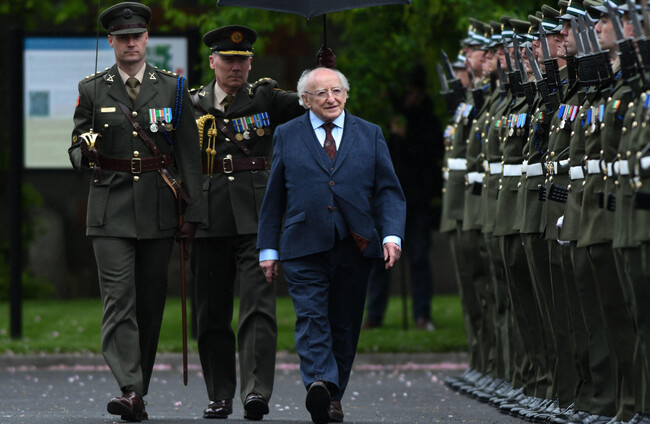
HELEN MCENTEE HAS described as ‘rhetoric’ much of the debate on the removal of the triple lock, in response to comments by former president Michael D Higgins.
McEntee, speaking from Lebanon where she is visiting troops, was asked about comments in an Irish Examiner interview Higgins claimed the removal of the troop deployment measure was designed to place Ireland in military alliances.
Higgins, who is a long time peace and antimilitarist campaigner, said the government were being dishonest about what it was saying about the move.
Last week the Dáil voted by 79 votes to 71, approving the second reading of the Defence (Amendment) Bill – and to vote, substantively, for the first time to remove the ‘triple lock’ rule on the deployment of the Defence Forces.
Higgins said: “I think that it’s less than honest not to give the full story when you’re talking about going into preparatory alliances, and I really do feel that because I dealt with senior army people in my 15 years as president.
“In fact, actually, what you’re having, and critics are right in saying it, is that people are sliding into things rather than choosing to decide to go into things.”
The triple lock currently means that Ireland must satisfy three protocols before it deploys more than 12 troops abroad on a mission. There must be a UN Security Council agreed mandate, agreement of the cabinet in Dublin and a vote of the Dáil. The new proposal will remove the need of a UN resolution.
The government’s argument is that the UN Security Council veto is an infringement on Irish sovereign decision-making, and those opposed to the change believe the triple lock is a key pillar of Irish neutrality and a recognition of the need for multilateralism.
Higgins claimed that losing the United Nations measure would change how Ireland participates in peacekeeping missions in the future.
“Supposing you were a voter, and you were being asked the question, are we going to wait for the European Union to tell us where to go to become active for peace? The evidence is that the European Union is not in favour of that kind of peace,” he said.
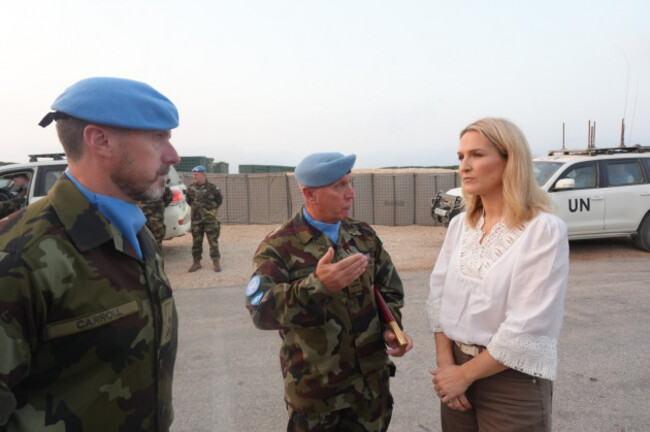
McEntee was asked this morning about the former president’s comments. She did not directly criticise Higgins but did criticise much of the debate around the triple lock.
“There’s a lot of rhetoric, and there are a lot of suggestions that we’re going to be forcing people to do things, that we’re going to be forcing our troops to go places.
“This will always remain Ireland’s choice, and as a neutral country, where our first and foremost priority is peace, it’s stability, it’s imposing our values of peace, stability, security, supporting people who need our help the most. That’s not going to change because the triple lock changes,” she said.
McEntee reiterated her argument that Ireland cannot depend on the five permanent states on the United Nations Security Council allowing peace missions to happen.
“It is about making sure that we, as a country, have the ability to make our own decision. It does not in any way alter our position of military neutrality.
Nor does it change the fact that for decades our troops have worked in cooperation with other troops.
“This is about Ireland having a choice, making our own decisions, while at the same time remaining a neutral country,” she added.
Meanwhile, when asked this morning about The Journal’s reporting on the possibility of a future mission for Irish soldiers to Bosnia or the wider Balkans Chief of Staff of the Defence Forces Rossa Mulcahy said the military are exploring options.
The Bosnia mission is managed by the EU, but it is up for a UN mandate renewal in November. There are concerns among some that Russia may seek to veto the renewal at the UN Security Council but the changed political leadership in Serbia could lessen that.
Mulcahy explained the process and said the Defence Forces are looking at opportunities in the NATO mission in Kosovo and in the EU mission in Bosnia.
“Each of those different entities do what they call force generation conferences, and we attend those, and we see what are the future requirements, maybe gaps in those missions that may be coming up in 12 or 18 months time.
“We discuss that, we put in bids, and we come back, and we discuss that with the department and the minister.
“We’re only looking at the moment, we’re exploring what are the potential options coming and I’ll make recommendations to the department to the minister and then that’s for a government decision whether Defence Forces in Ireland participates in a new form in some of those missions,” he said.

To embed this post, copy the code below on your site









have your say