Sign in. It’s quick, free and it’s up to you.
An account is an optional way to support the work we do. Find out more.
Sign in. It’s quick, free and it’s up to you.
An account is an optional way to support the work we do. Find out more.
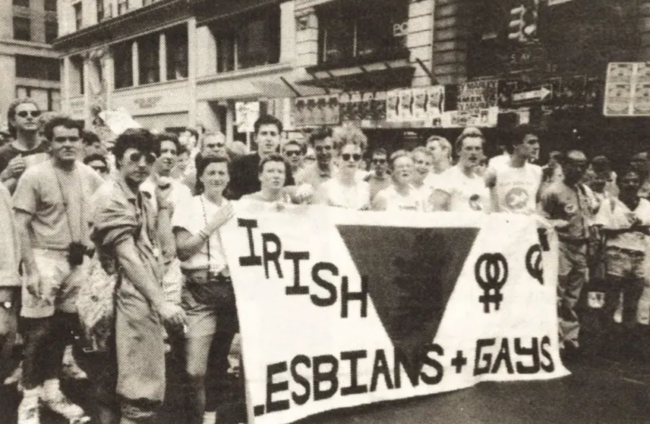
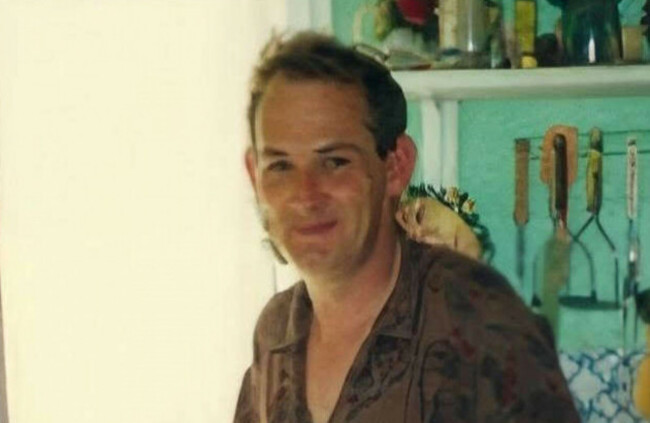
A CORK MAN who went missing 34 years ago was located deceased in the UK this month – and LGBTQ+ campaigners say he was just one of a whole generation who fled Ireland’s anti-gay laws and repressive society in the late 20th century.
Patrick ‘Patsy’ O’Sullivan was 35 years old at the time of his disappearance in 1992 – when consensual same-sex activity between men was still a crime in Ireland. His family always believed he left to evade persecution over his sexuality.
Before homosexuality was decriminalised in 1993, men convicted of engaging in consensual same-sex activity could be imprisoned under laws inherited from those imposed in the 1800s by the British state.
Punishment was not limited to the legal sphere. Members of the LGBTQ+ community were also targeted in society – including Declan Flynn, who was attacked in Dublin’s Fairview Park in 1983 and later died from his injuries.
The group of teenagers who attacked him were found guilty of manslaughter, but were let away with suspended sentences and served no time in prison.
State papers from the 70s and 80s that were released to the National Archives in 2023, examined by The Journal, show the extent of homophobic attitudes embedded in the civil service at the time, like fearing decriminalisation would lead to “public displays of homosexual relationships” and considering whether to leverage the AIDS crisis to defend keeping the law in place.
At that time, Ireland still had mother and baby homes and Magdalene laundries, the Eighth Amendment outlawing abortion had been introduced to the constitution and the country had voted against the right to divorce.
Overall, campaigners say that Ireland before 1993 was a place where many marginalised groups, including women and the LGBTQ+ community, felt unwelcome.
Activists and campaigners fought hard for equal rights for years, particularly from the 1970s, and decriminalisation was eventually passed in June 1993.
In 2018, the State issued a formal apology to the men convicted under the legislation, and in July of this year, Ireland’s Disregard Scheme was enacted to officially remove the criminal records of people punished for consensual same-sex activity.
The disregard bill, which came about after years of advocacy from groups such as the LGBT+ Restorative Justice Campaign, also requires the government to carry out a public awareness campaign about the law at home and abroad – which may reach the people who fled the country before decriminalisation.
The LGBT+ Restorative Justice Campaign is currently trying to get face-to-face time with the Minister for Justice to discuss how the public awareness programme will be carried out.
A Department of Justice spokesperson said that officials have been in touch with the campaign group with a view to arranging a meeting in the coming days, and will continue to engage with the group as the scheme becomes operational phase and the public information campaign is launched
“As a first step, the Department has asked the group to help ensure that the views of applicants are taken into account in the design of application forms and of the overall applications process. Bringing the perspective of users into the design process from the beginning will help ensure maximum accessibility for the Scheme,” they said.
Despite positive changes in Ireland, campaigners say the scars left from the time before decriminalisation left a mark on members of the LGBTQ+ community, many of whom never returned to Ireland.
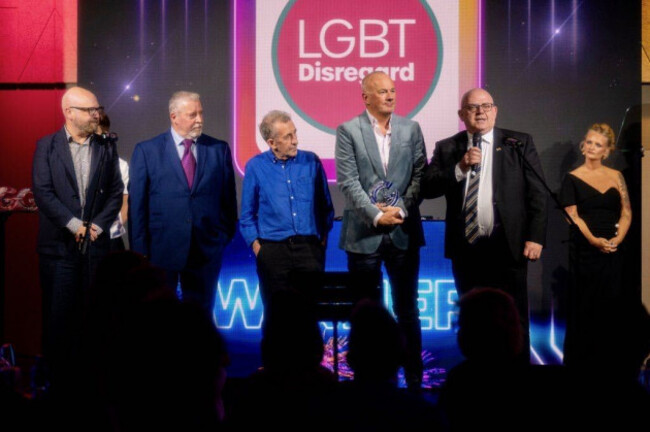
Kieran Rose, an activist who has been campaigning for the community since 1980 and a founding member of the LGBT+ Restorative Justice Campaign, said that for those who fled, Ireland becoming a more progressive country doesn’t change the experience they had.
“I don’t think that trauma would have left. It doesn’t change what happened to them,” he told The Journal.
“It was a very difficult time. We were very marginalised. I was living down in Cork, and there were no social facilities for gay people to meet up, and it was a very small group,” he said.
He said that many young people he knew at the time emigrated, including those in the Cork Gay Collective, which he founded.
“Most people did emigrate at some stage or other. Some came back, some didn’t,” he said, adding that some of those who left Ireland had a deep hatred of the country.
They would have felt that it wasn’t a voluntary immigration; that they were forced out.
“It’s a whole part of our social history that we haven’t really come to terms with,” he said.
Rose remembers decriminalisation bringing “huge relief” to himself and other members of the LGBTQ+ community.
“It was like a weight that was lifted from our shoulders, kind of a weight that we didn’t really know was there.” However, he said that decriminalisation didn’t immediately change things for gay people in Ireland in practice.
Mary McAuliffe, historian and director of Gender Studies at University College Dublin, told The Journal that although experiences varied depending on where people lived, overall 20th-century Ireland wasn’t a “particularly progressive country”.
McAuliffe said Ireland was in a state of flux, and in cities such as Dublin or Cork, there was a sense that things were changing. However, she said many would have still viewed homosexuality as a “deviancy and sinful”.
For those living in cities, McAuliffe said that it could be an exciting time as communities were forming and LGBTQ+ events were taking place, but she said you also “had to be wary of not being too obvious and too out”.
“There were parts of the city that you shouldn’t go in,” she added.
“It was a time of transformation in which things were potentially happening, and they did happen, but the remnants of that traumatising Ireland were still there.”
McAuliffe said many people left the country to escape the “dead hand of respect”.
“When Patsy disappeared or left for England, he didn’t disappear. He just chose to go somewhere else,” she added.
“For the people who did leave, who were traumatised by attitudes to homosexuality, they took that hurt with them,” she said. “In many ways, Patsy O’Sullivan is emblematic of that.”
She said this legacy is something we need to acknowledge and reckon with as a country.
“The hurt and the trauma meant people cut themselves off from their country and didn’t come back at all, or maybe didn’t come back for a couple of decades until it became obvious that we in Ireland had changed significantly.”
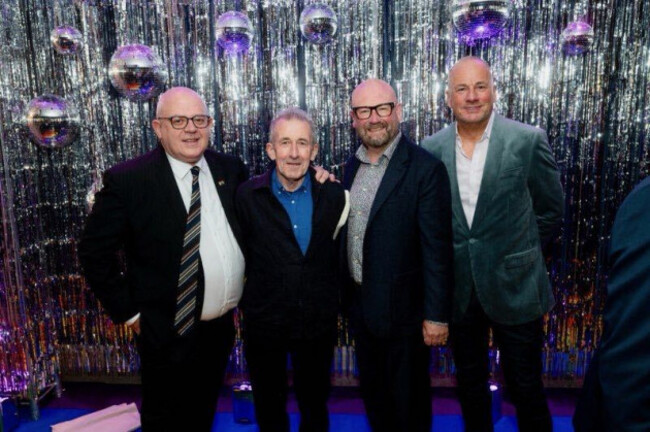
Karl Hayden, another founding member of the LGBT+ Restorative Justice Campaign, said his campaigning on the disregard bill has led him to learn of many people who left Ireland.
Speaking to The Journal, Hayden said people left Ireland for economic opportunities, to be in societies where they would feel more accepted, and to avoid convictions.
He said that in some cases, people left Ireland with criminal convictions under anti-gay laws, and lived illegally in other countries as their convictions prevented them from becoming naturalised. Some of these people may still be living abroad without immigration status.
The disregard bill means they no longer have a criminal conviction and are now able to access citizenship in the countries where they have built their lives.
“There are probably hundreds, if not thousands, of untold stories like [Patsy's] out there,” Hayden said.
For Hayden, leaving Ireland was an “escape plan if something happened”, but he never wanted to leave.
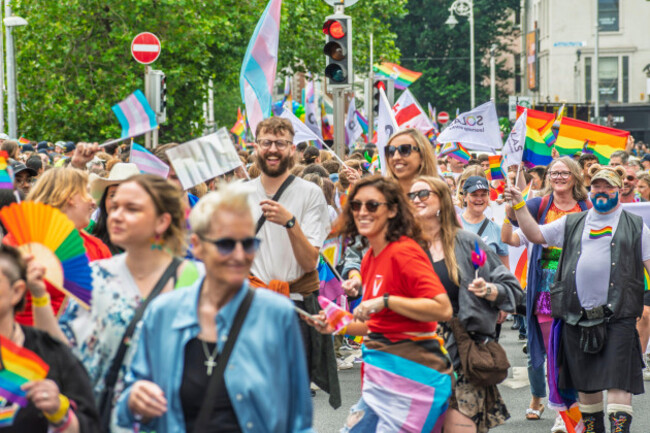
Hayden remembers the “amazing” moment decriminalisation passed in 1993.
He was standing in the Dáil and himself and other campaigners started cheering and clapping, and he recalled politicians in the chamber clapping too.
“Then the ushers came running into the public gallery to tell us to be quiet and to leave because we’d made noise,” he laughed.
After decriminalisation, he said changes came gradually rather than all at once.
“Once different groups of people were kind of confidently identifying themselves, then it meant that other people in the community felt a sense of confidence in themselves, and in identifying and coming out,” he said.
“More and more people were coming out and talking to their families, and you heard less stories of people who had bad experiences in doing that.”
Hayden said that although Ireland has “come a huge way” from the time before decriminalisation, more work still needs to be done.
“It’s taken a long period of time for change to come about. But there’s still the experience for people out there where they are discriminated against because of their sexual orientation,” he said.
“Today, sadly, it’s trans people who are the target of a lot of that as well.”

To embed this post, copy the code below on your site













have your say