Sign in. It’s quick, free and it’s up to you.
An account is an optional way to support the work we do. Find out more.
Sign in. It’s quick, free and it’s up to you.
An account is an optional way to support the work we do. Find out more.
REPRESENTATIVES OF THE EU-IMF troika are in Greece today to finalise details on the latest bailout agreement for the indebted state.
Final negotiations on the deal were suspended amid Greece’s recent political turmoil, but are resuming with new prime minister and former ECB vice-president Lucas Papademos.
Announcing its budget for 2012 yesterday, Athens insisted that it would not need any further austerity measures to meet this year’s deficit target, and predicted that deficit would fall sharply next year from 9 per cent of GDP to 5.4 per cent, largely due to the debt writedown agreed in its latest bailout negotiations.
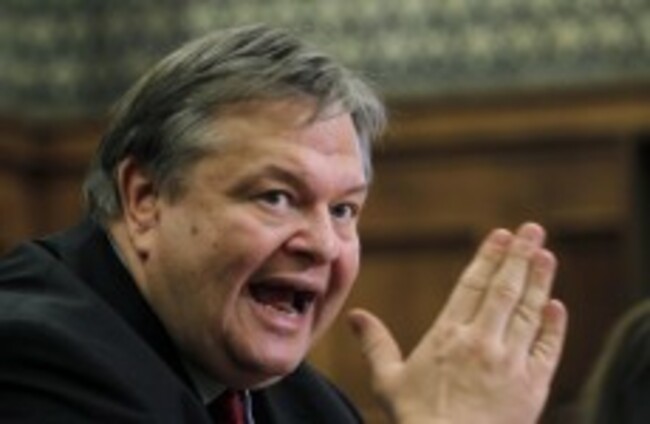
Greek finance minister Evangelos Venizelos said the government is actually expecting a budget surplus next year of 1.1 per cent, excluding interest rate payments on its outstanding debt.
On Thursday, an EU report by the Commission’s task force on Greek claimed that the country is losing out on about €60 billion in unpaid taxes.
The group’s first quarterly report said that Greece had begun implementing a programme of profound structural reform which includes efforts to make its public administration more efficient, but that more work was needed to ensure better taxation and sound public finance management.
It also said that certain public work projects which have been delayed could support jobs and boost investment.
Fiscal consolidation should go hand in hand with the structural reforms needed to transform Greece’s growth potential and generate the jobs its people so urgently need. We reiterate that our European Institutions will continue to do everything within their power to help Greece . The Task Force set up by the Commission has quickly established good cooperation with the Greek authorities to identify their priority needs. It has mobilised offers of technical assistance from many sides, thus demonstrating the unique European endeavour to support Greece in addressing its challenges.
The European Parliament recently approved the committal of €42.3 million in aid to help workers in Ireland, Austria and Greece, with Ireland receiving the bulk of the funding.
- Additional reporting by the AP

To embed this post, copy the code below on your site












have your say