Sign in. It’s quick, free and it’s up to you.
An account is an optional way to support the work we do. Find out more.
Sign in. It’s quick, free and it’s up to you.
An account is an optional way to support the work we do. Find out more.
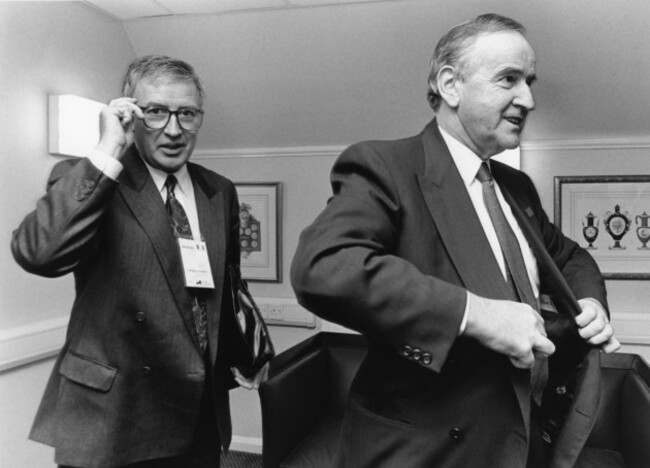
THIS WEEK SAW the sad passing of Albert Reynolds, the former taoiseach, who was instrumental in securing peace in Northern Ireland.
By Reynolds’ side during two turbulent years as taoiseach was Seán ‘Diggy’ Duignan, the journalist-turned-spin doctor, who will be familiar to many from the Six One News and spent two years as Government Press Secretary.
He later wrote a book/diary about that time – One Spin on the Merry-Go-Around which is perhaps the definitive account of that period in Irish political life.
It’s a wonderful read with plenty of colourful anecdotes. Here are a few which tell us a lot about what type of leader Albert Reynolds was
1. He was ruthless
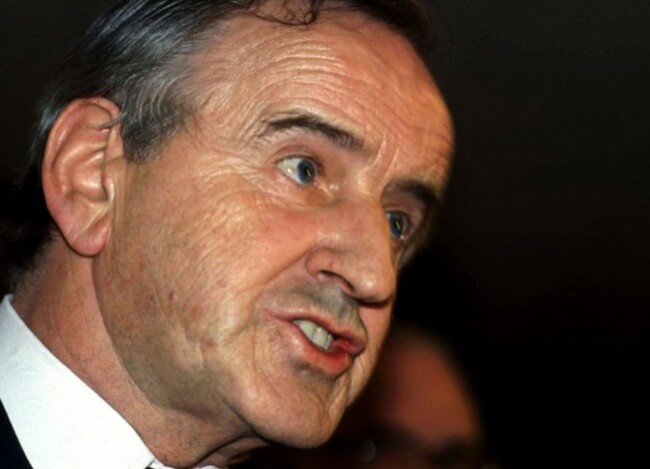
Duignan recalls how Reynolds dealt with the sacking of half the cabinet that Charlie Haughey had left behind in the hours following his elevation to the office of An Taoiseach in February 1992.
Left with only half an hour between sacking the old ministers and leading the new ones into the Dáil, it was thought he would do the deed en bloc. But instead Reynolds saw them individually:
“It was all over in less than a quarter of an hour. None of the victims was given much more than a minute. Only two argued the toss, Health Minister Mary O’Rourke and Chief Whip Dermot Ahern who demanded to know how he had transgressed to merit such a fate. ‘You didn’t,’ said Reynolds. ‘You just backed the wrong horse.’”
2. He was a strong believer in party discipline
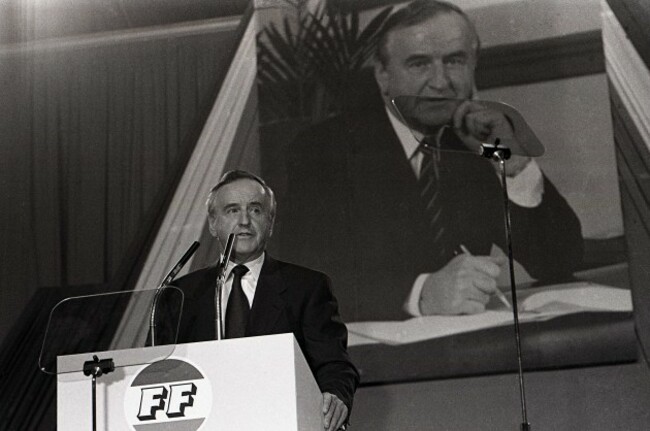
As the government grappled with ensuring that the State’s strong anti-abortion record was maintained during EU negotiations on the Maastricht Treaty, Duignan broached the idea of a free vote among the government TDs on ‘conscience’ issues. Reynolds was not a fan:
“He dismissed this as naive; a governing party’s duty was to govern, not to equivocate, prevaricate, procrastinate or, God forbid, capitulate. It was not the first or last time I listened to the Reynolds philosophy on the responsibility of power: Decisions, decisions, decisions, and hopefully, you get the majority of them right. The government governs.”
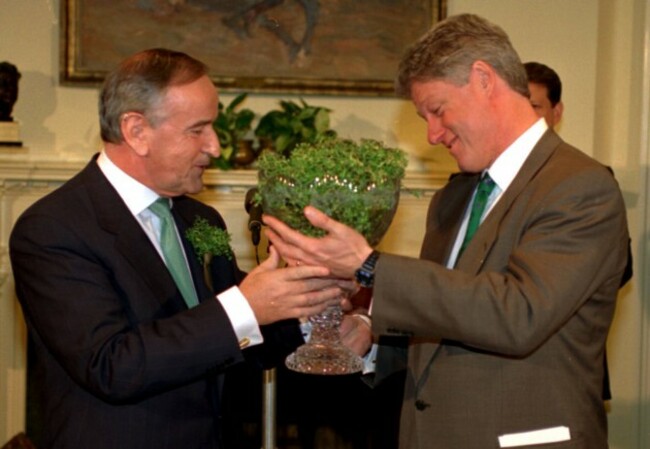
Reynolds, perhaps unfairly, had a reputation of being a country bumpkin, who was part of if not the leader of the ‘country and western wing’ of the Fianna Fáil party. He was ridiculed, often by comedians like Dermot Morgan, and yet he was utterly at ease with fellow heads of government at international conferences and it was to his benefit that he adopted such an approach. Duignan explains:
“He approached even the most august world statesmen with a total lack of self consciousness… I made the point of observing him in such situations. Whether with Mitterand, Clinton, Keating, Kohl, Major, Gonzalez, Delours or whomever, he was relaxed – alert, interested, sometimes fascinated – but always relaxed. At EU level, he instinctively struck the right balance between affability and persuasiveness. We would joke about his style – ‘I told Jacques to say to Helmut he’d need to be careful with yer man Felipe’ – but it was totally unfeigned.”
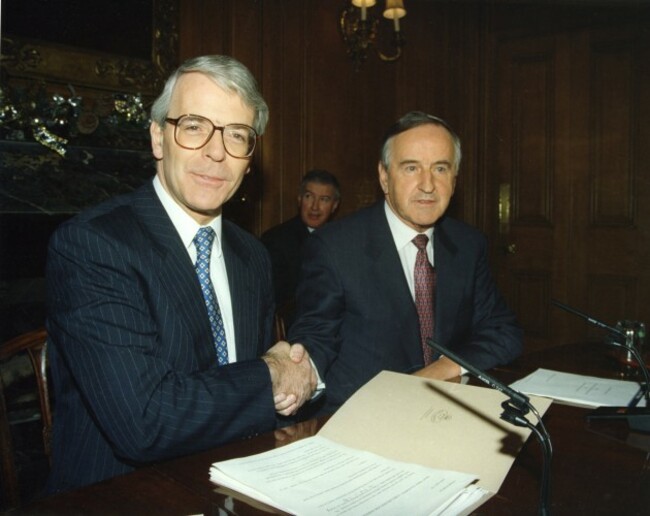
4. He had an enduring relationship with John Major
Reynolds first met John Major, whom he worked so closely with on the eventual Downing Street Declaration, when the pair were their countries’ respective finance ministers in the 1980s and Duignan recalls a poignant story Reynolds told him about that encounter:
“He described to me how they had been introduced at a European finance ministers meeting in Brussels in the 1980s soon after Major’s appointment as Chancellor of the Exchequer. ‘What do I need to know about this?’ Major said conversatuionally. ‘That you’re the bad guys,’ replied Reynolds, ‘bad Europeans, bad partners, bad everything. The game here is for the rest of us to gang up against the anti-EC Brits. But I think you and I are going to do business.’”
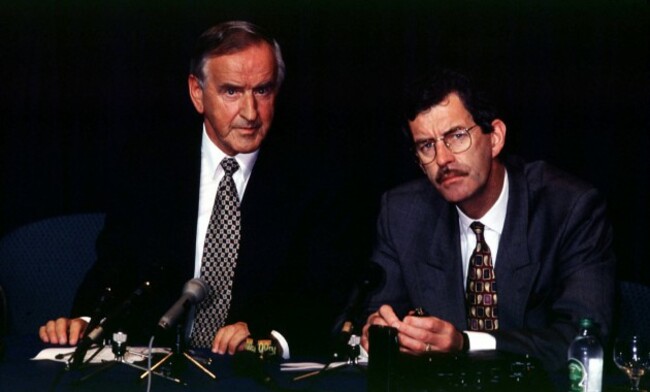
5. There were always going to be problems with Dick Spring
Fianna Fáil and Labour entered a historic but short-lived coalition in 1992 with relations between Reynolds and Spring gradually deteriorating despite their best intentions at the start. Fianna Fáil and Labour had obvious differences but so to did the Taoiseach and Tánaiste on a personal level as Duignan reveals:
“These conflicting FF-Lab priorities were compounded by the different character and personality of Taoiseach and Tánaiste. Reynolds was manipulative and impatient of opposition to his wishes. Spring was moody and quick to take offence. Given these characteristics, it was always going to be a bumpy ride, but I was still convinced that they were both sufficiently astute to arrive at a modus vivendi.“

To embed this post, copy the code below on your site













have your say