Sign in. It’s quick, free and it’s up to you.
An account is an optional way to support the work we do. Find out more.
Sign in. It’s quick, free and it’s up to you.
An account is an optional way to support the work we do. Find out more.
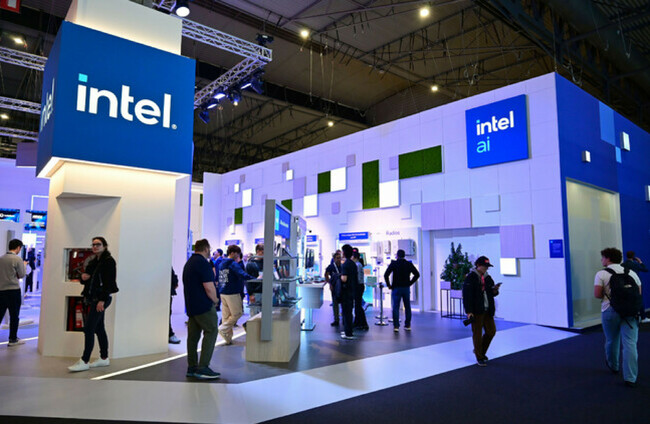
CHIP MARKER INTEL is in trouble as it attempts to catch up with competitors.
The tech giant looks set to slash jobs in an effort to cut bureaucracy and keep up with the fast-paced artificial intelligence (AI) industry.
But how did this fall from grace happen? And what is next for Intel?
Intel reported a loss of approximately €720m on revenue in the first three months of this year last week, with the company stating that it expected further losses in this quarter.
Meanwhile, just one week before, Taiwanese chipmaking titan and one of Intel’s main competitors TSMC reported a surge in net profit for the same period.
The recent financial results and forecasts are a reflection of Intel’s failure to keep up with its main competitors. The company was an essential part of the PC world for years after developing the first commercially available microprocessor in the early 1970s.
But the US firm was leapfrogged by UK-based company ARM, which specialised in mobile chips, at the beginning of the smartphone era. More recently, Intel was caught by surprise with the emergence of Nvidia as the world’s preeminent AI chip provider.
Even on the PC side of the industry, where Intel was a leader in the early 2000s, the company is continually losing market share to competitors such as AMD, a report by the Bank of America said last year.
Meanwhile, Intel controls every stage of the production of its chips but its competitors outsource fabrication to companies like TSMC. This allows other companies to focus on design and development.
In its attempt to fight back, Intel invested in purpose-built facility in Kildare, Fab34. It has been reported that this factory’s sole focus on is the manufacturing of AI chips, the first of its kind for the company, and keeps the production process in-house.
The firm experienced some issues, at first, with new AI technology including one flaw that allowed hackers to pry information from supposedly secure vaults. CEO Tan is seeking to cut staff so the decision-making and manufacturing processes are faster.
Intel has had some success with AI chip development in recent years, such as the development of processing units that have sped up the development of AI training and machine-learning.
But the company’s niche has been in chips used in traditional computing processes eclipsed by the AI revolution. Intel simply does not have the products to keep up with the likes of Nvidia, which is now the second-most valuable company in the world.
Intel CEO Lip-Bu Tan said on Friday that the company needs to streamline its decision-making processes.
In a note to staff, the new Intel boss said: “As we refocus on engineering, we will also remove organisational complexity.
There is no way around the fact that these critical changes will reduce the size of our workforce.”
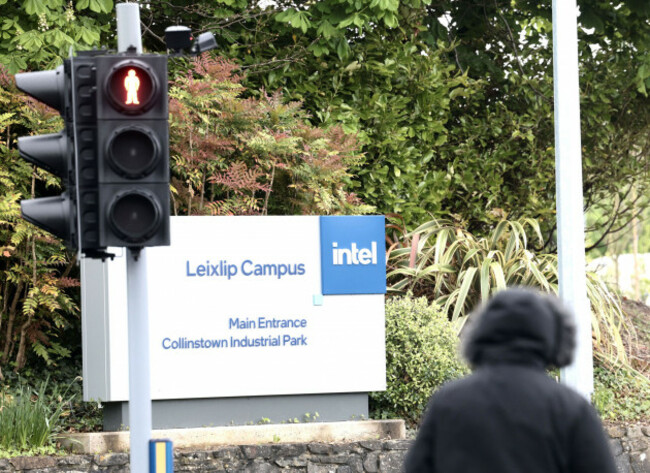
A renewed focus on engineering could yield positive results for the workforce in Ireland, as its newest operations in Leixlip, Co Kildare, given the reported significance of the site to its AI operations.
As a result, employment minister Peter Burke said last week that he believes workers might weather the storm.
“It is positive that the company have stated that they will continue to focus investment on their core business, the manufacturing of semiconductor products,” Burke said last week. ”This is the primary activity in Ireland.”
Includes reporting by AFP

To embed this post, copy the code below on your site














have your say