Sign in. It’s quick, free and it’s up to you.
An account is an optional way to support the work we do. Find out more.
Sign in. It’s quick, free and it’s up to you.
An account is an optional way to support the work we do. Find out more.
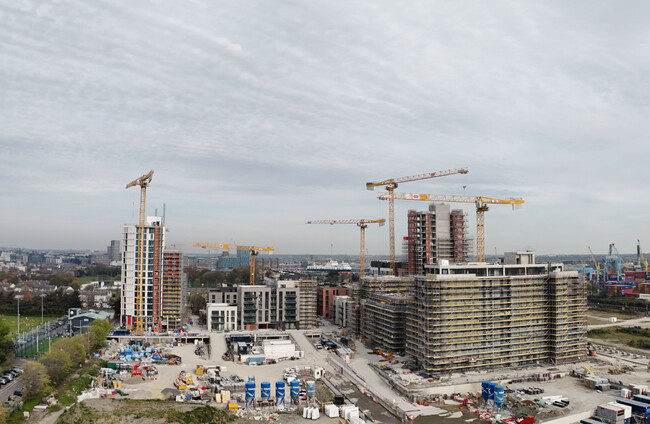
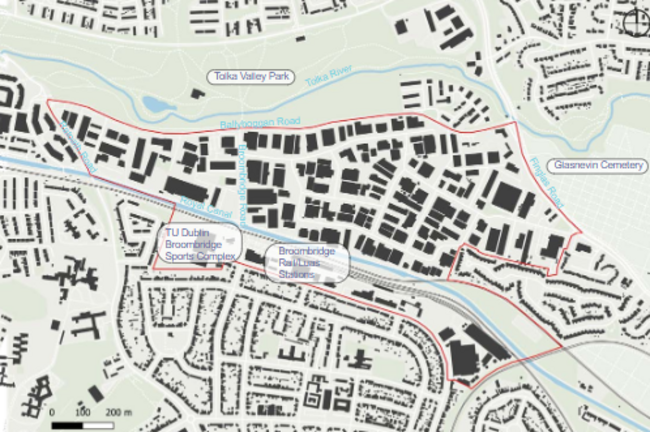
FOR THE DOZENS of (non political) people who actually read public consultations on Irish infrastructure projects, the recent decision on Ballyboggan came as a shock.
The location is planned to be the capital’s newest town, with officials planning to deliver 6,000 homes at the site of the Dublin Industrial Estate, which is close to Glasnevin Cemetery and only a short distance from the city centre.
6,000 sounds like a lot, and it is. But under Dublin City Council’s proposed plan, much of the development would be limited to four storeys, with just a few above that height.
Normally, these heights would be welcomed by locals in most areas of Ireland. Anyone who has read through planning submissions from local residents (if you haven’t, what are you doing with your life) would know that there are often protests over new housing developments.
Common issues cited are taller buildings blocking out light, too many new homes putting a strain on local services, too much traffic, and so on.
But Ballyboggan was different. Not only were most of the submissions in favour of development – they actually called for taller buildings.
While there were plenty of articulate submissions, one in particular succinctly sums things up: “The plan would represent a huge missed opportunity to provide homes for thousands of people at a time of overwhelming demand.”
The one line comment cuts to the core of the most important issues for many in Ireland – housing. Unsurprising, given prices have surged a staggering 40% or so over the last five years.
The comment also outlines the solution many people want to see implemented: build more homes. As fast as possible, as affordably as possible, in an effort to tackle the country’s crippling supply shortage.
Their cause is increasingly being championed by Ireland’s YIMBY movement – yes in my back yard.
It’s meant to act as a counterbalance to so-called ‘NIMBYs’ – not in my back yard.
The two terms don’t just apply to housing – they apply to any kind of new infrastructure development.
In recent years, ‘NIMBYism’ has increasingly become a dirty word in Ireland. Some of this is with good reason.
Think of how county councils zone for low-density property development in the middle of a housing supply crisis.
Or the role local objections played in upgrading the Luas green line to a metro.
Or local residents objecting to new housing developments in emotional, attention-grabbing terms – such as describing a proposed six-storey apartment block as a ‘monstrous tower’.
There are plenty more examples, which led then-Taoiseach Micheál Martin to agreeing in 2021 that Ireland has a ‘culture of Nimbyism’.
But there seems to have been some pushback as of late – which is where YIMBYs come in.
Their ultimate aim is simple, at least on paper: Get stuff built.
The YIMBY movement has its roots in the U.S. – as did its counterpoint, NIMBY (unsurprising, given that they both use the term ‘yard’).
The term ‘YIMBY’ has likely existed in some form for decades. But the movement in its current guise took off in San Francisco in the last 10 years or so, as a way to try to tackle the area’s affordability crisis.
Put simply: surges in house prices are normally attributed to too much demand, and not enough supply.
Given there’s not much you can do to lower demand in booming economic areas like San Francisco, YIMBYs want more to improve supply by building more homes, ultimately improving housing affordability.
The movement grew to become more broadly pro-development, generally pushing for the likes of transport and environmental projects.
Given Ireland tends to follow the lead of the U.S. in most areas, it was perhaps just a matter of time before YIMBYism took off here.
And resentment with NIMBYism had already been bubbling away for years as the housing crisis worsened – as evidenced by Martin’s comments back in 2021.
But Irish YIMBYism recently received a more definitive push from John and Patrick Collison, the two self-made billionaires from Limerick who co-founded payments processing firm Stripe.
With the company’s headquarters based in San Francisco, the YIMBY movement seems to have rubbed off on the pair, who have frequently called for more development in Ireland as a way of tackling surging prices.
In May 2024, they helped launch ‘Progress Ireland’, a think tank which focuses on how to address ‘housing shortages’ and ‘poor infrastructure’.
Its ideas already seem to be gaining some traction. In February, the government announced it was considering making cabin homes in back gardens exempt from planning rules.
Progress Ireland and other YIMBYs have advocated for similar measures, arguing that boosting the supply of ‘small houses’ could help ease some of the pressure in the property market.
The government is now bringing forward other proposals which would be generally cheered by YIMBYs, such as legislation which would extend planning permission which has been challenged by judicial reviews.
This relates to many cases for large housing developments, which are often appealed to the courts.
A common complaint is that these judicial reviews tie up housing projects for years due to the slow process of cases being resolved in the legal system. There have even been claims that objectors have taken advantage of this, demanding huge sums of money from builders to withdraw legal complaints.
This is a view which Housing Minister James Browne appears to subscribe to, as he said judicial reviews “have been weaponised by some people”.
Regardless of whether you think judicial reviews are being used in the spirit of the law or not, the move to extend planning permission timelines again shows a more pro-development attitude from officials which lines up with YIMBYs.
So between support from the general public, a new voice in the policy debate, and increasingly favourable attitudes in government, it appears things are going fairly well for the YIMBYs.
But it’s worth keeping in mind that there are still plenty of questions to answer.
The first one being – is the problem of NIMBYism really as big a deal as it’s made out to be?
Housing lecturer Lorcan Sirr has argued that the issue is overstated. Writing for the Irish Times in 2023, he said just 6% of planning permissions granted nationally in 2021 were appealed.
This would suggest that objections may not be as big a barrier for housing development as they are made out to be.
This is also backed up by the fact that planning permission for tens of thousands of homes are currently unused. Opposition politicians had called for ‘use it or lose it’ rules to be introduced, due to the suspicion that some developers were applying for planning permission solely to increase land values.
But the government’s plan for increased time extensions suggests a move in the opposite direction.
There is also the argument that increasing supply alone may not be enough to tackle Ireland’s housing affordability crisis.
As previously examined, it would likely take a decade or two before boosting supply made a real dent in prices.
Regardless, many YIMBYs would argue that doing something to impact a positive change, no matter how small, is better than letting problems continue to worsen.
And with the government planning to scale up housing delivery from 30,000 to 50,000 homes a year, it’s likely new rules will be increasingly pro-development.
The progress of legislation which could broadly be classed as pro-YIMBY over the last year looks like a sign of things to come.
In short – it’s a good time for those who want something built in their back yard.

To embed this post, copy the code below on your site












have your say