Sign in. It’s quick, free and it’s up to you.
An account is an optional way to support the work we do. Find out more.
Sign in. It’s quick, free and it’s up to you.
An account is an optional way to support the work we do. Find out more.
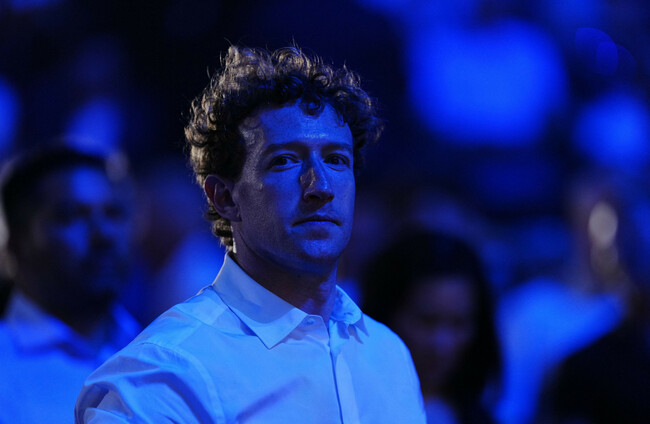
EVERYONE SHOULD HAVE access to superintelligence, Mark Zuckerberg has argued in a long-read essay, as his tech giant Meta released its new scaled-down AI model Muse Glimmer.
The Facebook founder set out Meta’s plans for the proliferation of accessible, superintelligent AI as he hit out at competitors and US policy in a 6,500-word essay titled The Future is for Everyone.
In the essay, he examined the perceived challenges that will accompany further proliferation of AI. Among them were “protecting freedom and preventing government tyranny” and “ensuring American leadership”.
On US leadership, he claimed that the nations at the helm of AI development will be empowered to lead the “prevalence of democratic values, prosperity and security in the future.”
It is for this reason, he continued, that it is necessary for those leading the AI race to be nations that “encode our values”. At present, the US and its allies have an advantage in silicon design, but a disadvantage in how quickly energy capacity and physical infrastructure can be built, he said.
“Countries like China are bringing online 1GW+ of nuclear capacity every other week, so we will need to accelerate building both energy and data centres to remain competitive.”
Meta operates 28 data centres across the world – including a €1.4 billion centre in Clonee, Co Meath.
He warned that foreign labs have an advantage as the US labs have to comply with “many additional restrictions” on training data.
“US policy must reduce this additional friction if we want American open source models to lead over time,” he stated.
Zuckerberg’s main gripe discussed in the piece with competitors is the model of a closed-source AI, where the underlying code, training data, and model weights are kept private by the company.
Muse Glimmer is an open-source, open-weight AI model – which essentially means consumers can access the numerical weights that act as the brain of the AI and customise them to their liking. Meta says releasing these weights will allow consumers to build their own agents.
In the essay, Zuckerberg said Meta is building personal superintelligence that for each user will work as a personal assistant.
“Your agent will work 24/7 on your behalf to improve your relationships, health, career, finances, home management, hobbies, and more,” he wrote.
“You’ll be able to interact with your agent through any device, including your glasses to keep you present in the moment with the people you care about.”
He used the example of one person with a superintelligent lawyer, versus everyone with access to a superintelligent lawyer, as an example of AI providing a society in which justice is delivered more fairly.
“When Priscilla [Zuckerberg's wife] and I started this work, our goal was to help scientists cure or prevent all diseases this century, and now with advances in AI we expect this will be possible much sooner,” he wrote.
Zuckerberg argued that many of those who develop AI models do so with an attitude of “doom”.
“I do not understand why anyone who believes that AI will eliminate most jobs and much of humanity’s relevance would rush to build that future,” he wrote.
“The notion that AI is so dangerous that the only safe path is an extreme concentration of power seems inherently problematic.”
To the same effect, he disagreed with the widely-held opinion that the expansion of AI use will result in job losses across industries, but will instead lead to fewer jobs in large companies, but a greater number of companies employing workers.

To embed this post, copy the code below on your site












have your say