Sign in. It’s quick, free and it’s up to you.
An account is an optional way to support the work we do. Find out more.
Sign in. It’s quick, free and it’s up to you.
An account is an optional way to support the work we do. Find out more.

WHILE THE CITIZENS’ Assembly on Drugs commenced last weekend, something to be commended, there has yet to be an acknowledgement of the scale of recreational drug use at music events and music festivals across Ireland.
For many, music festivals are an annual rite of passage, a chance to shake off the winter of hard graft, dark evenings and sedentary lifestyles in favour of the outdoors and a chance to plant their feet on the ground to the beat of their favourite bands. They are a time of great celebration and community where friendships are made and solidified.
Festivals, it has to be acknowledged, are also a space where drugs are easily available and consumed in all their forms. One 2019 HSE survey found that 94.2% of 1193 respondents said that they had used drugs at a festival, with many also reporting polydrug use and/or mixing drugs and alcohol.
There is a commonly-made association between all people who use drugs (PWUD) with those whose lives have been taken over by addiction. At PsyCare Ireland, we approach drug use in a non-judgemental way and acknowledge the reality that many people who use drugs do not do so to feed an addiction.
The motivation for many recreational drug users may be to connect more with music, the environment and their friends. While a relationship with drugs can most definitely lead to harm and the development of addiction for anyone at any time, many across Ireland will partake in social, occasional or exploratory kinds of drug use every year. Some will only partake once or twice a year at events like concerts or festivals.
We are a team of specialists with multidisciplinary backgrounds and we offer interventions to service users to prevent the escalation of traumatic or high-risk situations while they are under the influence of drugs. We offer a safe space to the service users at festivals as well as realistic and non-judgemental information and awareness around drug taking and the effects of drugs on the body and mind. Really, risk-minimisation is at the heart of what we do.
The HSE research findings also showed that users at festivals are more likely to experiment with drugs and mix high quantities of drugs with alcohol, resulting in greater recklessness. This can play out tragically in cases where people are afraid to go to medics when feeling unwell if they’ve taken substances; the same HSE research found that four out of five participants who reported feeling unwell did not seek help from medics, with fear of legal retribution cited as the primary reason for not doing so.
Since this research was published, the HSE has been more engaged in public campaigns with slogans like Go Slow and Low, Leave the Mixing to the DJ and Medics Are Your Mate. However, still many will go to festivals ill-informed and take drugs in ways that may pose danger. Though this is not just a phenomenon at Irish festivals.
The festival setting has always been particularly synonymous with the use of mind-altering substances. The forebears of the modern music festival were legendary 60s events like Woodstock (LSD), and the 1980s-90s USA and UK rave scene where MDMA (in powder and ecstasy pill form) became a particularly popular drug, one that is associated with dance music.
The modern festival is curated to offer people an experience that is outside their everyday lives, with unlimited offerings of alcohol, laser light shows, dance acts, psychedelic art, late night forest raves – an adult playground.
We need to accept that as people seek to curate their inner experiences, many of the popular drugs at festivals amplify the stimulating environment. This is the reality of what welfare services like ours see on the ground and we approach our care of service users with this in mind.
Drug use and counterculture have always developed in tandem. The fact that many of the drugs readily available at festivals are now being studied as novel treatments in various clinical trials around the world is interesting. In particular, MDMA, Ketamine, LSD and Psilocybin are being touted by some as the next revolution in Psychiatry, and Australia has just legalised Psilocybin and MDMA-assisted psychotherapy.
If something has the power to help people through immense difficulties like Post Traumatic Stress Disorder and help alleviate depression, we need to accept that people are going to want to use them in a festival setting.
However, people using drugs in these settings can become overwhelmed because they’re taking substances that are unregulated and sourced from illegal quarters. This can often mean they’ve taken the incorrect dosage, been mis-sold substances, feel overwhelmed in the chaotic environment of a festival or struggle to manage a pre-existing psychological condition.
As a therapist, I understand the growing research around the power of these substances to open up people’s minds and their subconscious in the right setting. Yet, in the wrong setting or mindset, people who use substances can end up feeling emotionally open, vulnerable and exhausted.
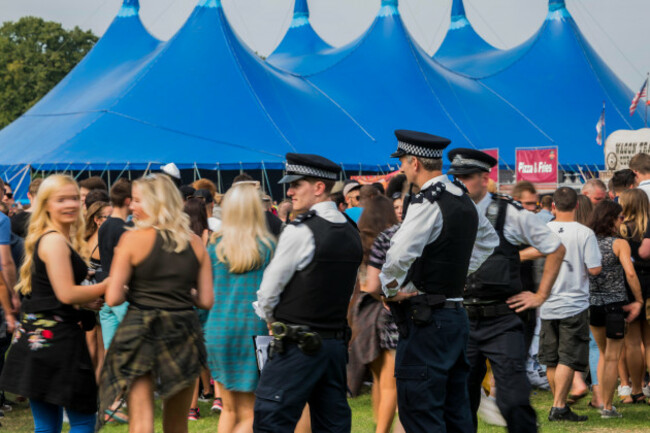
If we are truly open to the harm reduction model, then people in this state of mind do not need to face legal repercussions for whatever they have decided to take at a festival.
Instead, with the help of our team or other medics, they should be kept medically safe and psychologically be allowed to land and process whatever has been triggered in them.
What is really needed are specialist services at events that support people psychologically along with the amazing services already in place for their physical care. This is what PsyCare Ireland sets out to achieve. Our inspiration came via the work of similar groups abroad such as Kosmicare (Portugal), Zendo Project (USA) and PsyCare UK (UK). We provide 24-hour support to those at music festivals having a general psychological difficulty or difficult drug-induced experience. Typically, an average of 1% of festival-goers end up requiring the assistance of a service like PsyCare over the course of a festival; this is in line with the level of need reported by other festival welfare services abroad.
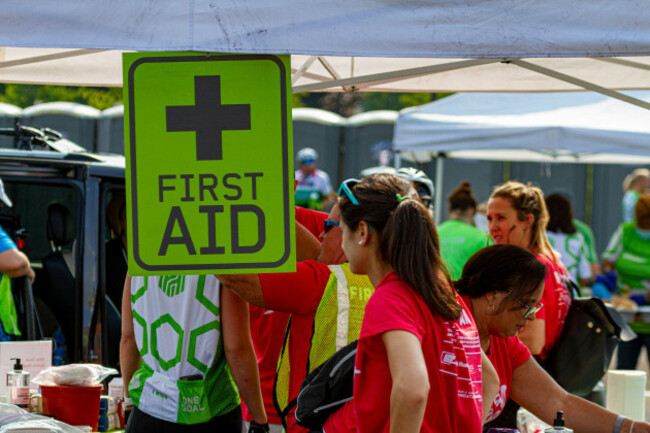
PsyCare, although new in Ireland, has existed in other forms in other jurisdictions going back to Woodstock and the Parking Lot Medics supporting people at Grateful Dead concerts in the 1970s, so this idea isn’t new. In Ireland, we’ve had recent great developments like the testing of drugs found at Electric Picnic. However, can we truly claim we are following a health-led approach to people who use drugs in Ireland if we don’t support the mental health of the many people who use them recreationally?
Whether we like it or not, it is time we acknowledge that drugs will be taken at festivals, regardless of the risks that they pose; for some, it’s as common as having a few drinks at an event. We need to provide psychological support and empower people with the information to make better and safer choices. Through having an open dialogue about harm reduction, we can educate people today and every upcoming generation on how to be safer with their use of substances. We hope the Citizens’ Assembly can bring about an acknowledgement of this too.
Michael Ledden is an accredited Psychotherapist and co-founder and Chairperson of PsyCare Ireland: Welfare and Harm Reduction CLG a non-profit dedicated to supporting people having difficult psychological experiences and difficult substance-induced experiences at Irish Festivals and Music Events. Get more information on PsyCare Ireland here. Tickets to PsyCare benefit night on the 18 May in WigWam, Dublin here.
To embed this post, copy the code below on your site








have your say