Sign in. It’s quick, free and it’s up to you.
An account is an optional way to support the work we do. Find out more.
Sign in. It’s quick, free and it’s up to you.
An account is an optional way to support the work we do. Find out more.
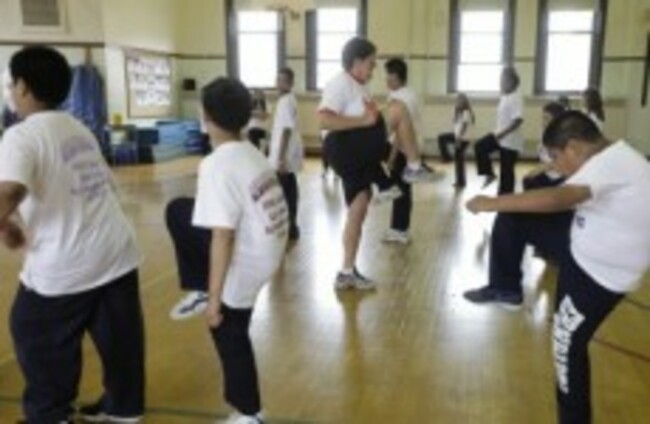

THIRTY YEARS AGO men and women were an average of 30 lbs lighter than they are today. Go to your fridge, see that pound of butter? Yes, 30 of them. Pretty shocking isn’t it ? And it’s getting worse.
The fat around our waistlines, arms, legs and bums is growing. If we don’t learn how to control it, we’re in trouble – and it’s costing us money that we could be spending on holidays or saving.
So where do we start when trying to tackle this problem? Well… where does anything start? Back to the beginning, back to basics, and in my opinion that means back to school. I believe it’s our priority at this stage to revert our ways and look at our teaching system in a new light. It’s not rocket science, it’s human science, and it’s crying out for attention.
What if we took school children from 1st to 3rd year and changed how they practised PE (which, incidentally, is suppose to mean ‘physical education’ and not just an excuse to play a game of football, like the way it was when I was in school). We could take the subject and break it into values like health, fitness, well-being, goal setting, life skills (feeding yourself with correct nutrition), self care, aesthetic values, and becoming strong young men and women.
How do we do this? How does this work? Well, after a revamp on curriculum and course planning on Physical Education, we should start with…
Fitness Testing – an easy fun way that has tons of benefits for parents, teachers and students.
Do I really have to list the benefits of exercise in this day in age? Well, how about the benefits on a child’s personal development? I’ll start there. Being a father myself it’s a good place to start.
Think about it: the assessment data from fitness tests could be used when working with parents at parent-teacher meetings or seminars, opening new doors for future schooling. The information could be used to educate the parents how the child compares with other kids of the same age and gender. It may even be possible to rule out certain health concerns if the parent knows about the child’s fitness level and can compare it against concrete standards.
Exercise and group activities can promote social skills, team building, trust, and friendships. Testing our children, combined with written and presentation-based content for teaching, is the way forward.
I know because I teach three different schools from three different areas in Dublin; an all-girls and two mixed schools. They all enjoy the training and presentations about the human body.
It’s just a matter of ingenuity and innovation: make it so they want to learn, filter the content to their needs, use social media, use real facts and reward health.
Lets take the Bleep Test, which is common in nearly every sport that requires running and changing direction (agility, speed and recovery). It is conducted by setting up two cones, A and B, which are 20 metres apart and correspond with recorded audio ‘bleeps’ that sound on a timer. The child runs from cone A to cone B before the bleep goes off, with each round becoming shorter until the child can no longer perform accurate sprints, at which point he or she is given a score.
This could be done in teams as part of cardiovascular health training. We could tie this in with using stethoscope and blood pressure cuffs to teach children the benefits of reducing the heart rate. We can teach them about heart and lung disease early, as well as blood pressure, coronary heart disease and many more cardiovascular and cardiorespiratory conditions that can arise from smoking, eating rubbish food, drinking alcohol to excess and not exercising.
Teachers could project images up on a whiteboard and discuss different types of training and health problems. They could discuss sporting icons, to make it relevant to these youthful impressionable sponges… Do you see where I’m going with this?
There is so much content, there are many possibilities, each knocking very loudly on the door of childhood obesity. That’s the real issue here.
We must take into account we as a society do not MOVE enough. We have gadgets and gismos that do everything for us, so school is the only place some of these kids actually get to exercise. I know because I have asked my students. That for me, personally, is a solid reason this needs to happen.
The health problems we face are:
The fact is, these are mostly avoidable.
Kids who are unhappy with their weight also will be more likely to develop eating disorders and substance abuse issues, possibly turn to drugs like marijuana and alcohol at a young age as a result of incapability to deal with their self-esteem development and self-image. Diagnosing and treating weight problems and obesity in children as early as possible may reduce the risk of developing these, and other, serious medical conditions.
There are various types of tests available. Here are some examples:
We have the opportunity to develop a course on basic human nutrition, physical education and life skills to young people, rather than just playing some mindless games. PE is a course that could truly change young people’s lives at an age when they’re at their most impressionable… and yet we’re not doing it.
What do you think ?
Steve Doody is an entrepreneur, personal trainer, fat loss expert and father-of-one. He is the Director of Training and Development at TRX Studios and partners in health of www.chopped.ie. Find Steve on Facebook at TRX Studios or follow him on Twitter @Steve_Doody.
To embed this post, copy the code below on your site














have your say