Sign in. It’s quick, free and it’s up to you.
An account is an optional way to support the work we do. Find out more.
Sign in. It’s quick, free and it’s up to you.
An account is an optional way to support the work we do. Find out more.
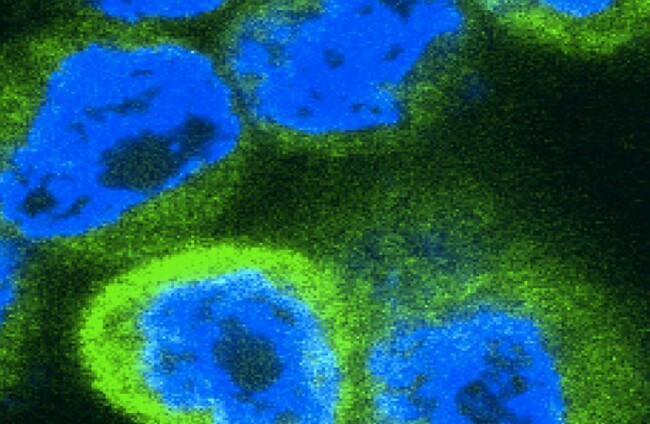
SCIENTISTS IN TRINITY College Dublin have discovered how certain types of cancer can hijack the body’s immune system to help it grow – and hope they can figure out how to reverse that pattern.
When tissue is damaged in a normal functioning immune system, a wound-healing response is engaged to promote growth of new cells to help heal the affected area. It is this process that many forms of cancer use to its own benefit.
Research conducted in the Smurfit Institute of Genetics at Trinity has found that a molecule called TRAIL, which is produced in the cells and is found in high concentrations in many cancers, can be re-wired in tumours in order to help the cancer grow.
Cancers can be described as ‘wounds that do not heal’ due to their ability to masquerade as damaged tissue in order to receive help from the immune system. But prior to this study, how cancers were able to do this was not well understood.
Smurfit Professor of Medical Genetics Seamus Martin, who led the research, says:
Understanding how cancers turn on the wound-healing response has been mysterious, so we are very excited to find that certain cancers exploit TRAIL for that purpose.
“This suggests ways in which we can turn off this reaction in cancers that use TRAIL to hoodwink the immune system into helping rather than harming them.”
The TRAIL molecule normally delivers a signal for cells to die, but scientists at Trinity found that it can also send a wound-healing message from tumour cells.
The study was conducted by research fellow at Trinity Dr Conor Henry and has just been published in the internationally renowned journal Molecular Cell.
Work in The Martin laboratory at Trinity College Dublin is supported by Science Foundation Ireland and Worldwide Cancer Research.
To embed this post, copy the code below on your site

















have your say