Sign in. It’s quick, free and it’s up to you.
An account is an optional way to support the work we do. Find out more.
Sign in. It’s quick, free and it’s up to you.
An account is an optional way to support the work we do. Find out more.
LAST UPDATE | 3 Aug 2025
IN THE 12 months to August, not one person died in a road traffic collision in Helsinki, Finland.
The feat may sound impossible to Ireland, which has seen a steady increase in the number of road fatalities in recent years. So far this year, 95 people have died on Irish roads.
In 2023, the Road Safety Authority launched their ‘Vision Zero’ campaign, which aimed to achieve zero road deaths by 2050.
However, as people continued to lose their lives, the RSA pivoted to more provocative messaging. The most recent ad campaign shows blood on the hands of those who drink drive, as well as those who don’t call it out.
Helsinki, a city with a population of 690,000, really has achieved ‘Vision Zero’.
It’s come close before. In 2019, no pedestrians or cyclists were killed in road traffic collisions, and just two people in vehicles died. The city’s authorities have been trying to replicate the feat for the last five years.
Now, after a full 12 months with no fatalities, The Journal asked how they managed it – and whether they have any tips for Ireland’s towns and cities.
Roni Utriainen, a traffic engineer with the city’s Urban Environment Division, says a multitude of factors come into play, but perhaps the most transformative has been speed.
More than half of the streets of Helsinki now have speed limits of 30km/h – a significant reduction on the 50km/h limits of the 1980s.
Statistically, one in ten pedestrians hit by car travelling at 30km/h will die of their injuries.
Whereas if a car is travelling at 50km/h, the likelihood of being killed is five in ten.
Helsinki has also made other changes to discourage speeding. Narrower streets, Utriainen says, make a difference to a driver’s boldness. As well as that, 70 new speed cameras have been installed around the city in the last seven years.
There are also fewer people driving cars.
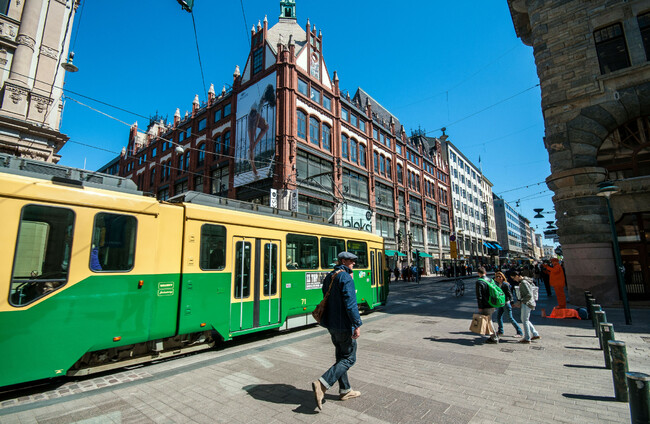
“Helsinki has a rather good public transport network,” he says. “This also reduces the number of crashes, because more people take a tram, or metro or bus line.”
To expand on this, the city has plans to construct a so-called cycling ‘super highway’.
Utriainen says that another factor for the reduction in road deaths may be that residents of Helsinki have a better attitude to their fellow road users.
“I would say that drivers give way in most cases to pedestrians,” he said.
“It’s more about overall culture and overall society.”

To embed this post, copy the code below on your site












have your say