Sign in. It’s quick, free and it’s up to you.
An account is an optional way to support the work we do. Find out more.
Sign in. It’s quick, free and it’s up to you.
An account is an optional way to support the work we do. Find out more.
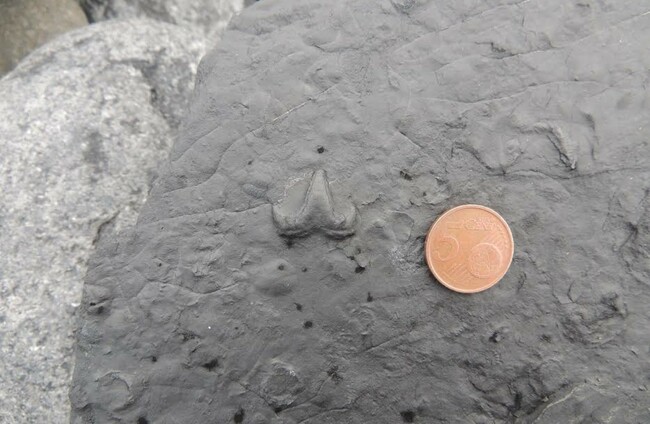
A 300 MILLION-year-old shark tooth fossil has been found on the north Clare coastline at Doolin, Co Clare.
The discovery of the tooth, belonging to a shark that is believed to have been the top predator in the area during its time, was made by geologist Dr Eamon Doyle.
Doyle said that the fossil was probably exposed by winter storms.
“They were found on one of our geo-sites. It’s somewhere I go and I look at the geology down there. It’s a very interesting spot geologically and it was just there. I was very fortunate,” Doyle told TheJournal.ie.
The shark is believed to have once hunted in the ancient seas of the Carboniferous period in the waters off Ireland, at a time when Ireland was located close to the equator.
“The type of tooth that is it, it’s got a sharp point and a couple of other nodes on the side. They were used for gripping, so that was before the typical great white shark tooth with the really sharp edges. These were used for gripping and then for crushing,” Doyle said.
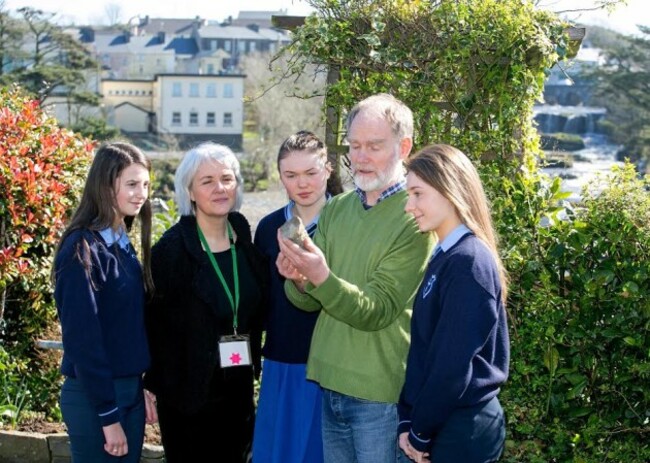
“It was probably hunting these little nautiloids that were swimming around in the sea, they’re related to the modern squid, they were hunters as well.”
“Previously we thought they were the top predator here but now we know this shark was there and we know now there was another top predator and that the ecosystem was more complete than we perhaps thought.”
This finding is significant to local geologists as it gives them a better understanding of the biodiversity of the ancient seas.
This shark tooth reveals that apex predators of up to 70cm were living off the West Coast at the time.
“Fossil shark teeth of this age are very rare in Ireland and so it extends the known range of fossil sharks in Ireland,” Doyle said.
“The main fossils we find in these rocks, there’s not a huge diversity of them so it’s always been interpreted as a very difficult environment so finding a shark tooth, especially one that size, that’s quite a large shark. It tells us that there was a lot going on that there was a wider diversity than we previously thought.”
The fossil will be placed on public display on 25 May at There’s Life in the Old Rocks of Clare in Ennistymon Public Library. The event will mark the start of the annual Burren Rocks festival.

To embed this post, copy the code below on your site













have your say